Bases Cancel Air Shows Amid Iran War: Blue Angels, Thunderbirds, Golden Knights Schedule in Flux

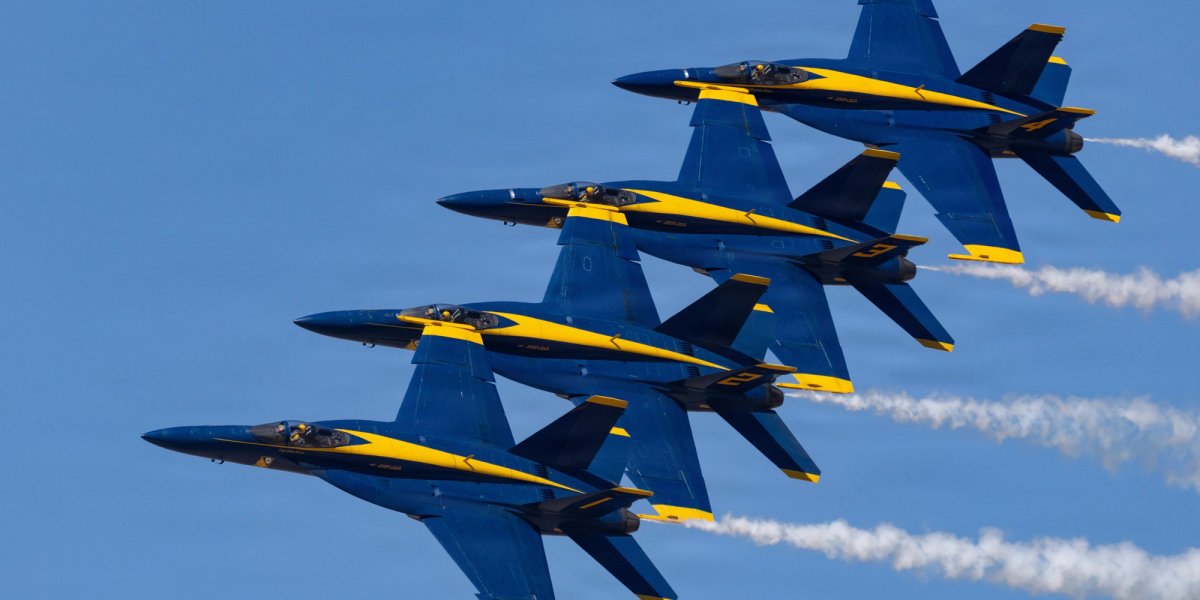
For millions of Americans, the sight of six Navy F/A-18 Super Hornets screaming across the sky in diamond formation is about as close to a religious experience as aviation gets. This year, fewer of them will get that chance—not because the Blue Angels aren't flying, but because the bases that host them are canceling.
Several military installations across the country have canceled or significantly scaled back their 2026 air shows as the Iran War reshapes operational priorities at home. Contrary to some reports in the press, none of the demonstration teams have canceled their shows. Their show schedules remain posted on their official websites with demonstrations still listed through November. It's the host bases that are canceling their open house air show events.
Air shows are one of the most direct and effective means the military has of maintaining its relationship with the American people. It’s an opportunity for the public to interact directly with their military, and the community to understand better what happens behind the fenceline. It’s also a chance for young people to explore service as a career choice, and many a future aviator got their start meeting a Blue Angel or Thunderbird.

What's Happened So Far
The first Blue Angels show of the season was scheduled for March 14 at Naval Air Facility El Centro in California. On March 4, a Facebook post from NAS El Centro announced the Festival of Flight was being canceled. Organizers of the show at NAS Lemoore, scheduled for March 21-22, followed shortly after. Both cancellations were attributed to heightened force protection requirements—the operational reality of fighting a war in Iran while simultaneously managing garrison security at home.
Niagara Falls Air Reserve Base similarly shelved its Thunder of Niagara Air Show, citing the "allocation of resources to ongoing operations in the U.S. Central Command area of responsibility"—plain language for a base whose KC-135 tankers are in high demand refueling fighters and bombers over Iran.
Joint Base Charleston was set to host its 2026 Charleston Airshow on May 2-3, but officials announced the event has been scaled back to a single-day harbor performance on Saturday, May 2. Col. Jason Parker, the base commander, was candid about the reason: the base must "prioritize the demands of our current operations and the support to our deployed warfighters."
The adjusted event will still feature the Blue Angels, flying over Charleston Harbor south of the Cooper River Bridge in a format that echoes a well-remembered 2010 harbor show. The pattern is consistent: installations are managing the friction between their public engagement mission and the real-world demands of a shooting war. Opening the gates to tens of thousands of civilians requires security resources that bases are currently directing elsewhere.
The Thunderbirds Feel It as Well
The Blue Angels aren't the only demonstration team whose hosts are standing down. The Air Force's Thunderbirds—flying F-16 “Vipers” in their signature red, white, and blue livery—face the same base-level constraints.
Shaw Air Force Base near Sumter postponed its March 28-29 Thunder Over the Midlands show, which was to have featured the Thunderbirds, as operational demands redirected resources elsewhere.
The Thunderbirds had been scheduled for more than 50 flight demonstrations at 29 locations across the country in what promised to be a robust season. Like the Blue Angels, the team is ready and willing; it is the host installations responding to wartime priorities that are creating the gaps in the calendar.

The Golden Knights Are Waiting
Then there are the Golden Knights. The U.S. Army's legendary parachute demonstration team had prepared through an intense six-to-eight week training period, including 150 to 200 high-altitude jumps, building toward a season that was supposed to open at Shaw—the same show that was postponed.
The two 12-member Golden Knight demonstration teams typically travel around 240 days per year, performing for audiences ranging from small civic events to nationally televised spectacles like Monday Night Football and NASCAR races.
They exist, like the Blue Angels and Thunderbirds, for a purpose that goes beyond performance: to put a human face on military service for the American public. When a kid watches a Golden Knight stick a perfect landing twenty feet in front of her, the Army stops being an abstraction.
A Legacy Worth the Wait
The disruptions land in a particularly significant year. 2026 marks the 80th anniversary of the Blue Angels. In 1946, Chief of Naval Operations Admiral Chester Nimitz envisioned a flight exhibition team to raise public interest in naval aviation and boost Navy morale in the aftermath of World War II.
In a remarkable three months, the Navy Flight Exhibition Team flew its first demonstration on June 15, 1946, at Naval Air Station Jacksonville, with Lt. Cmdr. Roy "Butch" Voris leading in a Grumman F6F-5 Hellcat. The name "Blue Angels" debuted at a show in Omaha in July 1946, suggested by Right Wing Pilot Lt. Maurice "Wick" Wickendoll, who came across it in a New Yorker Magazine column. Eight decades and roughly 500 million spectators later, the team remains one of the most enduring symbols of American military excellence.
Adding another layer to the shifting 2026 season, the Blue Angels' flight line will also be missing a familiar sight: their iconic C-130J Super Hercules support aircraft, affectionately known as "Fat Albert." The beloved logistics plane is currently undergoing extended maintenance in the United Kingdom and will not be performing this year.
The Blue Angels, Thunderbirds, and Golden Knights aren't grounded. Rather, base commanders are making judgment calls on the feasibility of hosting an open house during a period of increased military operations and security concerns. Shows remain on the Blue Angels' calendar at Cocoa Beach, Florida on April 11-12; NAS Kingsville, Texas on April 18-19; and Vidalia, Georgia on April 25-26, with multiple events continuing through November.
Continue Reading

Thunderbirds vs Blue Angels: The Return of the Air Shows
Join the Conversation

Mickey Addison
Military Affairs Analyst at MyBaseGuide
Mickey Addison is a retired U.S. Air Force colonel and former defense consultant with over 30 years of experience leading operational, engineering, and joint organizations. After military service, h...
Mickey Addison is a retired U.S. Air Force colonel and former defense consultant with over 30 years of experience leading operational, engineering, and joint organizations. After military service, h...
Credentials
- PMP
- MSCE
Expertise
- defense policy
- infrastructure management
- political-military affairs
SHARE: