The Strategic Importance of the Coast Guard’s New Icebreaker Fleet

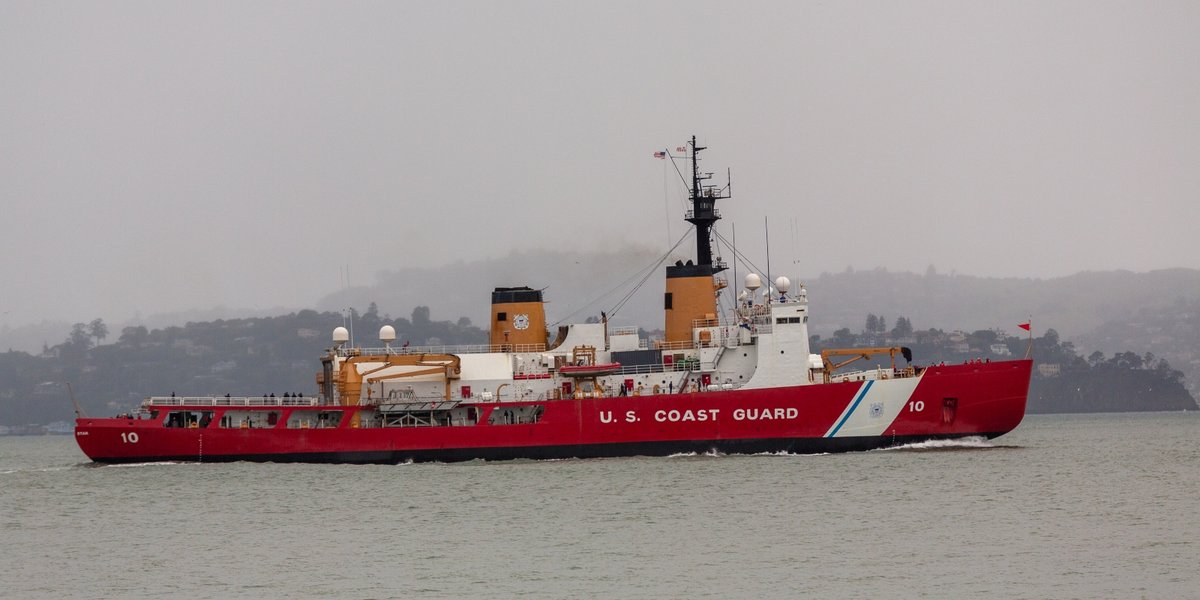
Despite its relatively small size, the United States Coast Guard has an extremely wide array of missions and focus areas, from port security to environmental protection to defending and monitoring America’s territorial waters. While all the jobs the men and women of the USCG carry out feature unique challenges and difficulties, some are carried out in extremely dangerous environments to boot.
And there may be no region more hazardous and harsh where our courageous Coasties regularly serve than the unforgiving, ice-choked waters at the very top of planet Earth: the Arctic Ocean. Sailing aboard a handful of icebreakers, vessels designed to power through frozen seas, the Coast Guardsmen operating in the region above 60° north protect our country’s interests in the world’s northernmost latitudes.
And as the importance of the Arctic in global affairs continues to increase, the Coast Guard is making moves to update and expand their fleet of ships capable of safely steaming through both waves and ice.
What Is an Icebreaker Ship?
In short, an icebreaker ship is what someone reading the terms likely assumes: a ship capable of breaking through ice. Endowed with extremely thick, reinforced hulls and incredibly powerful engines that allow them to open cracks in thick ice floes of the polar regions and push their way through.
During the mid-19th to early 20th century, as the increase in metal-hulled ships powered by steam engines rather than the wind gradually brought the Age of Sail to an end, navies, nations, and corporations began to build so-called “ice-resistant” ships. These vessels could operate in far icier conditions than others of their era, but they could not break through frozen sheets or floes. It wasn’t until the latter end of that timeline that the first true icebreakers went to sea.
The Russian ship Yermak, widely considered the very first such vessel, carried out her maiden voyage in 1899. In the following decades, Imperial (and then Soviet) Russia continued to build icebreakers, and while other countries soon began launching similar ships of their own, the Russians remained the foremost constructors and employers of vessels capable of smashing through ice.
For example, it was their nuclear-powered Arktika that, in 1977, became the first surface vessel to ever reach the North Pole. But by then, the United States had long ago joined the list of nations with icebreakers in its service.

History of America and the US Coast Guard in the Arctic
While plenty of Americans have travelled to the Arctic region by both sea and land since the nation’s founding, the country’s formal interest in the region dates back to 1867, when the US purchased Alaska from Russia. Acquiring that territory (which became the 49th state in 1959) gave the United States control of land within the Arctic Circle and the adjacent portion of the Arctic Ocean.
As a result, the Treasury Department’s Revenue Cutter Service (the US government agency which, in 1915, merged with the US Life-Saving Service to become the Coast Guard) began deploying ships to patrol and monitor the region: Arundel, Naugatuck, Mahoning, and Raritan. The first ships they sailed in the region fell into the category of “ice-resistant." But in 1939, forty years after the Yermak first set sail, the United States commissioned her first four icebreaker ships: the cutters.
A few years later, as the Second World War raged, the Coast Guard designed, commissioned, and built an entirely new series of icebreakers, the wind class ships, totaling nine vessels in all. By the 1970s, those vessels needed replacing, which led to the construction of two far more modern icebreaker ships: the Polar Star and Polar Sea, commissioned in 1976 and ’78, respectively. Planned as the first two of their class, unexpectedly high costs prevented the construction of additional ships.
By the late 80s, the USCG decommissioned the last of the wind class ships, leaving the Polar Star and Polar Sea as America’s only icebreakers. The Coast Guard upped their icebreaker count to three in 2000 by commissioning the USCGC Healy, but in 2010, the Polar Sea suffered a career-ending engine failure, again reducing America’s icebreaker fleet to two.
They remained the country’s only Arctic-capable ships until 2024, when the USCG purchased a commercial icebreaker with a worrying history, the Aiviq, and redesignated her the USCGC Storis. Since then, America’s military presence in the polar seas has been limited to these vessels.
The Current Political/Military Situation in the Arctic
It may come as a surprise to anyone who pictures the topmost latitudes of the globe as nothing more than windswept horizons of snow prowled by the world’s largest terrestrial predators, but the Arctic is a region of ever-increasing strategic and material value to the world. It’s home to large amounts of the kind of rare earth minerals used in the manufacture of most high-tech products and rechargeable batteries, which the five countries with territory in the Arctic Circle (the United States, Russia, Canada, Norway, and the Kingdom of Denmark) and several others, including China, plan to claim and extract.
The decrease of sea ice covering the Arctic Ocean caused by climate change is opening newer, shorter global shipping routes. And President Donald Trump and his administration's ambiguous yet aggressive plans for Greenland further complicate America’s strategic situation in the northern latitudes; over two-thirds of the island falls within the Arctic Circle. Suffice to say, the political situation in the Arctic is increasingly fraught.
Why the Coast Guard Needs New Icebreaker Ships
Despite the increasing political, military, and economic focus on the Arctic region, America’s maritime presence has remained, as mentioned above, fairly minimal. As of now, the USCG operates just the three aforementioned active icebreaker cutters, only two of which are assigned to the Arctic: Healy and Storis. The USCGC Polar Star operates on the other extreme end of the planet, servicing McMurdo Station, the main research post and logistics hub on Antarctica. Thus, the United States needs more ships that will allow the country to project military and scientific resources into the Arctic.
Moreover, China and Russia (still the leading nation when it comes to the sheer number of icebreakers in operation) have both taken an increased interest in the Arctic in recent decades. Given that they are America’s two most significant adversaries/rivals on the global stage, developing a fleet of ships capable of countering them in among the floes and bergs of the northernmost latitudes is vital to protecting our nation’s interests.
Design and Construction Timeline for New USCG Icebreaker Ships
The process to procure and deploy these future-icebreaker-cutters formally began last October when the United States entered into a formal agreement with Finland to purchase the vessels. Signed by President Trump and Finland’s President and Prime Minister, Alexander Stubb and Petteri Orpo, the Memorandum of Understanding (MOU) will see the Finns building four new Arctic Security Cutters with US shipyards set to construct up to another seven vessels of the same class.
A few months later, on December 29th of 2025, the Coast Guard announced the two companies contracted for the project: Rauma Marine Construction in Finland and Bollinger Shipyards in the United States, specifically their location in Lockport, Louisiana. The first Finnish icebreaker is slated for delivery sometime in 2028, with the first American-built cutter scheduled for completion the year after. The addition of these first new vessels to the Coast Guard’s fleet will mark the start of the United States’ active efforts to oversee and protect its interests in the Arctic.

Join the Conversation

Paul Mooney
Veteran & Military Affairs Correspondent at MyBaseGuide
Paul D. Mooney is an award-winning writer, filmmaker, and former Marine Corps officer (2008–2012). He brings a unique perspective to military reporting, combining firsthand service experience with exp...
Paul D. Mooney is an award-winning writer, filmmaker, and former Marine Corps officer (2008–2012). He brings a unique perspective to military reporting, combining firsthand service experience with exp...
Credentials
- Former Marine Corps Officer (2008-2012)
- Award-winning writer and filmmaker
- USGS Public Relations team member
Expertise
- Military Affairs
- Military History
- Defense Policy
SHARE: