What Jonny Kim Can Teach the Navy’s Next Generation of Aviators
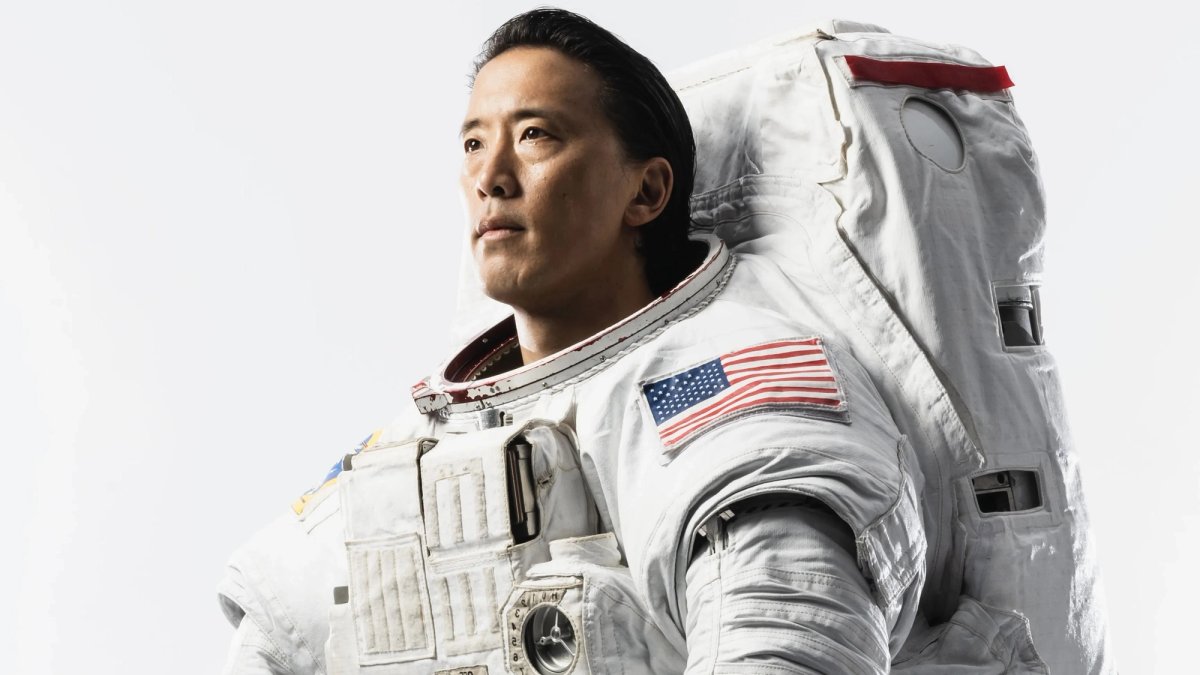
Jonny Kim has spent much of his career learning how people perform when the margin for error gets small.
He served as a Navy SEAL and special operations combat medic, became a physician, earned his wings as a U.S. naval aviator and qualified as a flight surgeon, then spent nearly a decade with NASA. His first spaceflight took him to the International Space Station for an eight-month mission that ended after thousands of orbits around Earth.
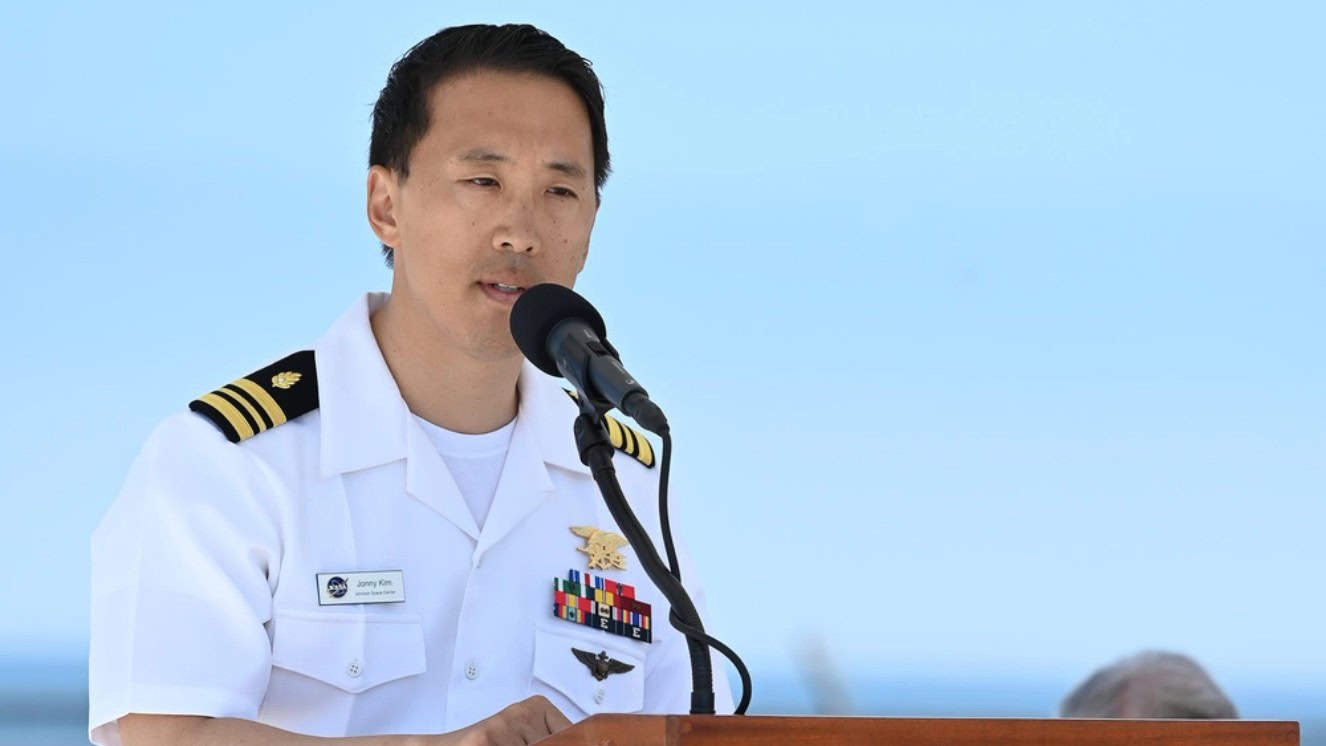
Now, Kim is leaving NASA and spending what he says will be his final year in the Navy with Training Air Wing Two at Naval Air Station Kingsville, Texas.
His goal for that year is straightforward. Jonny Kim said he wants to give back by “teaching and mentoring the next generation of naval aviators” before moving into the next chapter of his career.
As someone who has worked in special operations, emergency medicine, naval aviation, human spaceflight, and mission leadership, he will help pilots who are still learning how to operate high-performance military aircraft.
The question now is what lessons from those very different environments can follow him into the training cockpit.
Jonny Kim Never Actually Left Active-Duty Navy Service
Some reports about Kim’s departure from NASA have described him as returning to active military duty.
To avoid a wrong impression about his status, Jonny Kim remained an active-duty Navy officer throughout his time at NASA, according to Navy Personnel Command.
“Navy personnel selected as NASA astronauts remain on active duty while assigned to the NASA Astronaut Corps as part of an interagency detail,” Lt. Cmdr. James Adams, a Navy Personnel Command spokesperson, said.
Those officers retain their rank, continue accumulating time in service, and remain eligible for Navy promotion boards, Lt. Cmdr. Adams said. Kim’s move to Training Air Wing Two is therefore better understood as a change in assignment rather than a return to the Navy.
“As a naval aviator, Lt. Cmdr. Kim’s assignment to Training Air Wing Two reflects standard Navy detailing processes as he continues his service by teaching and mentoring the next generation of naval aviators,” he added.
NASA announced Kim’s departure on August 27, 2026, after nearly a decade with the agency. He joined the astronaut corps in 2017 and completed two years of astronaut candidate training before taking on assignments supporting International Space Station operations and the Artemis program.
What Happens at Training Air Wing Two?
Training Air Wing Two is one of the places where Navy and Marine Corps pilots learn to fly tactical jets before moving on to their operational aircraft.
About 150 student pilots arrive at the wing each year after completing primary flight training. They train through either Training Squadron 21 or Training Squadron 22 at NAS Kingsville and fly the T-45C Goshawk.
The wing’s training goes well beyond basic aircraft handling.
Students learn formation flying, instrument procedures, low-level navigation, weapons employment, air combat maneuvering, and carrier operations. The curriculum also includes extensive simulator time and training on aircraft malfunctions before students eventually attempt carrier qualification.
What Student Aviators Train for at Training Air Wing Two
Student aviators at Training Air Wing Two move through an advanced jet-training syllabus designed to prepare them for follow-on operational and combat training. Below are the main parts of that pipeline and the skills students develop before earning their Wings of Gold.
Training Air Wing Two says its mission is to prepare jet naval aviators for follow-on operational and combat training. Students reach Kingsville at a point where technical flying skills increasingly have to be paired with sound judgment and effective crew communication.
Spaceflight Gave Kim Another View of Crew Performance
Jonny Kim’s astronaut experience added another high-risk operating environment to a career already full of them.
NASA selected him for its 2017 astronaut class. His training covered International Space Station systems, robotics, T-38 flight operations, physiological training, survival, Russian language instruction, and preparation for spacewalks. He later worked in Mission Control as a capsule communicator and held several operational leadership assignments.
Kim launched to the space station in April 2025 as a flight engineer. NASA says he completed 3,920 orbits and traveled nearly 104 million miles during the mission while participating in scientific research and technology demonstrations.
The technical details are only part of what he says he is taking away from NASA. When announcing his next assignment, Kim emphasized the people behind the mission.
“Our greatest asset will always be each other, led with empathy and care,” he wrote.
That focus on people also matters in aviation training, where students learn to operate as part of a crew and eventually within larger operational units.
NASA astronauts train extensively for situations they hope never occur. Simulators, emergency procedures, communication protocols, and defined crew responsibilities give crews repeated practice responding when conditions change.
Kim now brings that experience into a training environment where student aviators also spend significant time rehearsing emergencies and learning how to make decisions when a flight stops going according to plan.

Medicine Adds Another Layer to How He Understands Performance
Astronaut experience aside, his experience with human performance began well before NASA.
During his enlisted Navy career, he served as a SEAL medic and completed more than 100 combat operations. After earning his commission, he graduated from Harvard Medical School and trained in emergency medicine before becoming a naval flight surgeon. He later earned his designation as a U.S. naval aviator as well.
Kim’s medical career gives him a different perspective on aviation performance. As both a physician and naval aviator, he has experience with the aircraft side of flight as well as the physical and cognitive demands placed on the person flying it.
His background gives him firsthand experience with the physical and cognitive demands of aviation, as well as the medical perspective of caring for people who work in high-risk environments.
Special Operations Taught Different Lessons About Teams
Before medical school, flight training, or NASA, Kim spent his early Navy career in the SEAL teams.
After enlisting in 2002, he trained as a hospital corpsman and completed Navy SEAL training before serving with SEAL Team Three. NASA says he worked as a medic, sniper, navigator, and point man during more than 100 combat operations across two deployments.
His years in the SEAL teams also gave him extensive experience working in environments where clear roles, preparation, communication, and trust were critical.
Years later, Kim described similar priorities at NASA, writing about crew culture and helping teammates perform at their best.

The Navy Says Assignments Like Kim’s Are Part of an Existing Path
Jonny Kim’s résumé makes his particular route unusual, but the broader idea of a military astronaut returning to Navy flying or training assignments is not unprecedented.
Lt. Cmdr. Adams said some military astronauts finish their careers at NASA, while others move back into fleet or training billets.
“Returning to active fleet and training billets is not an unusual career option,” he added.
The Navy maintains pathways that allow qualified aviators to return to flying assignments after joint, staff, education, and specialized interagency duties, he explained. The detailing process also considers more than an officer’s previous assignments.
“Every officer’s circumstances are unique, and the Navy detailing process carefully balances individual and family milestones with the overarching needs of the Navy,” Lt. Cmdr. Adams said.
Lt. Cmdr. Adams said that pathway allows the Navy to bring experience gained outside traditional fleet billets back into operational and training commands. In Kim’s case, his years with NASA added another layer to an aviation career that already included medical and operational experience before he arrived at Kingsville.
What Can Jonny Kim Give Future U.S. Naval Aviators?
Kim arrives at Kingsville after spending more than two decades in professions that demanded different kinds of judgment, preparation, and leadership.
For student aviators, the value of that experience may be less about any single job he held and more about the lessons he can carry across them.
By the time they leave Training Air Wing Two, they have progressed through formation flight, tactical maneuvering, weapons training, simulators, carrier qualification, and increasingly complex decision-making in the cockpit. They then move to a Fleet Replacement Squadron to learn the specific aircraft they will operate in the fleet.
Kim can bring experiences from several communities into those conversations without pretending that one profession works exactly like another. A spacecraft emergency is different from an aircraft malfunction. Emergency medicine is different from carrier aviation. A SEAL platoon operates differently from a flight training squadron.
What connects his experiences is the need to prepare before the pressure arrives, understand a team’s capabilities, communicate when circumstances change, and continue making decisions when the environment becomes demanding.
That experience could also be useful during debriefing and mentoring after training flights. Student aviators are still learning how to evaluate their decisions, identify what they could improve, and apply those lessons the next time they fly. Kim has gone through versions of that process across combat operations, medicine, aviation, and astronaut training.
The Navy sees value in placing that experience around students.
“Assigning highly accomplished officers back into the cockpit reflects the Navy’s focus on training the next generation,” Lt. Cmdr. Adams said.
“Placing leaders with extensive operational and specialized experience at training commands ensures that student aviators learn directly from professionals who have operated at the pinnacle of aviation and human performance.”
One Final Navy Assignment Focused on the People Coming Next
Kim’s final Navy year brings him back to aviation at a point when student pilots are preparing for operational careers of their own.
His time in special operations, medicine, naval aviation, and NASA gives him examples to draw from when talking with students about crew performance, preparation, leadership, and decision-making.
The Navy has not detailed exactly how those experiences will shape his day-to-day instruction, but it has made clear why officers with broad operational backgrounds are valuable at training commands.
Kim has described the assignment as an opportunity to give back during his final year in uniform. At Training Air Wing Two, he will have the chance to pass on lessons from combat operations, medicine, aviation, and spaceflight to aviators beginning their own Navy and Marine Corps careers.
Continue Reading
Jonny Kim: Meet the Astronaut, Former SEAL, and Aviator
Join the Conversation

Allison Kirschbaum
Veteran, Military History & Culture Writer at MyBaseGuide
Allison Kirschbaum is a Navy Veteran and an experienced historian. She has seven years of experience creating compelling digital content across diverse industries, including Military, Defense, History...
Allison Kirschbaum is a Navy Veteran and an experienced historian. She has seven years of experience creating compelling digital content across diverse industries, including Military, Defense, History...
Credentials
- Navy Veteran
- 7 years experience in digital content creation
- Expertise across Military, Defense, History, SaaS, MarTech, FinTech industries
Expertise
- Military History
- Naval Operations
- Military Culture
SHARE: