
The Pentagon Just Quadrupled THAAD Production

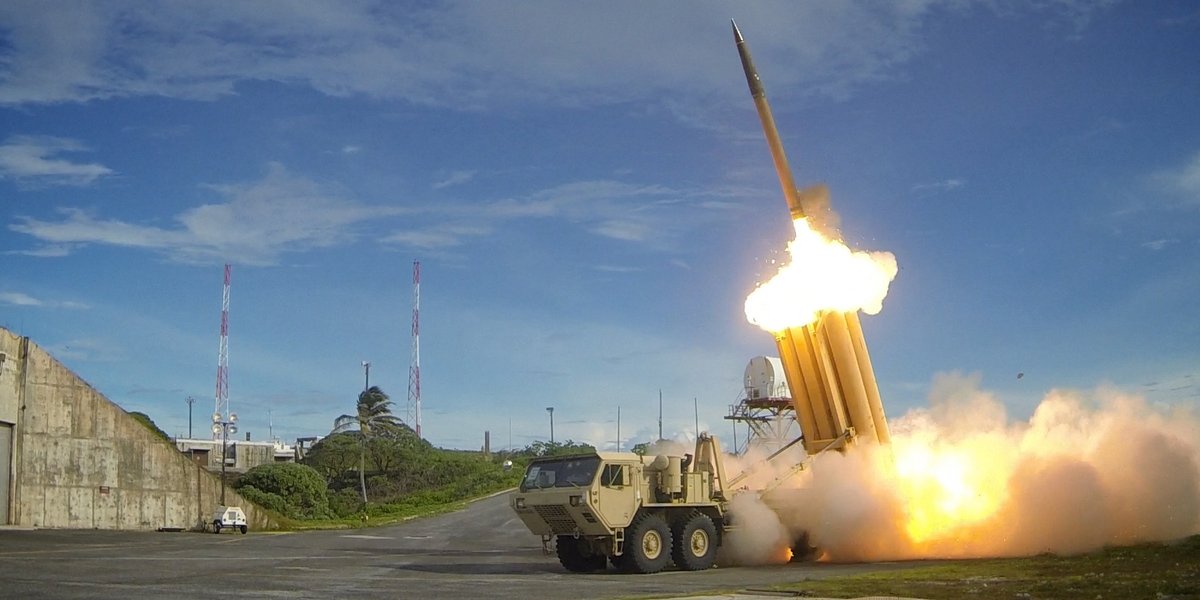
The U.S. Department of Defense isn’t just ordering a new supply of munitions, they’re ordering four times the supply. The Pentagon has secured a deal to quadruple production of the guidance systems inside its Terminal High Altitude Area Defense interceptors. Not the outer shell, or launcher, but the part that decides whether a missile gets stopped, or gets through.
Officials describe the agreement as a move to accelerate delivery timelines and give the industry the certainty needed to expand production capacity. This isn’t tied to specific operations, or deployments. There is no timeline, just capacity, locked in.

The Supply Chain Is the Strategy Now
The agreement reaches past prime contractors and into the supply chain itself, targeting the seeker, the most sensitive component inside the interceptor. The Pentagon isn’t just buying more missiles. It is pressing on the parts that have historically slowed production.
Under Secretary of Defense for Acquisition and Sustainment Michael Duffey said the effort is intended to strengthen the supply chain alongside prime contractors, BAE Systems and Lockheed Martin, positioning industry to scale production more reliably. This goes deeper than procurement headlines, it moves production from reactive to sustained. Factories don’t scale like this for short-term demand.
The Systems Don’t Sit Still
THAAD has never been a warehouse asset. It already stands watch in South Korea, positioned against North Korean launches.
It anchors missile defense in Guam, where the U.S. territory sits inside expanding strike ranges. It operates in the United Arab Emirates, where missile attacks have already tested defenses in real time.
Every deployment brings personnel with it: operators, maintainers, security, and command. When production expands at this scale, those footprints rarely stay fixed.
Speed Changes the Timeline, Not the Headlines
The Pentagon’s release centers on speed and scale, and how quickly systems can be produced and delivered. Officials frame the effort as necessary to meet growing demand and ensure readiness.
Missile defense has long been constrained by how fast systems could be built and replaced. That constraint shaped where assets went, and where they didn’t.
Four times the production doesn’t just fill stockpiles. It compresses decisions. In a crisis, timing carries more weight than volume. The Pentagon is making certain that if they need the supply, they have it on demand.

The Demand Is Already Ahead of Supply
The Pentagon ties the expansion directly to “growing global demand,” according to their release. But that’s where it stops.
Reuters has reported on broader Pentagon efforts to expand munitions production capacity, linking the push to evolving missile threats and sustained demand across multiple regions.
Production doesn’t surge without something pushing it. This agreement locks in something more durable than a contract. Pace.
Continue Reading

Army Expands Air & Missile Defense by 30% in 2024
Join the Conversation

Natalie Oliverio
Veteran & Senior Contributor, Military News at MyBaseGuide
Natalie Oliverio is a Navy Veteran, journalist, and entrepreneur whose reporting brings clarity, compassion, and credibility to stories that matter most to military families. With more than 100 publis...
Natalie Oliverio is a Navy Veteran, journalist, and entrepreneur whose reporting brings clarity, compassion, and credibility to stories that matter most to military families. With more than 100 publis...
Credentials
- Navy Veteran
- 100+ published articles
- Veterati Mentor
Expertise
- Defense Policy
- Military News
- Veteran Affairs
SHARE: