Navy Quietly Brings Back Mandatory Separation for PFA Failures in 2026

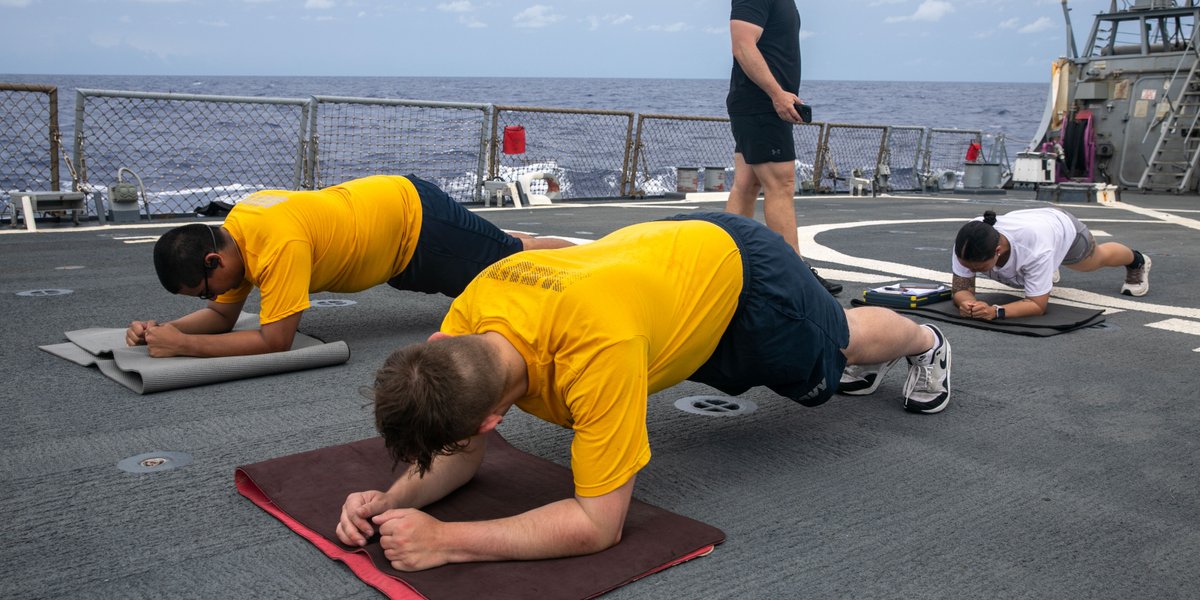
Many Sailors will experience the Navy’s latest move on fitness. This shift occurs not because the Physical Fitness Assessment is changing, but because failing it will have real, career-ending consequences.
In December 2025, the Navy quietly updated its separation manual, MILPERSMAN 1910-171. Navy Personnel Command restored mandatory administrative separation processing for Sailors who repeatedly fail the PFA, with a new window beginning January 1, 2026.
Although no formal announcement was made, this change raises the stakes for Sailors in 2026, more than any update in years.
The Rule That Resets the Clock in 2026
The updated separation article leaves little room for interpretation.
“Administrative separation processing is mandatory for Sailors who fail three official PFA cycles within the most recent four-year period.”
The four-year window starts January 1, 2026. Earlier failures do not count towards the mandatory separation clock.
Once a Sailor hits a third failure inside that window, the career impact is immediate:
“Sailors are not eligible for transfer, reenlistment, or advancement while administrative separation processing is pending.”
And when it comes to documentation, the policy is equally blunt:
“PRIMS is the authoritative source for PFA failures and may be used to support separation processing.”
Even if counseling paperwork is missing or delayed, PRIMS alone can carry the case.
In short, three failed PFAs in four years now force the Navy to begin separating a Sailor in 2026.
Why This Is Such a Sharp Turn for the Fleet
For nearly a decade, Navy leadership publicly moved away from tying fitness failures directly to separation.
Most recently, in 2024, the Navy rolled back several administrative penalties for PFA failure and framed the shift in terms of modernization and trust.
“We are modernizing our PFA policy to acknowledge our diverse population, increase Sailor trust, and enhance the quality of service.” – Vice Adm. Richard J. Cheeseman Jr., Deputy Chief of Naval Operations for Personnel, Manpower, and Training.
The Vice Adm. went on to explain, “These changes remove mandatory significant problem comments and administrative actions concerning physical readiness program failures.”
That messaging resonated across the fleet. Fitness still mattered, but careers would no longer automatically hinge on a bad cycle.
The December 2025 update changes that calculus.
Starting in 2026, repeated PFA failures will require mandatory separation, not just lead to administrative or evaluation consequences.
What’s New Under the Navy’s 2026 PFA Guidelines
For Sailors, the most consequential changes are straightforward:
- Three failed official PFAs within the most recent 4-year period now require ADSEP processing.
- The counting window resets and begins Jan. 1, 2026.
- Transfers, reenlistment, and advancement are frozen while processing is underway.
- PRIMS is the authoritative system used to prove failures.
- Active and Reserve Sailors with 18 or more years of service are not exempt.
- Sailors with 20 or more years must request Fleet Reserve or retirement within 90 days of a third failure.
This is not about harsher workouts or new scoring tables. It is about restoring separation as the outcome for repeated failure.
What Has Not Changed
Despite the impact, much remains the same.
This update does not change the PFA itself. Events, scoring standards, age brackets, or medical waivers remain under the jurisdiction of the Physical Readiness Program.
Commands are still expected to counsel Sailors after failures. Waivers may be requested through established policy channels.
The test is unchanged. The consequences are not.
Denial of Veteran Benefits
An ADSEP from a PFA case can cancel out the benefits that honorably discharged Veterans are widely eligible for.
In PFA-only cases, separation characterizations generally remain under a General (Under Honorable Conditions) or Other Than Honorable (OTH) discharge, depending on the circumstances, prior history, and command's recommendation, rather than a criminal, Bad Conduct Discharge (BCD), unless it involves UCMJ violations or egregious misconduct. The characterization depends on whether the failure was due to inability or intentional misconduct.
Consequences that accompany a General, or Other Than Honorable discharge include:
- VA benefit denial - including healthcare, education, and home loan eligibility
- Employment barriers - discharge types are included in various background checks for employment
- Re-enlistment - generally barred
Ultimately, the type of discharge received in a PFA case will depend on circumstance and Command leadership.
Who Should Be Paying the Closest Attention
This policy will matter most to three groups in the fleet.
- Junior Sailors trying to stabilize their careers: One bad cycle happens. Three of the past four years have now put separation squarely on the table.
- Mid-career Sailors managing injuries, deployments, and family strain: The reset clock means every PFA from 2026 forward matters.
- Late-career Sailors approaching retirement: At 18, 19, or 20-plus years of service, a third failure is no longer just another hurdle. It can force a retirement decision within 90 days.
There are no exceptions for those near retirement.
What Sailors Can Do Right Now
Understand where the starting line is.
Jan. 1, 2026, is effectively day one of the new count. Beginning on that date, review and document every official PFA promptly. Seek clarification on each PFA's significance and impact. Treat each submission as potentially career-defining.
Review your PRIMS record.
Log in to PRIMS and double-check every PFA entry for correctness. Confirm that any medical waivers or issues are documented. Address any errors with your chain of command before 2026.
Take counseling seriously.
Attend and engage seriously with all counseling sessions after a PFA failure. Ask questions about the consequences of repeated failures and ensure you understand the expectations for improvement.
Plan early if you’re near 18+ years of service.
This policy removes the assumption that you can ride out the clock to retirement. While this policy change arrived quietly, its effects are very real.
Fitness is now a requirement for continued service and advancement. For Sailors heading into 2026, that tension becomes personal.
Continue Reading

What the New Navy Physical Readiness Test Policy Means for 2026
Join the Conversation

Natalie Oliverio
Veteran & Senior Contributor, Military News at MyBaseGuide
Natalie Oliverio is a Navy Veteran, journalist, and entrepreneur whose reporting brings clarity, compassion, and credibility to stories that matter most to military families. With more than 100 publis...
Natalie Oliverio is a Navy Veteran, journalist, and entrepreneur whose reporting brings clarity, compassion, and credibility to stories that matter most to military families. With more than 100 publis...
Credentials
- Navy Veteran
- 100+ published articles
- Veterati Mentor
Expertise
- Defense Policy
- Military News
- Veteran Affairs
SHARE: