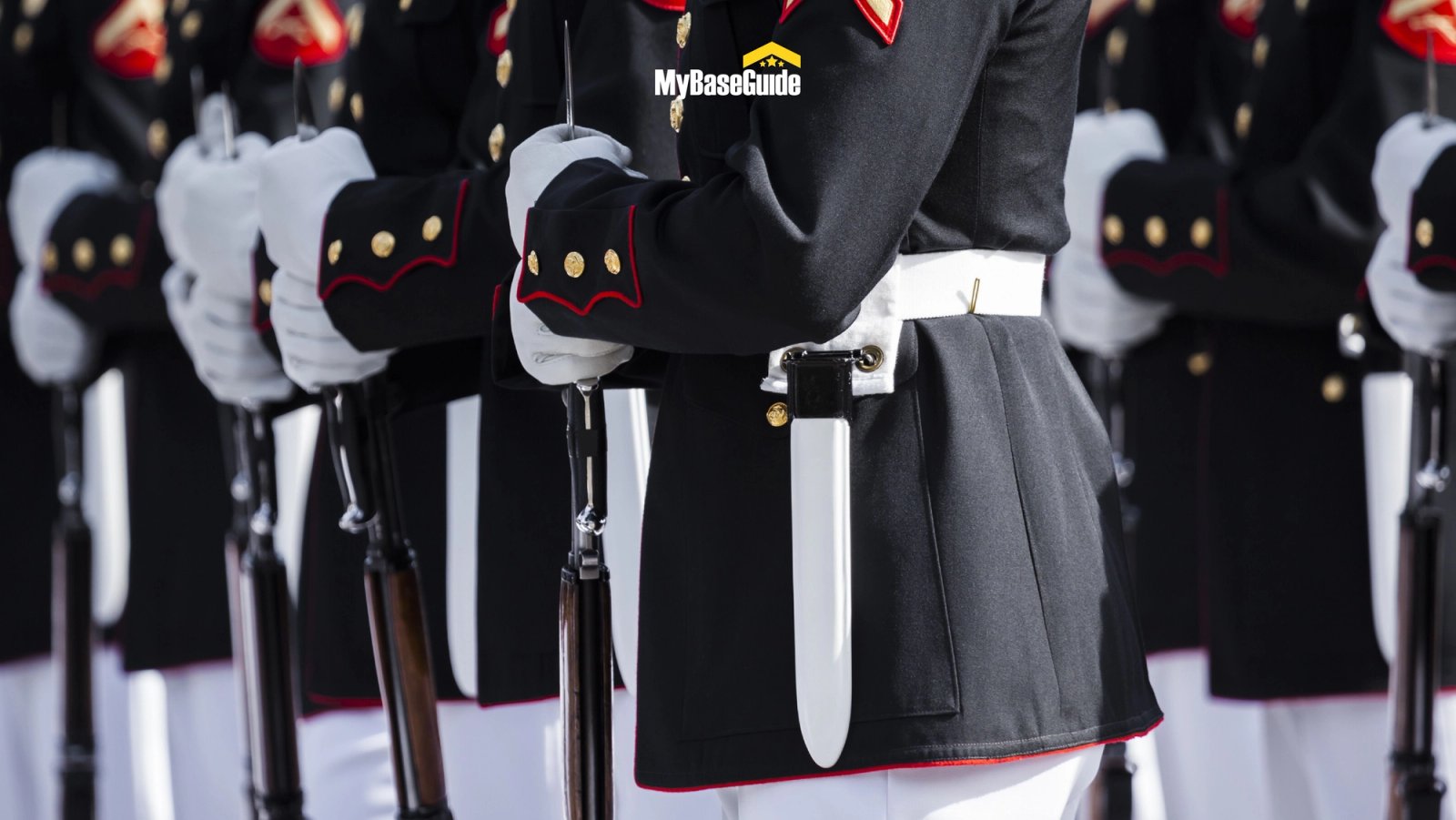
Marines Have Until September 30th to Update Their Official Religious Affiliations


Due to an administrative order issued in mid-August, all U.S. Marines have until September 30 to review and update their religious affiliation in personnel records. This represents a major overhaul in how the Corps will interact with individual servicemembers of an array of faiths, as the same order reduced the number of available religious-affiliation codes from more than 200 to 30. The change is described by the Department of Defense as part of a broader effort to streamline how the military records the religious affiliations of uniformed servicemembers across all branches. For individual Marines, however, the change means some personnel will have to select a broader category because the specific faith designation previously available to them is no longer listed.
The new list of codes replaces more than 200 faith and belief designations with 30 standardized categories. Some of these no-longer-available faiths are ones that, according to the Marine Corps, are no longer represented by any individuals in service and, in some cases, have instead been consolidated into broader categories. For Marines whose specific faiths are also among those being removed or consolidated, the deadline is approaching quickly.
Why Is the Military Changing Its Religious-Affiliation System?
While the deadline for Marines steadily approaches, the process that led to it began months ago. In March, Secretary of Defense Pete Hegseth announced reforms to the military's Chaplain Corps, including a significant reduction in the number of religious-affiliation codes used by the military.
According to the DoD, the previous system had grown to more than 200 faith codes, and Secretary Hegseth argued that so many options proved administratively unwieldy. The Department further claimed the new, slimmed-down system is intended to return the codes to their original purpose: providing chaplains with useful, broad strokes of information about the religious composition of their units so they can better plan how to provide proper spiritual support to the troops under their purview.
The Associated Press reported that the new list includes broad categories covering major religious traditions, while a number of smaller faiths, sects, and belief systems were removed as options. Pentagon officials said the change is not intended to declare those beliefs illegitimate or prevent service members from practicing them.
As Pentagon spokesperson Sean Parnell clarified, “This decrease in religious affiliation codes is not designed to make any claims on the legitimacy of any faith or religious belief, nor is it intended to provide a list of 'officially approved' religions. Rather, it is designed to allow chaplains to quickly look at the religious composition of their units and determine how they structure resources to best provide for warfighters of all faith groups.”
That distinction is important as it makes these changes a logistical decision, according to the DoD, rather than a refutation of any particular faith.
A religious-affiliation code is an administrative designation in a Marine's personnel record. It is not, by itself, a determination of which specific religion(s) a Marine is permitted to practice in their private life. That said, the change has raised questions about how the military handles religious diversity when an individual's faith no longer has a dedicated category.

What Does the Consolidated List of Religions Mean for Marines?
The basic consequences for all affected Marines are relatively straightforward. They must log into Marine Online (MOL), navigate to their personal information, select the religion section, and choose the most appropriate religious-affiliation code from the new list. The change will then become part of their official personnel record. The Corps says commanders are responsible for making sure Marines know about the requirement and have a reasonable opportunity to complete the update before the deadline.
The challenge comes for Marines whose particular religious identity is no longer represented by its own category. Instead of selecting a precise designation, those Marines may have to select a broader category that most closely corresponds to their beliefs compared to the others available.
For the faithful, that can make the process feel more consequential than a routine personnel-record update, particularly for service members whose religious practices are an important part of their military lives.
A US Military Religious Affiliation Code Isn't the Same as Religious Accommodation
One of the most important things for Marines to understand is that the new affiliation system does not erase the military's broader religious-support structure. Marine Corps doctrine specifically recognizes the importance of supporting religious practice within the force.
MCTP 3-30D (“Religious Ministry in the United States Marine Corps”), the Marine Corps publication covering religious ministry, explains that the military's religious support system exists within a pluralistic environment designed to support the free exercise of religion for all Marines and Sailors. The document also explains how to accommodate religious practices and facilitate religious services that a particular chaplain may not personally be able to provide. That can include coordinating with chaplains of different faiths, civilian clergy, lay leaders, or other outside religious resources.
In other words, a Marine or Sailor who has to select a broader administrative affiliation code is not necessarily losing the ability to seek religious support specific to their faith. The affiliation code is one piece of the administrative system. Religious accommodation and religious ministry are broader processes. That distinction matters because the Marine Corps serves personnel from a wide variety of religious backgrounds, including faith traditions that may have relatively few adherents in the force.

Broader Questions About Religion in the US Military
The reduction in religious-affiliation codes also coincides with other changes to the military's approach to faith, chaplaincy, and religious accommodation. The DoD announced changes to the Chaplain Corps in March that included, in addition to the reduction of religious-affiliation codes, a change to the uniforms worn by military chaplains: replacing rank insignia with insignia representing their religion. The department said the reforms were intended to make the chaplaincy more focused and useful to service members.
Meanwhile, the military has also tightened the process for requesting religious accommodations involving beards. Starting earlier this year, troops seeking religious waivers to maintain beards would face additional requirements, including sworn statements concerning their religious beliefs and additional review by military leadership.
Existing religious waivers were also slated for reevaluation under the new guidance. While a separate issue from the consolidation of recognized religions, they share a common question: How should the military balance standardized rules with the individual faiths and practices of servicemembers?
What Marines Need to Do Before the September 30th Deadline
For Marines more worried about avoiding an administrative headache than anything else (which, as an extremely paperwork-averse USMC veteran, I so get), the immediate issue is much simpler than any questions posed by the broader debate.
They need to review the religious affiliation currently listed in their personnel records and make sure it accurately reflects the most appropriate category available under the new system. Marines whose former designation has disappeared from the system should select the category they believe most appropriately represents their religious affiliation from the remaining options.
For anyone uncertain about how the new categories apply to their particular circumstances, the Marine Corps' administrative message provides the formal guidance governing the update.
A Smaller List Doesn’t Bar Any Faiths from the Corps
The biggest takeaway is that the Marine Corps has changed how it categorizes religious affiliation, not necessarily which beliefs its personnel are allowed to hold. As mentioned above, the Pentagon's stated rationale for this reduction/consolidation is purely administrative: reduce an unwieldy list, provide chaplains with simplified information about the religious makeup of their units, and make religious-ministry planning easier. But for individual Marines, the specifics of religious identity can feel considerably more personal than a line in a personnel database.
MCTP 3-30D recognizes that service members may have diverse religious practices and that supporting those practices can require coordination beyond a single chaplain or religious category. For now, Marines don't need to fret over any larger debates about religion in the military. They simply need to make sure their records are updated by the end of this month.
Continue Reading
Marine Corps Uniform Regulations Relaxed in New Update
Join the Conversation

Paul Mooney
Veteran & Military Affairs Correspondent at MyBaseGuide
Paul D. Mooney is an award-winning writer, filmmaker, and former Marine Corps officer (2008–2012). He brings a unique perspective to military reporting, combining firsthand service experience with exp...
Paul D. Mooney is an award-winning writer, filmmaker, and former Marine Corps officer (2008–2012). He brings a unique perspective to military reporting, combining firsthand service experience with exp...
Credentials
- Former Marine Corps Officer (2008-2012)
- Award-winning writer and filmmaker
- USGS Public Relations team member
Expertise
- Military Affairs
- Military History
- Defense Policy
SHARE: