The U.S. and Japan: The Alliance That Shapes the Pacific

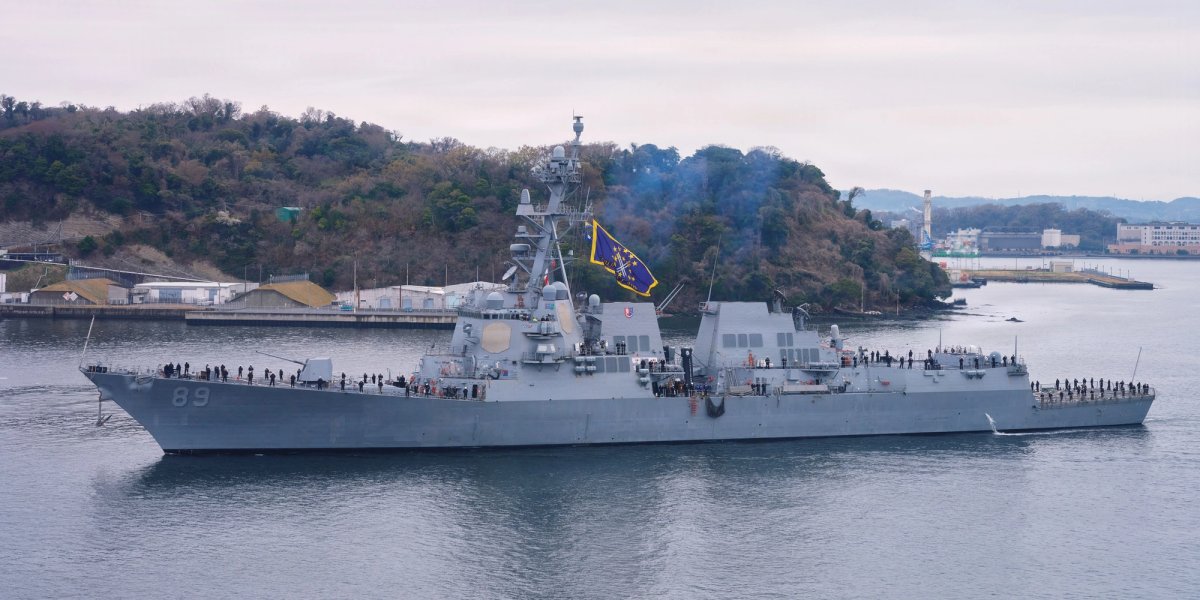
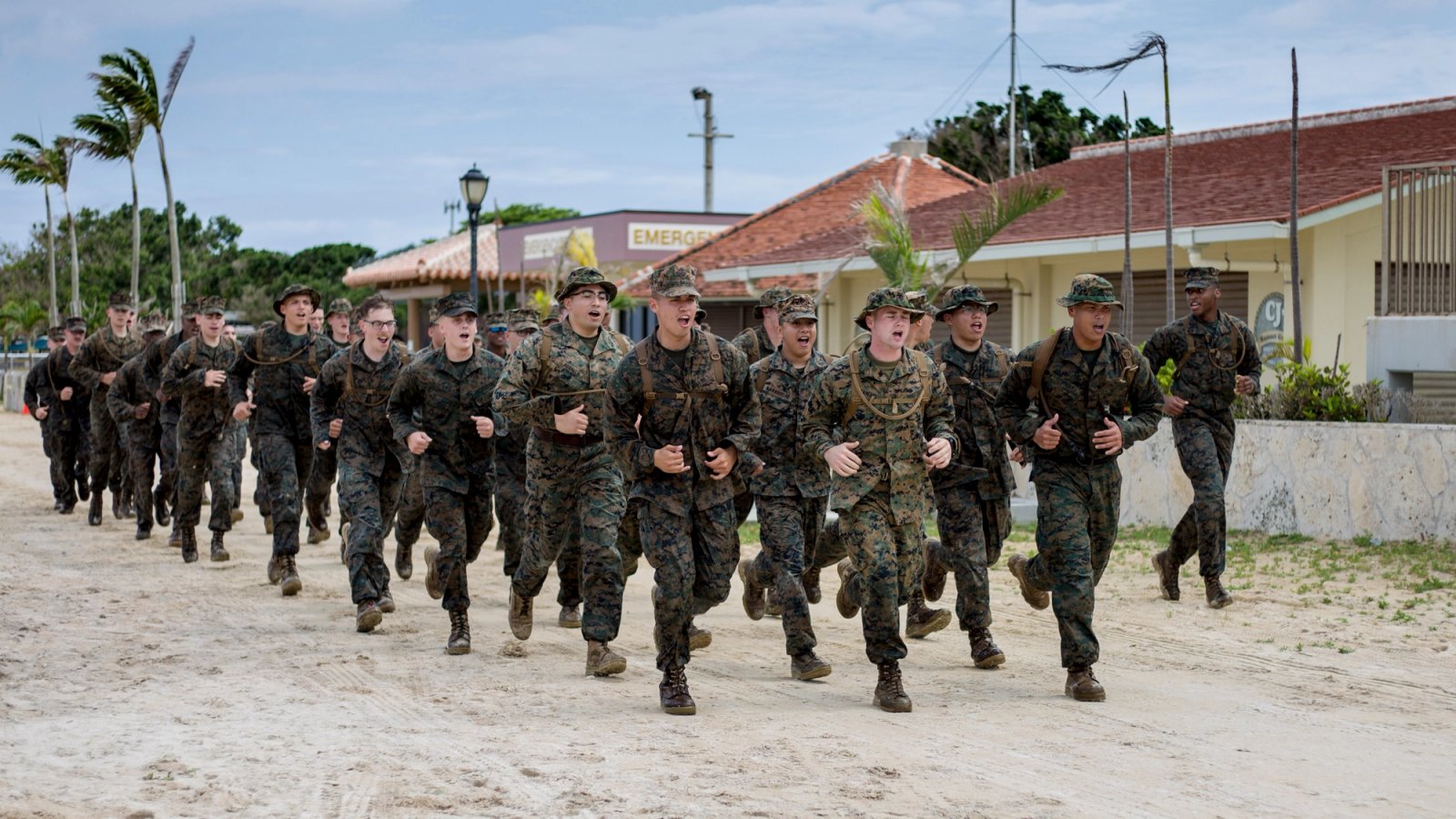
Since the end of World War II, the United States and Japan have built one of the most consequential security partnerships in the world. That partnership is now entering its most significant transformation in 70 years -- one that is redefining how American forces stationed in Japan train, command, and fight alongside the Japan Self-Defense Forces.
Central to the alliance is a network of American military installations that do far more than project force. They represent the physical foundation of a bilateral commitment governed by the 1960 Treaty of Mutual Cooperation and Security. Under Article V of that treaty, the United States has reaffirmed its unwavering commitment to the defense of Japan using its full range of capabilities, including nuclear capabilities -- a guarantee that covers even the disputed Senkaku Islands in the East China Sea.
Japan hosts some 55,000 U.S. troops—more than any other country—and remains vital to U.S. strategy in the Pacific. The security environment driving that strategy is growing more severe by the year. Chinese naval forces regularly conduct exercises simulating blockades of Taiwan; North Korea continues developing ballistic missile capabilities; and Russia and China have conducted joint naval and air drills around Japan's southwest islands.
Against that backdrop, the bases described below are not simply forward garrisons -- they are the connective tissue of a living, evolving alliance.
US Military Bases in Japan: Total Number and Overview
United States Forces Japan manages all or part of 120 major military installations and remote sites across the country.
There are more overseas U.S. bases in Japan than in any other nation. Ten installations are considered major, with Okinawa hosting the largest concentration of US combat power in the Western Pacific.
The Strategic Framework: From Liaison Command to Warfighting Headquarters
The command architecture of the alliance between the United States is evolving, given the rise of China and threats to the Senkaku and Ryukyu Islands between Taiwan and the Japanese Home Islands. The need for better integration between USFJ and the Japanese Self-Defense Forces has driven a restructuring of USFJ into a warfighting headquarters similar to USFK.
The first phase of restructuring USFJ from a liaison-focused entity to a more operationally integrated command was announced on March 30th by Defense Secretary Pete Hegseth during a visit to Tokyo.
The transformation of USFJ has been underway for some time, and its roots run to Operation Tomodachi in 2011, when the improvised command structure required to respond to Japan's triple disaster exposed how poorly suited USFJ was for actual operational control. The argument for change has been building ever since -- through exercises, bilateral planning efforts, and the quiet work of officers on both sides who understood the gap between the alliance on paper and the alliance in practice.
Which Military Branch Is Right for You?
Answer 10 questions to discover which branch of the U.S. Armed Forces best matches your personality, interests, and goals.
10 questions • Takes about 2 minutes
Secretary Austin formalized the decision at the July 2024 "2+2" meeting. Secretary Hegseth launched phase one in March 2025, advancing what the alliance had been building toward for more than a decade. The significance of that step is hard to overstate. The reconstitution is widely seen as the most substantial transformation since USFJ's establishment in 1957.
For decades, USFJ's primary role was administrative: managing the Status of Forces Agreement and facilitating key policies rather than providing operational direction to U.S. forces in the field. Day-to-day command flowed from service component headquarters in Hawaii. That arrangement made sense for the Cold War era, but it created friction as the threat environment grew more complex and as Japan began developing its own more capable and offensive-oriented military posture.
In a parallel move, Japan's Ministry of Defense in March 2025 activated its new Japan Joint Operations Command (JJOC), responsible for commanding all branches of the Japan Self-Defense Forces. The JJOC will enhance command and control, unify operational control of the JSDF, and speed decision-making, and the restructured USFJ is designed to serve as its direct American counterpart.
The USFJ Commander, Air Force Lt. Gen. Stephen Jost, described the creation of Japan's command as a historic milestone, signaling a more agile and integrated security approach, and said Japan's ability to provide a more comprehensive and timely response to emerging threats will significantly increase. What that means in practical terms is that two commands -- one American, one Japanese -- will now work as genuine operational partners rather than coordinating through layers of geographically distant headquarters.
It is worth noting what this transformation is not. The new arrangement will not resemble the Combined Forces Command structure in South Korea; the JSDF will not be subordinate to U.S. command. Japan's constitutional constraints and political realities make a fully merged command structure unlikely in the near term. But the goal is clear: faster, more integrated bilateral operations that would allow both forces to respond decisively to a contingency before it escalates.

The Exercise Architecture: Interoperability Built Through Repetition
Command integration on paper only matters if it is practiced. The U.S.-Japan alliance has built a dense calendar of joint exercises that stress-test both forces and refine the procedural interoperability required for real operations.
Yama Sakura, the alliance's premier annual bilateral command post exercise co-sponsored by the Japan Ground Self-Defense Force and U.S. Army Pacific, focuses specifically on the kind of joint planning and coordination that the new JFHQ structure is designed to improve. The exercise enables U.S. military and JGSDF personnel to train against realistic scenarios that test capabilities and interoperability to fulfill obligations under the mutual defense treaty to defend Japan. It has grown substantially in recent years, now incorporating Australian forces as a trilateral training audience.
Exercise Orient Shield, a large-scale field training event, builds on the command integration developed during Exercise Yama Sakura, the largest annual bilateral and trilateral command post exercise between the U.S. Army and the Japan Ground Self-Defense Force (JGSDF). The exercise, conducted in September 2025, focused on converging multidomain operations through field training and live-fire drills, and included Australian Army soldiers joining U.S. and JGSDF forces for the first time. The deliberate sequencing of these exercises -- command post work first, field training second -- reflects a mature exercise architecture designed to translate staff planning into combined arms execution.
Exercise Bushido Guardian, a 12-day air combat exercise hosted by the Japan Air Self-Defense Force at Misawa Air Base, featured the U.S. Air Force's inaugural participation in 2025, with two dozen fighter jets and more than 700 Airmen from Australia, Japan, and the United States training on integrating fifth-generation fighter capabilities in a multidomain environment. In February 2025, more than 2,300 personnel and 80 aircraft participated in the trilateral US-hosted Exercise Cope North, held annually in Guam, under an agreement to sharpen air warfare capabilities and expand force integration.
Taken together, these exercises represent something important: the alliance is no longer just maintaining deterrence through presence. It is actively building the operational muscle memory required to fight together.
Japan's Strategic Shift: From Shield to Active Partner
The command integration and exercise activity cannot be understood apart from Japan's own historic strategic reorientation.
In 2022, Prime Minister Kishida's government unveiled a new National Security Strategy that included plans to nearly double the defense budget by 2027 and invest for the first time in long-range counterstrike missiles. That last element represents a genuine break with Japan's postwar strategic identity.
For decades, Japan operated under a strictly defense-oriented posture -- it was the alliance's shield, while the United States provided the spear. Japan's shift toward counterstrike capability requires a reconfiguration of roles within the alliance, as the traditional division of labor premised on Japan providing air defense, anti-submarine warfare, and logistics support evolves toward something more balanced.
Japan agreed in early 2024 to purchase 400 Tomahawk land attack cruise missiles along with Joint Air-to-Surface Standoff Missiles-Extended Range, with the first missiles to be delivered in 2025. Integrating those offensive capabilities into a coherent bilateral targeting and command architecture is a central task for the new JFHQ and JJOC relationship.
For the first time in 80 years, Japan must consider how adversaries might react to a Japanese counter-attack -- a shift in mentality from territorial defense to a broader geographic remit that also requires developing a theory of escalation management. That is precisely the kind of complex joint planning that the restructured command architecture is designed to support.

The Strategic Picture: An Alliance in Transformation
The bases described above are impressive on their own terms -- forward presence, rapid response capability, logistical depth, joint infrastructure. But what makes them genuinely powerful is the living partnership they support.
The goal of the JFHQ transformation is to improve warfighting effectiveness alongside Japan and enhance the alliance's deterrence posture. That is a more demanding standard than simply maintaining presence. It requires two militaries to plan together, exercise together, and develop the kind of trust that only comes from sustained engagement over time.
The exercise architecture - Yama Sakura, Orient Shield, Bushido Guardian, Cope North, Keen Soward, Keen Edge - is how that trust gets built. The JFHQ and JJOC structures are how it gets institutionalized. And Japan's own strategic transformation -- from a defense-only posture to one that includes counterstrike capability and a doubling of defense spending -- means the alliance now has two genuine military partners rather than a patron and a protectorate.
Hegseth said it plainly during his March 2025 visit to Tokyo: "Japan would be on the front lines of any contingency we might face in the Western Pacific, and we stand together in support of each other."
The bases, the exercises, the command restructuring, and Japan's own rearmament all point toward the same conclusion: the U.S.-Japan alliance is not simply being maintained. It is being built for the threats that are already here, and the decades-long partnership is stronger than ever.
Join the Conversation

Mickey Addison
Military Affairs Analyst at MyBaseGuide
Mickey Addison is a retired U.S. Air Force colonel and former defense consultant with over 30 years of experience leading operational, engineering, and joint organizations. After military service, h...
Mickey Addison is a retired U.S. Air Force colonel and former defense consultant with over 30 years of experience leading operational, engineering, and joint organizations. After military service, h...
Credentials
- PMP
- MSCE
Expertise
- defense policy
- infrastructure management
- political-military affairs
SHARE: