Army Pulls Back on Both Traditional Aviation and Its Signature Drone Unit
The U.S. Army is simultaneously realigning two different parts of its aviation portfolio: the manned helicopter formations that have defined Army aviation for decades, and the experimental drone battalion it stood up little more than a year ago to absorb lessons from the war in Ukraine. The two moves stem from different decisions made months apart, but together they illustrate an Army that is still working out what its aviation branch is supposed to look like in an era when unmanned systems have reshaped the battlefield.
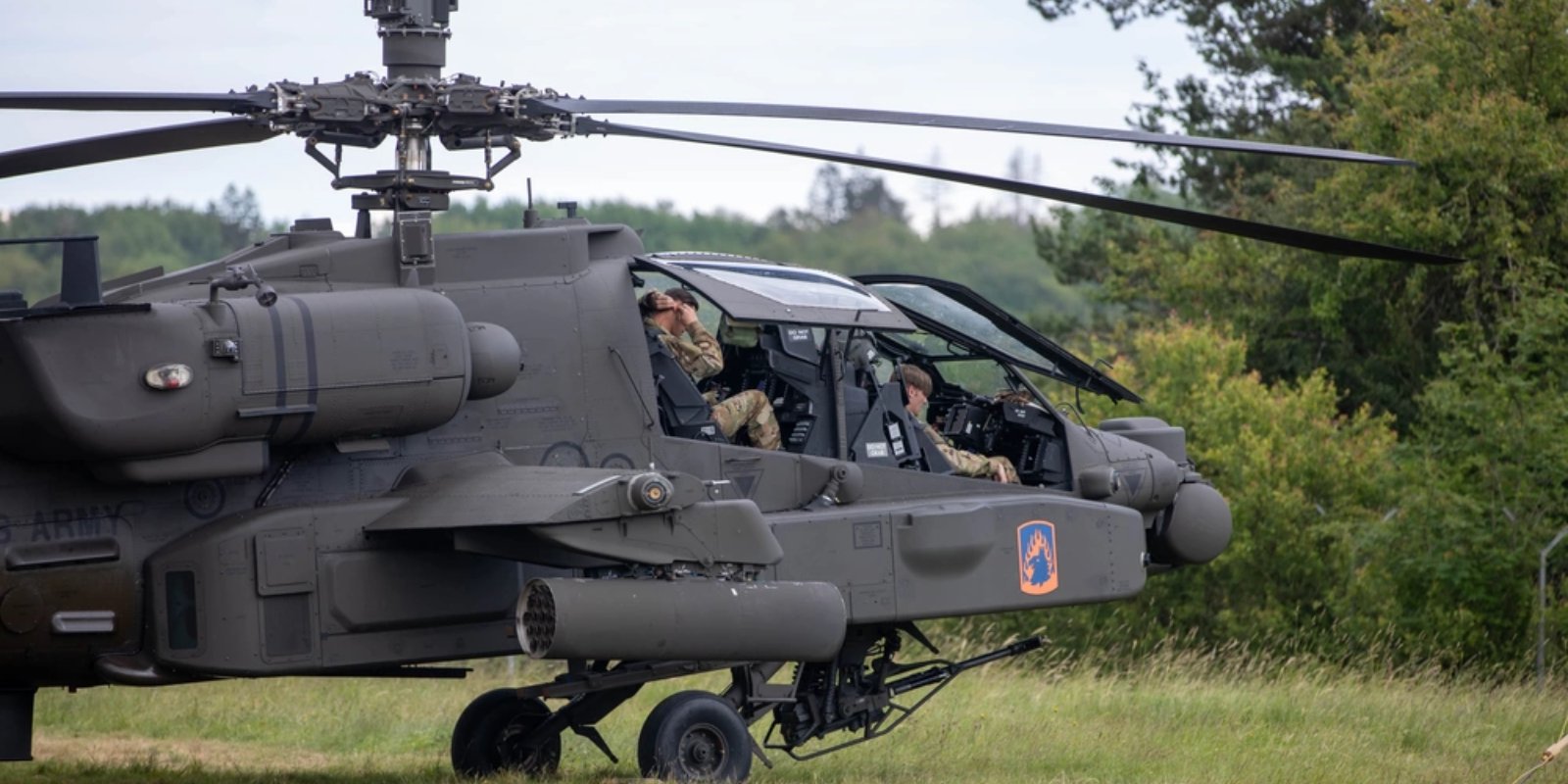
The Army’s restructuring plan seems to indicate either a refocus in Army Aviation or a scale back in the size of it. In a "Letter to the Force" published May 1, 2025, Secretary of the Army Dan Driscoll and then-Chief of Staff Gen. Randy A. George laid out the Army Transformation Initiative, a set of changes the two men said were necessary to build "a leaner, more lethal force by adapting how we fight, train, organize, and buy equipment." Among the specific changes: eliminating one Aerial Cavalry Squadron from each Combat Aviation Brigade in the active force, canceling the AH-64D variant of the Apache attack helicopter, and retiring "older unmanned platforms" including the MQ-1C Gray Eagle drone. The letter also called for merging Army Futures Command into Training and Doctrine Command, cutting roughly 1,000 staff positions at Army headquarters, and converting all Infantry Brigade Combat Teams into Mobile Brigade Combat Teams. Driscoll and George framed the changes bluntly: "Yesterday's weapons will not win tomorrow's wars."
That restructuring was still underway when a separate, and in some ways contradictory, story emerged this week. According to reporting by The Wall Street Journal, the Army is now phasing out a battalion it built specifically to master drone and ground-robot warfare. This does not mean the end of Army interest in drones; it does mean that development and field testing will be done elsewhere.

The Rise and Fall of the Drone Battalion
The Journal reported that the Army decided in November 2025 to establish a "tactical unmanned systems battalion" tasked with studying lessons from Ukraine and developing new concepts for fighting with drones and ground robots in support of a larger brigade combat team. The unit was formally stood up in January 2026 using Soldiers drawn from the 173rd Airborne Brigade, numbered roughly 600 troops, and took the historic designation of the 3rd Battalion, 504th Parachute Infantry Regiment. No end date was set for its drone-assault mission when it was created, the Journal reported.
The battalion's creation followed an intensive push by senior Army leaders to study Russia's war against Ukraine at close range. The senior Army leadership, including George, Driscoll, and Gen. Chris Donahue, then the top Army commander in Europe, traveled to Kyiv in November 2025 to meet with Ukrainian drone commanders. George had already been converting Army infantry brigades into maneuver forces equipped with reconnaissance and strike drones, but his view was that the service needed to move bigger and faster given that both Russia and Ukraine had established dedicated drone combat units and military branches. The initiative became part of what George called "transformation in contact" using troops in the field, rather than planners far from the battlefield, to evaluate emerging technology and devise tactics.
Under that mandate, the battalion's soldiers rotated in small numbers through Kyiv to meet Ukrainian counterparts and trained alongside Ukrainian drone operators at NATO training areas. Last spring, Ukrainian troops played the role of a mock adversary in an exercise and reportedly bested a U.S. brigade combat team rotating through Europe. That exercise made quite a splash as those combat-hardened drone operators reportedly made very short work of an American brigade combat team. Clearly there is more to do to train for the modern battlefield.
That trajectory changed after Gen. Christopher LaNeve became acting Chief of Staff of the Army in April 2026, following Defense Secretary Pete Hegseth's decision to remove George from the post. LaNeve (who served as Hegseth's senior military aide in 2025 before becoming Army vice chief in February 2026) has ordered what the Journal described as a "back-to-basics" approach across the service, and eliminating the drone battalion, a signature initiative of his predecessor, has been a target of that shift.
According to an Army official's statement obtained by the Journal, the battalion will take part in a major exercise called Sabar Junction at Hohenfels, Germany, running through August and September, and will then report its findings to the Army "to inform force design and future experimentation."
After that, the statement said, "the battalion will refocus on its core warfighting tasks as an airborne infantry battalion," shedding the drone-assault development mission it was built around.
The Army has not said what will replace the battalion's role in developing drone-warfare concepts. A spokesman for the service said that the Army
"Is committed to accelerating U.S. military drone dominance to meet the demands of large-scale combat operations," while declining to comment on future plans.
The spokesman added: "We rigorously test a wide variety of unmanned and counter-unmanned technologies in the field. Ultimately, these aerial systems are enablers that support our soldiers."

A Broader "Back-to-Basics" Push
The drone battalion is not the only initiative LaNeve has unwound or redirected since taking over. In a memo to the force circulated this week, LaNeve wrote in an article on Army.mil entitled "Army Azimuth," that the Army’s focus on Warfighting includes, “...counter[ing] enemies who employ stand-off weapons, including unmanned systems and WMD.” So while the drone development mission will undoubtedly continue, that mission will not be performed by the Unmanned Assault Battalion.
LaNeve has also moved a Multi-Domain Task Force from Europe to South Korea, and has reassigned III Armored Corps, based at Fort Hood, Texas, from its Europe-focused mission to a newly created Western Hemisphere Command. Both moves follow a broader reduction in the U.S. combat-brigade presence in Europe under the Trump administration.
A Mixed Reaction
The decision to wind down the drone-assault battalion has drawn criticism from outside military experts. Michael O'Hanlon, a defense expert at the Brookings Institution, told the Journal that
"Ukraine has essentially revolutionized the close fight," adding that "Gen. George was starting to get that, and any setback in what he was doing would be deeply regretful and dangerous."
LaNeve has also drawn support. Retired Lt. Gen. Keith Kellogg, who recommended LaNeve to Hegseth and served in both Trump administrations, told the Journal that
"LaNeve is hard over pushing standards. That is his strength. He is uncompromising for the good of the force."
Half the budget, and one helicopter
Sen. Mark Kelly pressed the Army Secretary on the scale of the drawdown in a Senate Armed Services Committee hearing: annual aviation procurement halved, and a coming budget request that buys almost no new airframes at all.
ANNUAL AVIATION PROCUREMENT
A 50% reduction, per Kelly’s figures. He compared it to the Air Force’s early retirement of the A-10 — cutting production of proven aircraft before a replacement is validated.
IN THE COMING BUDGET REQUEST
Driscoll defended the plan as a balance between the current fleet and incoming systems including FLRAA, and said foreign military sales would help sustain production lines.
ALSO CUT UNDER THE TRANSFORMATION INITIATIVE
1 per CAB
One Aerial Cavalry Squadron eliminated from every active Combat Aviation Brigade, alongside cancellation of the AH-64D Apache variant and retirement of the MQ-1C Gray Eagle.
LIFE OF THE DRONE BATTALION
Jan–Sep
Stood up January 2026 with roughly 600 soldiers and phased out after Saber Junction this September — decided November 2025, with no end date set when it was created.
HEGSETH DRONE INVESTMENT PROGRAM
$1.1B
Aimed at closing the gap with China on drone technology, extending beyond the Army to the Marine Corps and U.S. Special Operations Command.
Sources: Office of Sen. Mark Kelly; Senate Armed Services Committee testimony of Army Secretary Dan Driscoll; Army Transformation Initiative “Letter to the Force,” May 1, 2025; The Wall Street Journal. Graphic: MyBaseGuide
Congressional Pushback on the Aviation Cuts
The manned-aircraft side of the drawdown has already drawn scrutiny on Capitol Hill. In a Senate Armed Services Committee hearing, Sen. Mark Kelly (D-Ariz.) pressed Driscoll on the scale of the reductions, according to a press release from Kelly's office. Kelly said the Army's aviation procurement budget had fallen from roughly $4 billion to $2 billion annually, and pointed to a coming budget request that included "zero AH-64 Apaches, zero Chinook Block IIs, and one UH-60."
Kelly drew a comparison to the Air Force's early retirement of the A-10, arguing that cutting production of proven aircraft before a replacement is validated risks the permanent loss of industrial capacity and a skilled workforce that would be expensive and slow to rebuild. During Driscoll’s testimony, Kelly concluded,
“...as my office has looked into this, it just doesn’t seem like enough to sustain the helicopter industrial base.”
Driscoll, according to the release, defended the approach as a deliberate balance between the Army's current helicopter fleet and incoming modernized systems, including the Future Long-Range Assault Aircraft, or FLRAA, which is intended to eventually replace much of the Army's Black Hawk fleet. Driscoll said the Army's existing helicopters "will be in the Army's life for a very long time" and expressed confidence that foreign military sales would help sustain production lines even as Army orders slow. Kelly was skeptical that foreign sales alone could keep the helicopter industrial base intact through the early 2030s, citing concerns from small suppliers that were already weighing whether to exit the sector.
That exchange underscores that the aviation drawdown detailed in the Transformation Initiative letter is not simply a paper reorganization. It is already showing up in procurement numbers that lawmakers are contesting in open hearings, independent of the more recent debate over the drone battalion's future.

Reshaping Army Aviation in the Drone Age
Taken together, the two threads point to an Army aviation branch being reshaped from more than one direction at once. The Transformation Initiative that Driscoll and George rolled out in May 2025 was framed explicitly around preparing for future, technology-driven warfare. Fourteen months later, the most visible symbol of that same technology-driven push at the tactical level, the 3rd Battalion, 504th Parachute Infantry Regiment's drone-assault mission, is being phased out by the leadership that succeeded the plan's authors.
The Army's public position is that its overall commitment to drone dominance is unchanged. Defense Secretary Hegseth has separately backed a $1.1 billion investment program aimed at closing the gap with China on drone technology, a push that extends beyond the Army to the Marine Corps and U.S. Special Operations Command.
The tactics, techniques, and procedures developed by the Unmanned Assault Battalion during their time with this mission will be promulgated to the rest of the Army in the next 60 days.
As an Army official explained, “The battalion is participating in Exercise Saber Junction at the Joint Multinational Readiness Center in August and September. It will deliver what it learned there, together with the past year’s findings, to the Army to inform force design and future experimentation.”
Continue Reading
Army Reduces 6,500 Aviation Roles for Unmanned Aircraft Focus
Army Reserve Eliminates All Aviation Units by Summer 2024
U.S. Army Reduces Helicopter Fleet to Boost Tiltrotor Investment
Join the Conversation

Mickey Addison
Military Affairs Analyst at MyBaseGuide
Mickey Addison is a retired U.S. Air Force colonel and former defense consultant with over 30 years of experience leading operational, engineering, and joint organizations. After military service, h...
Mickey Addison is a retired U.S. Air Force colonel and former defense consultant with over 30 years of experience leading operational, engineering, and joint organizations. After military service, h...
Credentials
- PMP
- MSCE
Expertise
- defense policy
- infrastructure management
- political-military affairs
SHARE: