Navigating the Civilian Workforce: Essential Tips for Transitioning Veterans

Out of uniform, life operates under different rules. Day by day, year after year - your role shaped by your rank, and your routine is built on orders. Suddenly, those fixed paths dissolve. Instead, opportunities appear without a set map. The work week loses its rhythm. Missions fade. In their place: offices, resumes, and unfamiliar expectations. Each morning asks new questions, and purpose must be found, not assigned.
Starting over in the civilian workforce brings more than just a new routine - it often feels like you are stepping into someone else’s skin. Often, military experience shapes who you become, so leaving that role behind can be difficult.
Shifting from structured missions to office routines asks Veterans to rethink their daily purpose. Skills built through years of discipline might seem out of place at first glance; yet those strengths - precision, resilience, leadership - carry quiet power in unfamiliar settings. Finding where they fit becomes part of the journey forward.
Is Your Resume Civilian-Ready?
Translating military experience into civilian language is one of the biggest hurdles veterans face. Take this 6-question quiz to see where your job search strategy stands.
6 questions • Takes about 2 minutes
For those moving out of military life or those who are already back in civilian shoes, job hunting can feel tricky - yet help is close at hand. When the next step means finding work after uniform, support shows up right when it's needed most.
Finding Employment After Military Service
Rank and MOS often shape what you do in the military. Promotion routes and who leads are usually clearly defined. However, the civilian workforce is a whole different experience.
Military Benefits Eligibility Checker
Answer a few questions to discover which military and VA benefits you or your family may be eligible for.
10 questions • Takes about 2 minutes
For Veterans, finding employment after service holds several meanings:
- Starting fresh with purpose. Life once handed you two clear roles - protecting the country and building your career - both steady, both defining. Retirement shifts the ground. Suddenly, those reasons fade, and you find yourself searching for your "why" all over again.
- Overcoming the translation barrier. What feels routine in uniform often sounds foreign at a job interview. To combat this, consider breaking down your accomplishments without using jargon. Let your past roles speak through impact instead of titles. Clarity comes when meaning moves across worlds.
- Out of uniform, things get fuzzy. Office life leans on who you know and how well you can read a room. Often, unwritten rules can make retirees feel isolated and confused, as expectations have more often than not been explicit for most of their careers.

Tips For Navigating the Civilian Workforce
Tip 1: Translate Your Skills Into Civilian Language
Most Veterans struggle the most with their resumes. Civilian job applications demand a format unlike anything they’ve seen before.
When seconds count, resumes packed with military terms often vanish into silence - especially if hiring bots can’t match those phrases to the role. Hidden behind acronyms, many strong candidates fade fast. Tactical wins mean little unless they speak directly to what the employer seeks. Without clear links, the system moves on without a pause.
Start strong by eliminating military-centric language on your resume. Curious what that looks like?
If your resume says, “Commanded a squad of 16 personnel,” consider using more civilian-friendly language like “Managed and developed a team of 16 employees.”
Start by rethinking how your resume sounds. When doing this, consider highlighting qualities like being adaptable, solutions-oriented, working cross-functionally, and be sure to showcase leadership skills.
Tip 2: Build Skills Through Educational Opportunities
Jumping into civilian work doesn’t mean going it alone. Plenty of support systems exist specifically for those moving out of military roles and into everyday jobs.
DoD SkillBridge
If you are still on active duty, the DoD SkillBridge program allows you to spend the last 180 days of your service interning or training with an industry partner. Knowing what comes next helps quiet the uncertainty most feel near separation. A handful have landed roles this way just before hanging up their uniforms.
The GI Bill and VET TEC
Starting college or trade school? Take advantage of every chance to build skills through education perks. With the 2026 rollout of VET TEC 2.0, Veterans have additional opportunities to pursue high-tech training.
Tip 3: Never Stop Networking
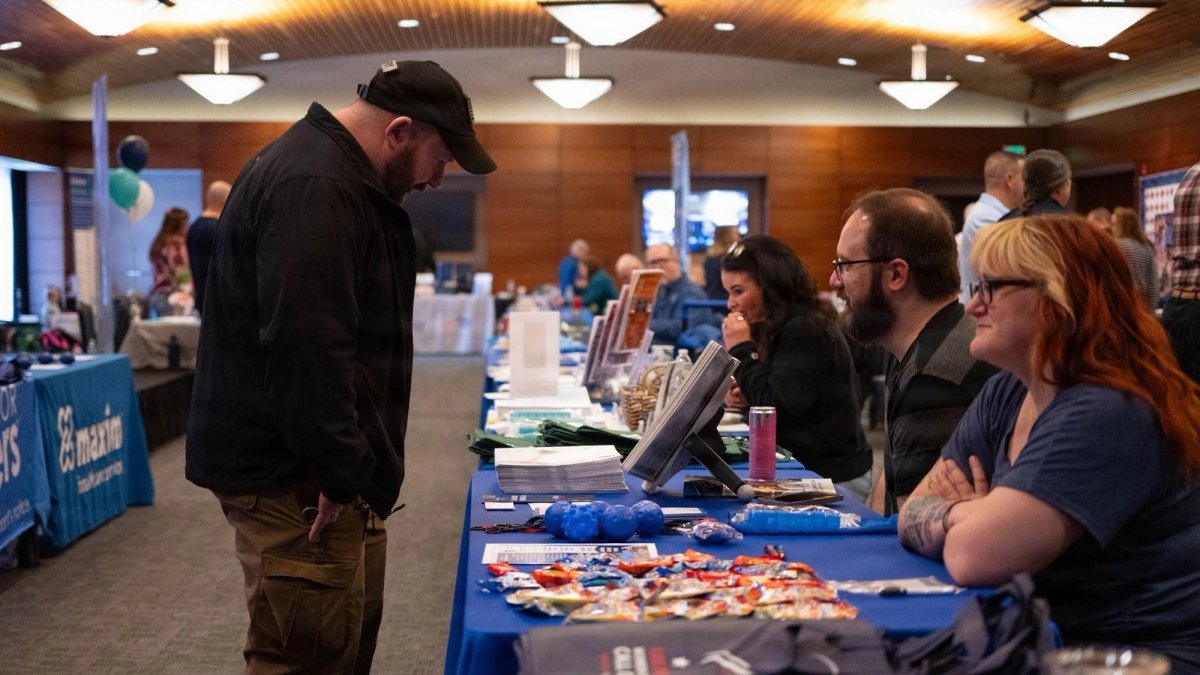
In the civilian world, nobody hands you a team. You’ve got to piece one together yourself. Most Veterans land solid work through people they know. So, before you leave the military, start thinking about who you talk to, how you reach out, and who can help you achieve your future goals.
A strong LinkedIn presence is integral. Consider reaching out to Veterans already working in fields you’re aiming for - learning where they’ve been might show you where to go. Getting noticed often begins by talking to those who’ve walked the path ahead.
Remember, You Are Valuable
Starting a job search at any time in life might seem tough. Still, companies look for Veterans because they bring strength under pressure. When plans fall apart, knowing how to move forward matters deeply to hiring managers. Even though finding work isn’t always easy, having help along the way makes reaching your long-term and short-term goals possible. With the right support and resources, you can be successful.
Continue Reading
Military to Civilian: Employment Transition Tips for Veterans

The Truth About Transitioning Out of the Military & Tips for Vets

Top Skill Trades for Veterans Transitioning to Civilian Careers
Join the Conversation

Jessica Gettle
Military Spouse & Family Life Writer at MyBaseGuide
Jessica Gettle is a military spouse of more than a decade, part of the EOD community, and a communications professional with 10 years of experience. She combines her career expertise with a deep, pers...
Jessica Gettle is a military spouse of more than a decade, part of the EOD community, and a communications professional with 10 years of experience. She combines her career expertise with a deep, pers...
Credentials
- Military Spouse
- SEO content writer
- Experience with deployments and relocations
Expertise
- Military Family Support
- Military Lifestyle
- Military Spouse Benefits
SHARE: