Top 5 Largest Air Force Bases in the United States

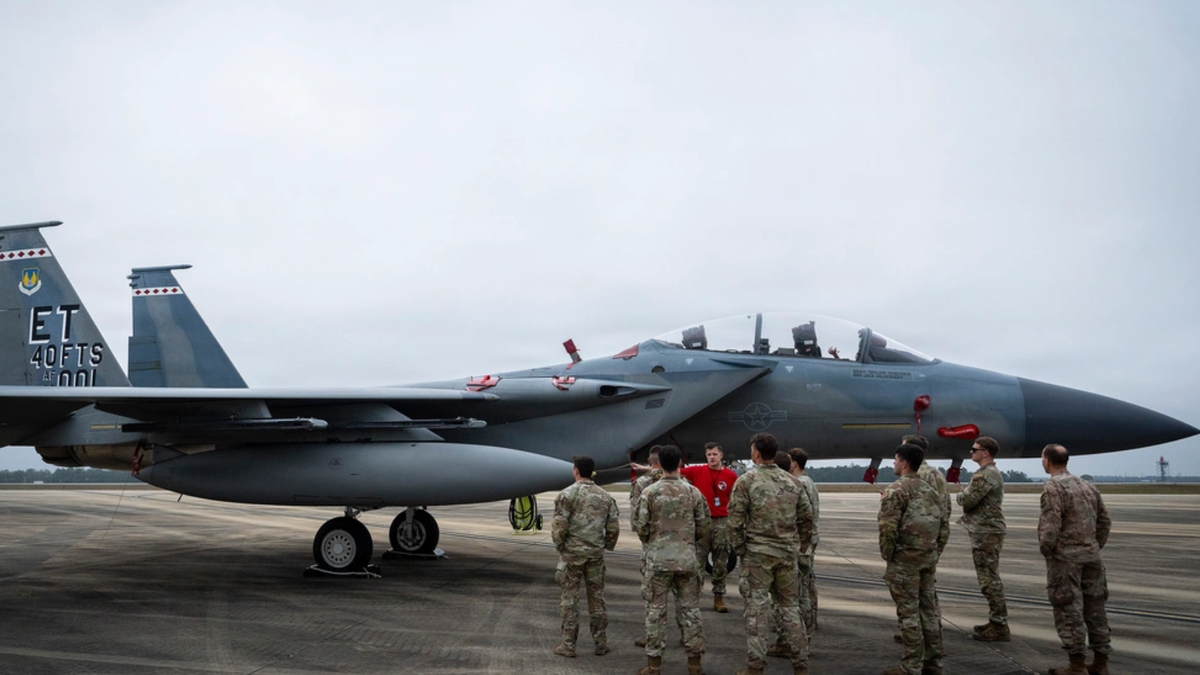
The Department of the Air Force (DAF)—which oversees both the U.S. Air Force and the U.S. Space Force—operates some of the largest installations in the Department of Defense. When you look at the raw acreage required to test next-generation aircraft, launch satellites into orbit, and conduct live-fire combat training, the land requirements are staggering.
When you factor in the massive ranges attached to these installations, such as the Nevada Test and Training Range or the overwater airspace assigned to Eglin, the scope of DAF operations grows significantly.
Here is a look at the five largest Air Force and Space Force bases in the United States by physical land acreage, followed by the massive training ranges that support them.
The 5 Largest U.S. Department of the Air Force Bases by Acreage
1. Eglin Air Force Base, Florida
Located in the western Florida Panhandle near Valparaiso and Fort Walton Beach, Eglin spans approximately 463,400 acres, making it the largest Air Force installation in the United States by land area.
Its origins trace to 1933, when a small parcel was cleared near Valparaiso for use as a local airfield. The installation has a distinguished WWII pedigree: it was where the Doolittle Raiders trained for the 1942 Tokyo raid.
Today, Eglin is a multi-service installation and the Air Force's premier weapons development and test complex. The 96th Test Wing serves as the host unit, responsible for developing, testing, and evaluating all non-nuclear air-delivered weapons for the Air Force.
The 53rd Wing operationally tests and evaluates fighters, bombers, and drones, while the 33rd Fighter Wing conducts F-35 training. The Army's 7th Special Forces Group and the Navy's Explosive Ordnance Disposal School also call Eglin home. Beyond its massive footprint, Eglin supports an impressive daily population of approximately 20,000 military, civilian, and contractor personnel.

2. Edwards Air Force Base, California
Edwards covers approximately 300,800 acres in the Mojave Desert of Southern California, roughly 100 miles northeast of Los Angeles. Operational since 1933, much of its land has been left undeveloped or only partially improved for flight testing purposes. Rogers Dry Lake, which borders the installation, provides a 65-square-mile natural lakebed that serves as an emergency landing surface.
Edwards is the spiritual home of American flight testing. Air Force Captain Chuck Yeager broke the sound barrier here in 1947 in the Bell X-1. Since then, Edwards has hosted the X-Plane experimental series, the development of stealth technology (F-117 Nighthawk), and the testing of the F-22 Raptor and F-35 Lightning II. Today, it is home to the Air Force Test Center, the 412th Test Wing, and the elite Air Force Test Pilot School.
To support this massive testing enterprise, Edwards sustains a daily population of roughly 11,500 military members, federal civilians, and contract employees.
3. Vandenberg Space Force Base, California
Vandenberg is the third-largest DAF installation in the U.S., containing roughly 99,600 acres of land along the California coast in Santa Barbara County. The installation began as Army Camp Cooke in 1941 before transferring to the Air Force in 1957.
Vandenberg's coastal location and access to polar orbits make it the nation's primary spaceport for military, government, and commercial satellites requiring trajectories that cannot be safely achieved from Cape Canaveral.
Which Military Branch Is Right for You?
Answer 10 questions to discover which branch of the U.S. Armed Forces best matches your personality, interests, and goals.
10 questions • Takes about 2 minutes
The Space Force's Space Launch Delta 30 serves as the host unit, managing the Western Range and overseeing launches. SpaceX also conducts a significant portion of its commercial launch activity from Vandenberg.
Because so much of the installation is preserved as a natural, undeveloped safety buffer for rocket launches, Vandenberg has a relatively small personnel footprint for its size, supporting a daily population of about 10,000.

4. Joint Base Elmendorf-Richardson (JBER), Alaska
Formed during the 2005 Base Realignment and Closure (BRAC) process by merging Elmendorf AFB and Army Fort Richardson, JBER covers more than 64,200 acres in south-central Alaska. While it is a joint base, the Air Force serves as the lead agency, with the 673d Air Base Wing acting as the host unit.
JBER’s massive footprint and strategic location make it a critical power-projection platform for the Pacific and Arctic regions. It is home to the Air Force’s 3rd Wing, which operates F-22 Raptors and C-17 Globemaster IIIs, as well as the U.S. Army’s 11th Airborne Division. The sprawling acreage allows for extensive joint training in extreme cold-weather environments.
Because of its joint nature, JBER supports a massive military-affiliated community of over 40,000 people, including active-duty Army and Air Force personnel, dependents, and retirees.
5. Holloman Air Force Base, New Mexico
Rounding out the top five is Holloman AFB, located in the Tularosa Basin of southern New Mexico. Covering roughly 59,600 acres, Holloman was established in 1942 as Alamogordo Air Field.
Today, Holloman is anchored by the 49th Wing, which is the Air Force's primary training hub for F-16 Viper pilots and MQ-9 Reaper drone operators.
In addition to its flightline operations, Holloman utilizes its vast desert real estate to host the Holloman High Speed Test Track, a 10-mile-long aerospace ground test facility used to evaluate missile components, ejection seats, and aerodynamics at hypersonic speeds. To keep these vital training and testing missions running, Holloman supports a total base community of roughly 21,000 active-duty members, dependents, and retirees.
The Major Air Force Ranges: Where the Real Estate Gets Serious
The bases above are massive in their own right, but the ranges associated with DAF testing and combat training are on a different scale entirely.

1) Nevada Test and Training Range
Managed by Nellis AFB in Las Vegas, the NTTR occupies 2.9 million acres of ground space and approximately 7,000 square miles of restricted airspace. It is the largest contiguous battlespace available for peacetime military training in the free world.
The range contains more than 1,200 targets and a simulated Integrated Air Defense System, making it the proving ground for the Air Force's premier Red Flag combat exercises.
2) Utah Test and Training Range
Managed by Hill AFB, the UTTR encompasses 2,675 square miles of ground space and over 19,000 square miles of restricted airspace. It is currently the largest contiguous block of overland, supersonic-authorized airspace in the continental United States.
The range supports approximately 20,000 training sorties annually and serves as a landing site for NASA space sample return missions.

3) Barry M. Goldwater Range, Arizona
Spanning southern Arizona, this range is jointly managed by the Air Force and Marine Corps. Administered by the 56th Range Management Office at Luke AFB, it is the primary live-fire training ground for close air support, training roughly 95 percent of all U.S. fighter pilots who deploy to combat operations.
4) Eglin Gulf Test Range
Distinct from Eglin AFB's physical land area, the 96th Test Wing manages nearly 120,000 square miles of overwater airspace known as the Eglin Gulf Test Range. Extending deep into the Gulf of Mexico, it is one of the largest overwater test ranges in the world, utilized for hypersonic and long-range weapons testing that cannot be safely conducted over land.
Together, these expansive bases and sprawling ranges offer the United States a robust, unmatched foundation for the production and projection of air, space, and cyberspace power.
Continue Reading
Top 5 Largest U.S. Military Bases Worldwide
The Top 10 Largest Army Bases in the United States, Ranked
Where Are the Largest Space Force Bases? Your Guide to the Top Installations
Join the Conversation

Mickey Addison
Military Affairs Analyst at MyBaseGuide
Mickey Addison is a retired U.S. Air Force colonel and former defense consultant with over 30 years of experience leading operational, engineering, and joint organizations. After military service, h...
Mickey Addison is a retired U.S. Air Force colonel and former defense consultant with over 30 years of experience leading operational, engineering, and joint organizations. After military service, h...
Credentials
- PMP
- MSCE
Expertise
- defense policy
- infrastructure management
- political-military affairs
SHARE: