The Navy Hit Its 2026 Recruiting Goal Early: Now It Has to Fix the Fleet

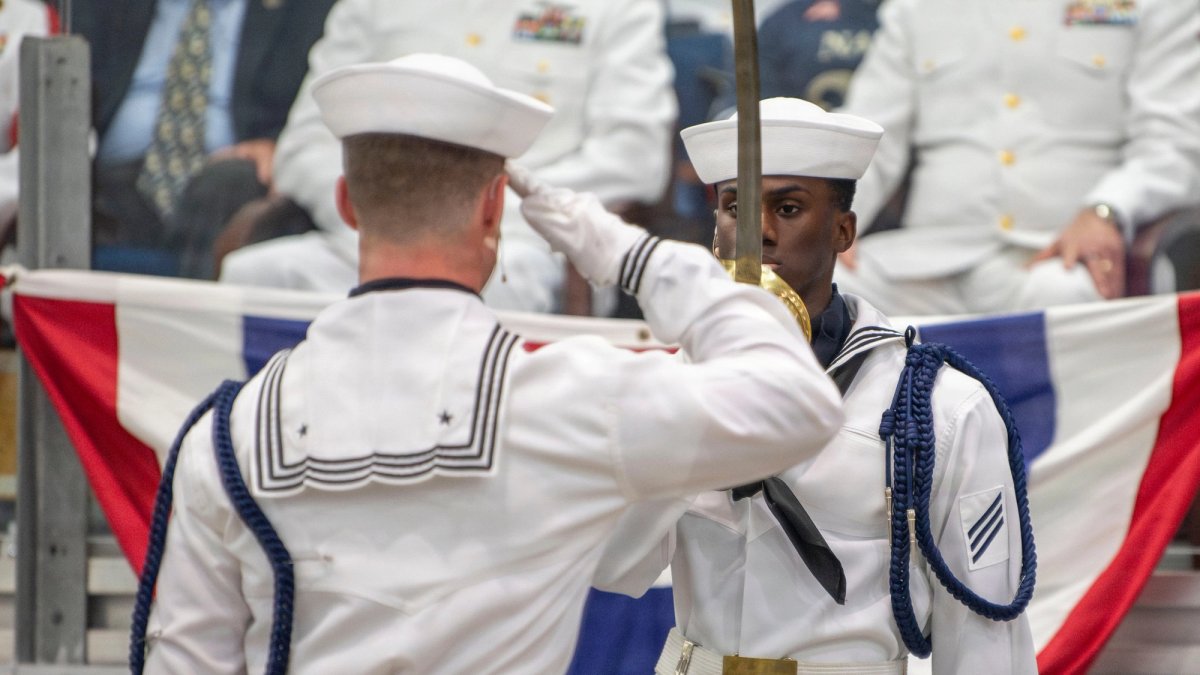
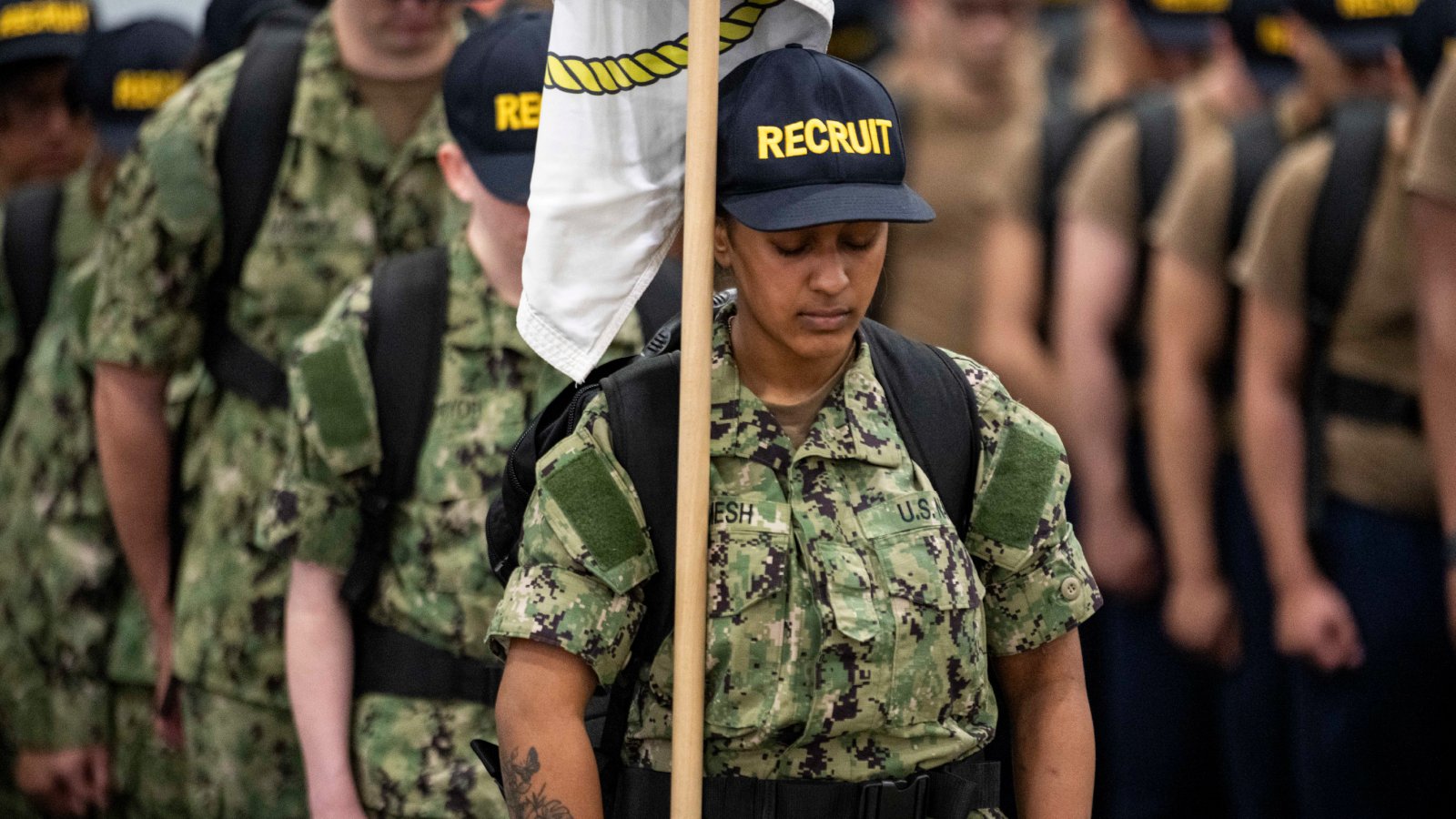
The U.S. Navy announced that it had signed contracts with 45,000 future Sailors, hitting its entire Fiscal Year 2026 recruiting objective three months before the fiscal year even ends. It's the second year in a row that the Navy has beaten its recruiting timeline, and the most Sailors it has signed in roughly two decades. But the headline number is only the beginning of the story.
Behind this milestone sits a matrix of enlistment bonuses that can now run as high as $140,000 per Sailor, a years-long shortage of people actually standing watch on ships at sea, a Pentagon inspector general who says the Navy bent the rules to get there, and a recruiting surge playing out simultaneously across the Army, Air Force, Space Force and Marine Corps.
The Incentive Package Behind the Surge
Navy Recruiting Command has released a new enlistment bonus message roughly every month or so throughout FY2026, each one adjusting which ratings qualify and by how much. The structure is no longer built on the old tiered system; bonuses now shift based on which jobs the Navy needs filled most urgently.
A Sailor entering the nuclear power field can qualify for up to $75,000 in enlistment bonuses, submarine-related technical ratings can reach $60,000, and a broad swath of other technical and "special warfare" fields cap around $50,000. Layer in shipping bonuses of up to $30,000 for recruits willing to leave for boot camp during under-subscribed months, a $15,000 bonus tied to physical screening standards that returned after years of dormancy, and the Student Loan Repayment Program, and the Navy now markets a maximum potential payout of $140,000 to some incoming Sailors — the richest package among the armed services, ahead of the Coast Guard's $75,000 ceiling, the Army's $50,000, the Air Force's $40,000 and the Marine Corps' modest $15,000.
Money isn't the only lever. Navy Recruiting Command has spent the last three years modernizing the recruiting process: adding more recruiters, speeding up medical waivers and tattoo approvals, and using data more aggressively to track applicants through the pipeline.
“For our recruiters, this achievement reflects years of sustained effort to connect with qualified Americans, build trust within their communities, and help the next generation find purpose through service,” a Navy spokesperson said.
“Recruiting is a challenging mission, and this milestone is a testament to the professionalism, resilience, and commitment of Recruiting Nation.”
The service also leaned on its Future Sailor Preparatory Course, a boot-camp-adjacent program that gives recruits who fall short on the physical fitness or academic (ASVAB) requirements extra weeks to meet the bar before they ship, mirroring a similar program the Army pioneered.
The Price Tag and Quality Control
Congress and the Pentagon don't publish a single line-item cost for "recruiting," since bonuses, marketing, additional recruiters, and preparatory-course instruction sit in different budget accounts. But the trajectory is unmistakable: enlistment bonuses have grown even as recruiting goals are being met, not despite it, because retaining top-decile applicants for hard-to-fill technical and nuclear ratings now requires bigger checks than it did during the recruiting crisis of 2022-2023.
That spending comes with a quality question attached, and it matters. Category IV recruits, by the military's own long-standing data, tend to have a harder time in training and on the job than higher-scoring peers. A Pentagon watchdog raised that question directly in December, when a Defense Department Inspector General report found that the Navy and Army were undercounting the share of recruits who scored in the bottom band (10th–30th percentile) of the Armed Forces Qualification Test, a category Congress caps by law.
The core of the dispute: both services were crediting recruits with the test scores they earned after completing preparatory coursework rather than the scores
they had when they first enlisted. Using the original numbers, the Navy's share of low-scoring recruits in FY2025 would have been 11.3%, not the 7.2% it reported; nearly triple the 4% threshold that requires the Secretary of Defense to formally notify Congress. The Pentagon disputed the finding, arguing that the whole purpose of the preparatory courses is to raise recruits' scores before they count. The inspector general wasn't persuaded and is still tracking whether the
department fixes its methodology.
A Navy spokesperson explained that the service has not lowered its standards:
"The Navy remains committed to recruiting qualified individuals who can meet the demands of military service. While we have continued to improve applicant processing and remove unnecessary administrative barriers, we have not lowered the standards required to serve. The Navy continues to assess applicants against established medical, moral, and aptitude requirements.
Waivers remain an established part of the accession process and are evaluated on a case-by-case basis to determine an applicant's suitability for service. As recruiting performance has improved, our focus has remained on attracting qualified individuals who are capable of successfully completing training and serving in the Fleet."
It's the clearest evidence yet that the recruiting turnaround, while real, has also involved the services testing the edges of federal quality-control law to keep
the numbers climbing.

What a Bigger Recruiting Class Means for Sailors Already in the Fleet
For Sailors currently serving, the recruiting surge is aimed squarely at a problem that has nothing to do with headlines: the Navy's "gaps at sea."
“Reaching 45,000 Future Sailors is first and foremost a readiness milestone,” a Navy spokesperson noted.
“Every one of those contracts represents a future Sailor who will complete recruit training, receive specialized training, and ultimately report to the Fleet to support operational requirements around the world.”
As recently as December, roughly 20,000 sea-duty billets were unfilled fleet-wide, the overwhelming majority in junior enlisted (E-1 to E-3) apprentice positions (the deckhands, mess cooks, and junior technicians who do much of a ship's day-to-day physical work). Then-Chief of Naval Personnel Adm. Richard Cheeseman told Congress in 2025 that closing that gap would take several consecutive strong recruiting years, not one, because it takes close to nine months for a new recruit to move from a signed contract through boot camp, technical "A" school, and finally onto a ship. Master Chief Petty Officer of the Navy John Perryman has said that bringing more recruits in the door is the only real fix, since the gaps are ultimately a numbers problem before they're a training problem.
“Recruiting fills the front end,” said Perryman. “Retention preserves experience. Training builds competence. Talent management puts sailors where they can have the greatest impact. None of those things work in isolation.
Together, they're how we close the gaps over time and build the fleet our nation expects us to have.”
Left unaddressed, that shortage has real consequences for the Sailors already underway: a 2024 Government Accountability Office review found most warship crews reported it was "moderately to extremely difficult" to keep up with underway maintenance given their staffing, and that overworked, more experienced sailors often end up covering for undermanned watch sections, a dynamic that itself drives burnout and attrition. A fuller pipeline of new accessions doesn't erase deployment tempo overnight, but Navy personnel officials expect the sea-duty fill rate (currently around 88%) to keep climbing over the next two to three years as this year's and next year's recruits reach the fleet.
“From a readiness perspective, consistently meeting recruiting objectives enables the Navy to maintain healthy accession pipelines, support fleet manning requirements, and provide trained Sailors to operational commanders,” the Navy spokesperson added.
Advancement is being reshaped by policy changes running in parallel with the recruiting push, rather than by class size directly. The Navy has been converting more ratings to "billet-based advancement," under which Sailors who pass their rating exam can move up as soon as a vacant, higher-grade billet opens rather than waiting for a fixed, quota-limited cycle.
“The reality is these men and women still have to ship, graduate boot camp, complete "A" school and follow-on training where required before they report to the fleet,” said Perryman.
”That's time well spent because we don't just need more people; we need competent, technically proficient Sailors who are ready to contribute from day one.”
Advancement to E-4 has also become largely automatic after roughly 30 months of service. A bigger junior enlisted population does mean more competition for advancement quotas at the margins, but it also means more open billets at the E-4 and E-5 level as the Navy's overall end strength grows toward its newly authorized 334,600, a 12,300-person increase for FY2026 under the Defense Authorization Act Congress passed last year.

The Last Time the Navy Moved This Fast
The Navy's own numbers put this run in context: FY2025's haul of 44,096 Sailors was the largest since 2002, meaning this marks the best two-year recruiting performance the Navy has posted in more than two decades. Before that, the service had spent FY2022 and FY2023 missing its targets, at one point falling roughly 20% short, in what the Pentagon later called the toughest recruiting environment since the all-volunteer force began in 1973.
The rebound started in FY2024, when the Navy met its goal for the first time in three years, then met FY2025's goal three months early, and has now beaten FY2026's larger goal by the same three-month margin.
Notably, the Navy also raised its own bar each time: FY2026's 45,000-recruit target is roughly 10% higher than FY2025's 40,600, meaning this year's early finish came against a tougher assignment.
How the Navy Stacks Up Against the Other Services in FY2026
All five active-duty services met or beat their FY2025 goals, averaging 103% of target, according to the Defense Department, the strongest across-the-board recruiting performance in more than a decade. Every service credits a similar mix of tools: bigger bonuses, revamped advertising (the Army brought back the classic "Be All You Can Be"), faster medical-waiver processing, and preparatory courses for applicants who are close to, but not yet at, entrance standards.
The Marine Corps is something of an outlier; it has met its recruiting mission every year since 2005 and, as the most selective and smallest of the services, doesn't rely on waivers the way the other branches sometimes do.
Addressing the shared factors driving this broader military recruiting recovery, the Navy spokesperson said,
“… we have seen encouraging signs across the Department of War as each service continues adapting to today’s recruiting environment.”
Rather than relying on a one-size-fits-all Pentagon strategy, the sea service tailored its approach to its specific operational hurdles.
“For the Navy, our success has been driven by a combination of factors: empowering recruiters with better tools and technology, streamlining applicant processing, leveraging data-informed decision-making, modernizing our marketing efforts, and maintaining strong standards while meeting applicants where they are,” the spokesperson added.
“Most importantly, it reflects the extraordinary work of recruiters across the country who build lasting relationships with prospective Sailors and their families every day.”
This service-level execution coincides with a broader, highly publicized cultural push from the Pentagon's top leadership. Under the current administration, reversing the recruiting slump has been treated not just as a manpower issue, but as a top-tier political and national security priority.
“The Department of War has continued to build on its historic recruitment success,” said Chief Pentagon Spokesman Sean Parnell.
“The Army, Navy, Marine Corps, Air Force, and Space Force have already exceeded their year-to-date goals for FY 2026. Additionally, the Army Reserves have made monumental gains in their recruitment and are positioned to make their end-of-year mission for the first time since 2016."
Parnell framed the turnaround as a direct result of recent administrative shifts.
"These historic wins are a testament to President Trump and Secretary [Pete] Hegseth’s leadership and commitment to restoring the warrior ethos and establishing peace through strength," he added.
"Americans everywhere are prouder than ever to serve in our unmatched military that prioritizes lethality, merit, and protecting our nation from those who seek to harm it.”
The Angle Getting Less Attention: A Recruiting Win That's Really a Retention Fix
The most under-covered part of this story isn't the headline number; it's what the Navy is actually trying to fix with it. This isn't primarily a story about patriotism or marketing; it's a story about a maintenance and staffing crisis at sea that recruiting is being used to patch.
Two consecutive record-setting recruiting years exist because the Navy is roughly 20,000 Sailors short in the junior enlisted billets that keep ships running day to day, a gap Navy officials openly link to underway maintenance backlogs and crew fatigue documented by the GAO.
Framed that way, the 45,000 figure isn't really the finish line — it's a down payment against a staffing hole that opened during the 2022–2023 recruiting crisis and won't fully close, by the Navy's own estimates, until around FY2027.
Continue Reading
U.S. Navy Surpasses 2025 Recruitment Goals with 40,600 Enlistments
Navy Recruitment Goals for 2024 Are Showing Positive Signs
U.S. Army Achieves 2025 Recruitment Target Early
Join the Conversation

Tracy Fuga
Military Spouse & Military Lifestyle Writer at MyBaseGuide
Tracy Fuga is a San Diego-based writer, editor, and marketing professional with nearly two decades of experience in content creation and communications. A former editor at MARCOA Media — the origina...
Tracy Fuga is a San Diego-based writer, editor, and marketing professional with nearly two decades of experience in content creation and communications. A former editor at MARCOA Media — the origina...
Expertise
- military spouse lifestyle
- small buisness
- entrepreneurship
SHARE: