Department of Defense Expands Counter-Drone Marketplace, Deepens Ties With Allies and Industry


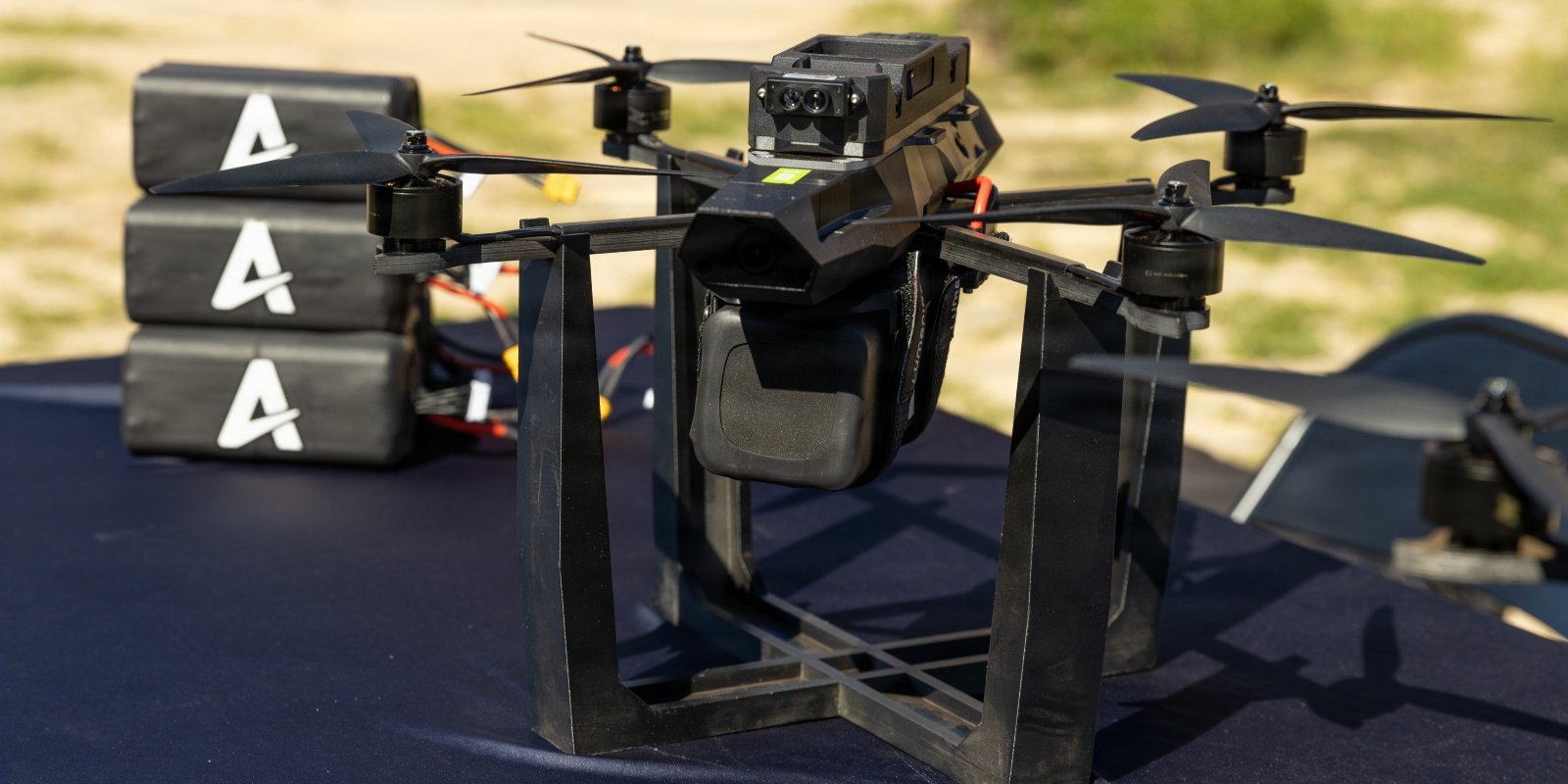
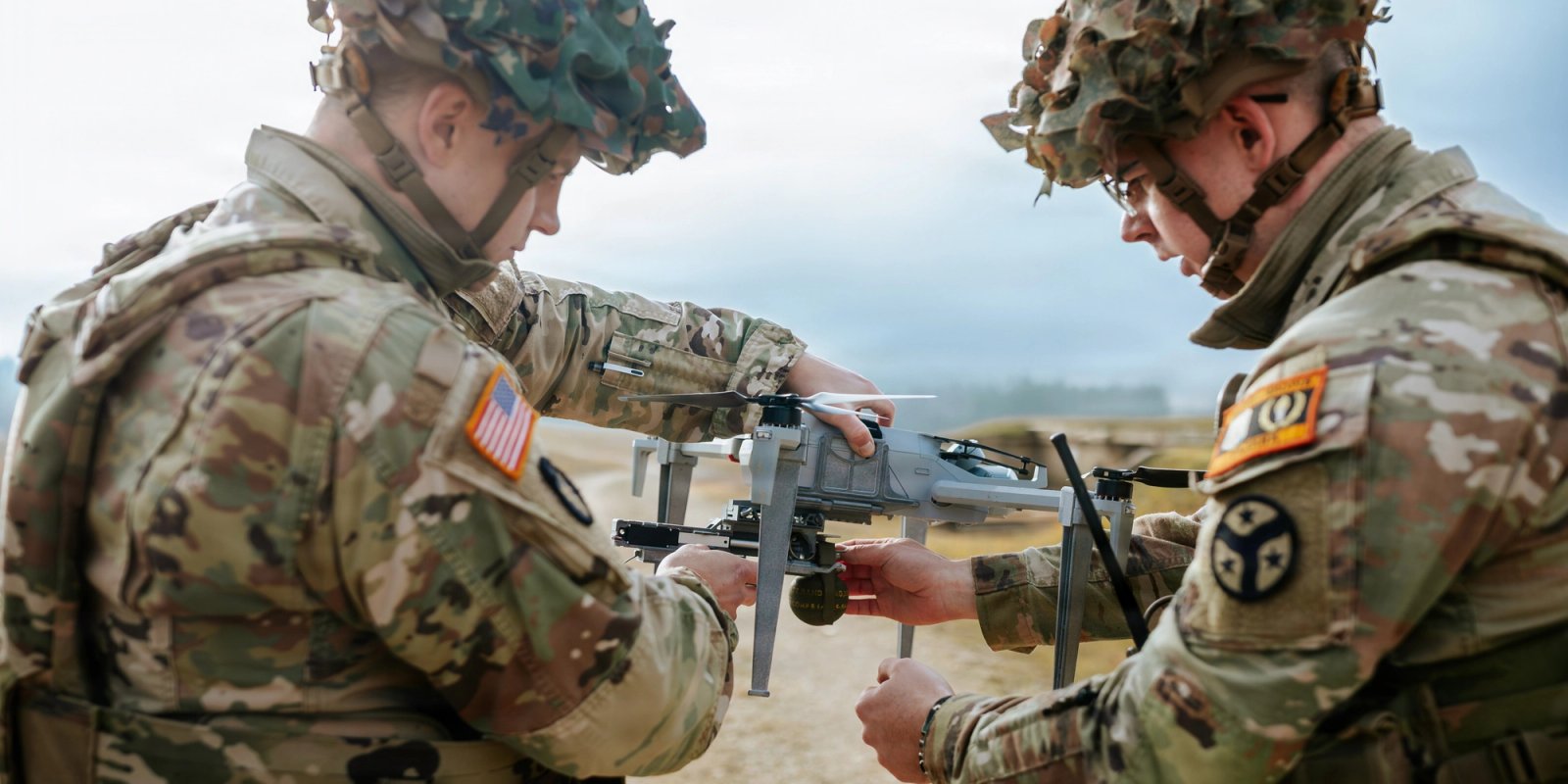
It should not be news to anyone who follows the events in the Gulf and Ukraine that drones on the battlefield have moved from “nuisance” to “significant threat.” Besides the kinetic threat, there is also the gross mismatch between the cost of the attack and surveillance drones and the cost of the systems currently employed to defeat them. Further, unlike the episodic threat of being under aerial and satellite surveillance, the prevalence of small drones on the battlefield makes nearly every movement visible to the enemy. This includes the United States’ main operating bases at home and abroad.
To address the threat, the Department of Defense is engaging the industry in an effort to increase the speed of development and fielding of counter-drone systems (“C-UAS”). It is widening access to its online counter-unmanned aerial system marketplace, a digital platform that lets military services, domestic law enforcement agencies, and foreign allies and partners search, evaluate, and buy validated counter-drone technology from a single, government-vetted catalog.
The DoD announced the enhancements on August 3 through a Joint Interagency Task Force 401 (JIATF-401) press release. The joint task force is the organization the Department of Defense stood up to synchronize counter-UAS efforts across the joint force and interagency. The updated platform, built and operated under contract by the New York-based software firm Kaizen, is intended to compress the distance between a validated system sitting in a catalog and that same system arriving in the hands of a unit, a police department, or an allied military.
"JIATF-401 remains focused on delivering the right counter-UAS capabilities to the right users at the right time," said U.S. Army Maj. Mike Hapner, the C-UAS marketplace lead for JIATF-401, in the department's release.
"Our revolutionary marketplace, powered through our partnership with industry, creates a streamlined, trusted pathway for the Joint force, domestic law enforcement, and our international partners to rapidly discover and acquire validated technologies."
The enhancements let authorized users search for systems by operational requirement, review validated performance data before committing to a purchase, and buy C-UAS products through what the department describes as a streamlined process. The platform sits on the Common Hardware Systems electronic catalog and connects to an established indefinite-delivery, indefinite-quantity contract vehicle, according to earlier reporting on the marketplace's initial rollout.
Brig. Gen. Matt Ross, JIATF-401's director, framed the effort against a threat picture that both the department and outside analysts describe as accelerating.
"Drones are a defining threat of our time," Ross said in the release.
"The proliferation of small systems and small drones and the threat that they pose both to critical infrastructure and to defense-critical assets requires us to move faster in this space. In order to address this threat, we are expanding the counter-UAS marketplace to allow us to share best practices and equipment globally."

From the Office to the Marketplace
JIATF-401 was established in 2025, consolidating authorities previously held by the Joint Counter-small Unmanned Aircraft Systems Office. New counter-UAS guidance issued by the department in January expanded interagency data sharing and extended Title 10 authorities, giving commanders more latitude to address drone threats that originate outside the boundaries of a military installation.
The marketplace itself did not begin as the Kaizen-built platform announced this month. JIATF-401 first launched the site in late February on an existing contract with a vendor the task force has not publicly named, reaching initial operational capability that month. At the time, Ross said the goal was to give buyers authoritative performance data so they could match systems to specific threats and operational environments, part of what he called a whole-of-government approach to countering small drones.
JIATF-401 then awarded Kaizen a separate $15 million prototype Other Transaction Agreement on May 8 to engineer, accredit, and ship an expanded version of the platform, according to a company announcement. Kaizen has described itself as an AI-native software company focused on rebuilding the government's digital application layer, and its co-founder and chief executive, Nikhil Reddy, said the company built and deployed the new system from a blank slate in under nine weeks.
U.S. Army LTC Adam Scher, Strategic Communications Advisor for JIATF-401, explained,
“The $15 million figure is the total firm-fixed-price value of the 12-month Phase 3 Prototype OTA awarded to Kaizen Laboratories.”
That figure, however, is not a ceiling for a follow-on production agreement,
“but rather the exact funded amount for the design, deployment, and operation of the platform over this 12-month period.”
What the Kaizen Platform Adds
According to Kaizen, the rebuilt marketplace lets defense buyers browse, filter, and search products against specific tactical mission needs, review validated system performance data, and submit acquisition requests directly through the site. Vendors publish their own product specifications, identification data, lead times, and attest to compliance requirements that JIATF-401 then independently validates before a listing goes live, according to the company's account of the process.
Reddy has also described a planned capability that would let the marketplace analyze a unit's stated threat, budget, and operational environment and recommend a configuration of sensors and effectors across what he termed the kill chain, though the department's own release does not detail that function, and it is unclear whether it has been fielded or remains in development.
As of early August, Scher told reporters the task force was continuing to expand how demand is aggregated across the platform and increase access for interagency partners and allies while working to strengthen the defense industrial base. Reddy has said the rollout remains deliberately incremental, with the department slow-rolling access to vendors and customers while administrators confirm that orders are being processed correctly before opening the platform to a wider set of users.
Vendors including Anduril, Smart Shooter, DroneShield, and AeroVironment have posted products to the marketplace, according to Reddy. The department has released limited public figures on the marketplace's actual purchasing activity. JIATF-401 reported roughly $13 million in counter-drone purchases through the platform as of April. By early August, that figure had grown to approximately $21 million, according to Scher. Neither figure has been broken out by service, agency, or country in public reporting, and the department has not stated whether those totals include only completed purchases or also reflect requests still in adjudication.
Regarding intellectual property rights, there is a clear delineation between the marketplace itself and the systems and software acquired through it. LTC Scher explained,
“Under the terms of the Commercial Software agreement and USG Addendum, Kaizen Laboratories retains the intellectual property rights to the underlying source code and proprietary platform architecture (as this is provided as a Software-as-a-Service model).
However, the U.S. Government retains full ownership of all government and vendor-generated data, including procurement records, catalog data, validation methodologies, and transaction histories.”
Foreign Military Sales Fast Lane
The release ties the marketplace directly to the Secretary of the Army's Foreign Military Sales Fast Lane initiative, an effort to shorten the timeline between an ally's request for a system and delivery of that system. Under the process described in the release, industry partners submit products for inclusion in the Fast Lane. JIATF-401, working with the Deputy Assistant Secretary of the Army for Defense Exports and Cooperation, then evaluates and pre-clears those products for foreign military sales before they reach allied buyers, with the stated goal of keeping capabilities integrated across the joint force, partners, and allies rather than fielded in isolation.
That FMS integration sits inside a broader push by the Army secretary to expand marketplace access to partner nations. The department has signed agreements this year enabling the United Kingdom, Romania, Australia, Poland, and the Republic of Korea to procure counter-UAS technologies through the JIATF-401 marketplace, with the Army secretary's stated goal of extending access to twenty-five partner nations by the end of summer 2026. JIATF-401 officials have framed the expansion as reciprocal rather than purely transactional, arguing that aggregating allied demand on a single platform helps the domestic industrial base plan production while giving partner nations faster access to fielded American technology.

The Mechanics of a Faster Buy
The choice of contracting vehicle is itself part of the story. JIATF-401 built the Kaizen prototype through an Other Transaction Agreement, a mechanism Congress has expanded over the past decade specifically to let the department move faster than the ordinary Federal Acquisition Regulation typically allows for software and prototype work. An Other Transaction Agreement, or OTA, is a contracting mechanism that lets federal agencies, including the Department of Defense, negotiate directly with a company on an accelerated timeline and with reduced solicitation and proposal documentation.
Rather than issuing a formal solicitation, agencies commonly request short white papers, often just a few pages, or brief oral pitches from interested companies, then evaluate and down-select based on relevance, technical merit, and business viability before negotiating terms directly with selected firms. If a prototype OTA is competitively awarded and completed successfully, the agency can move to a follow-on production contract with the same company without a new competition, provided that possibility was built into the original solicitation and agreement.
OTAs let a program office negotiate directly with a vendor, skip some of the procedural steps built into a traditional contracting process to produce and test a prototype, and, if the prototype proves out, transition to a production agreement without a new competition. Reddy's account of a nine-week build, if accurate, would be difficult to achieve under a standard software acquisition timeline, and it illustrates why the department has leaned on OTAs across multiple counter-drone efforts over the past two years.
That speed comes with a tradeoff. OTAs carry lighter reporting and competition requirements than traditional contracts, which is precisely why they move faster, but it also means less public visibility into how JIATF-401 selected Kaizen, what alternatives it considered, and how the task force will evaluate performance before any follow-on production agreement. The department has not said whether the original February platform's contract will be allowed to lapse now that the Kaizen version is live.
Title 10 Authorities and the Interagency Piece
The marketplace also sits downstream of a policy change that received far less attention than the platform itself. Counter-UAS guidance the department issued in January expanded interagency data sharing and extended Title 10 authorities, giving commanders more room to mitigate drone threats that originate outside an installation's fence line. That authority question (who can act against a drone and where) is distinct from the marketplace's procurement function, but the two are related: a marketplace that speeds up acquisition of sensors and effectors is of limited value if the commanders receiving that equipment lack clear legal authority to employ it against a threat that crosses a property line.
The department's release does not explain how the marketplace's vendor validation criteria account for that authority question, or whether systems are evaluated differently depending on whether they are intended for use on a domestic installation, in a deployed environment, or by a domestic law enforcement agency operating under an entirely different legal framework.
Domestic law enforcement access, which the release specifically cites as a use case for the marketplace, raises its own set of questions that fall outside the Defense Department's ordinary lane. The release does not specify which law enforcement agencies qualify as authorized users, what vetting a police department undergoes before gaining marketplace access, or whether purchases made by domestic agencies are tracked separately from military and foreign sales figures. Presumably, the marketplace is open only to federal agencies, as state and local police departments have separate acquisition systems.
It is common for federal agencies and military law enforcement units to have mutual aid agreements and support each other during investigations and responses. It’s also common for civil law enforcement agencies to purchase or be given surplus military equipment. Additionally, many military bases have “concurrent jurisdiction,” meaning that local officials have responsibility for criminal matters that arise on military bases in addition to federal/military jurisdiction. So, while it is highly unlikely that a civil law enforcement agency will use the marketplace, the drones developed for military use may eventually find their way into local police departments.
The Outlook
The marketplace expansion arrives as the department has elevated drone defense to a standing strategic priority, reflected in the "Drone Dominance" spotlight the department maintains on its public site alongside the 2026 National Defense Strategy.
Even a casual observer cannot ignore the implications of the ubiquity of small drones in both modern warfare and daily life. The DoD’s effort to speed acquisition of counter-drone systems to get them into the hands of commanders is a direct response to the rapidly changing environment.
Continue Reading
Drone Threats and Base Security: Why Commanders Are Getting More Say
The Drone Wars and How the U.S. Is Responding
Join the Conversation

Mickey Addison
Military Affairs Analyst at MyBaseGuide
Mickey Addison is a retired U.S. Air Force colonel and former defense consultant with over 30 years of experience leading operational, engineering, and joint organizations. After military service, h...
Mickey Addison is a retired U.S. Air Force colonel and former defense consultant with over 30 years of experience leading operational, engineering, and joint organizations. After military service, h...
Credentials
- PMP
- MSCE
Expertise
- defense policy
- infrastructure management
- political-military affairs
SHARE: