Federal Law Protects Camp Lejeune Settlements Following the 2026 Midterms

At an October 20 rally in Greenville, North Carolina, President Trump linked settlements for lawsuits regarding unsafe water at Camp Lejeune to his party’s win or loss in the midterm elections. The president said the DOJ would “settle all remaining legitimate claims”, but only if the Republicans held the House and Senate. He added, “If we don’t win, there’s no money.” The president went on to claim that “a billion dollars” had already been paid out in claims, and added that the money should go to “families, not to the lawyers.”
A report by Roll Call citing court documents was more accurate on payouts and filings. In a September 14 filing, the DOJ said 408,500 claims had been filed with the Department of the Navy. Of those claims, the Navy offered 3,637 settlements of between $100,000 and $550,000 for a total of $1.1 billion in offers. Actual payments were less, $879 million to 2,822 claimants, totaling less than 1% of the total claims filed.

What Happened at Camp Lejeune
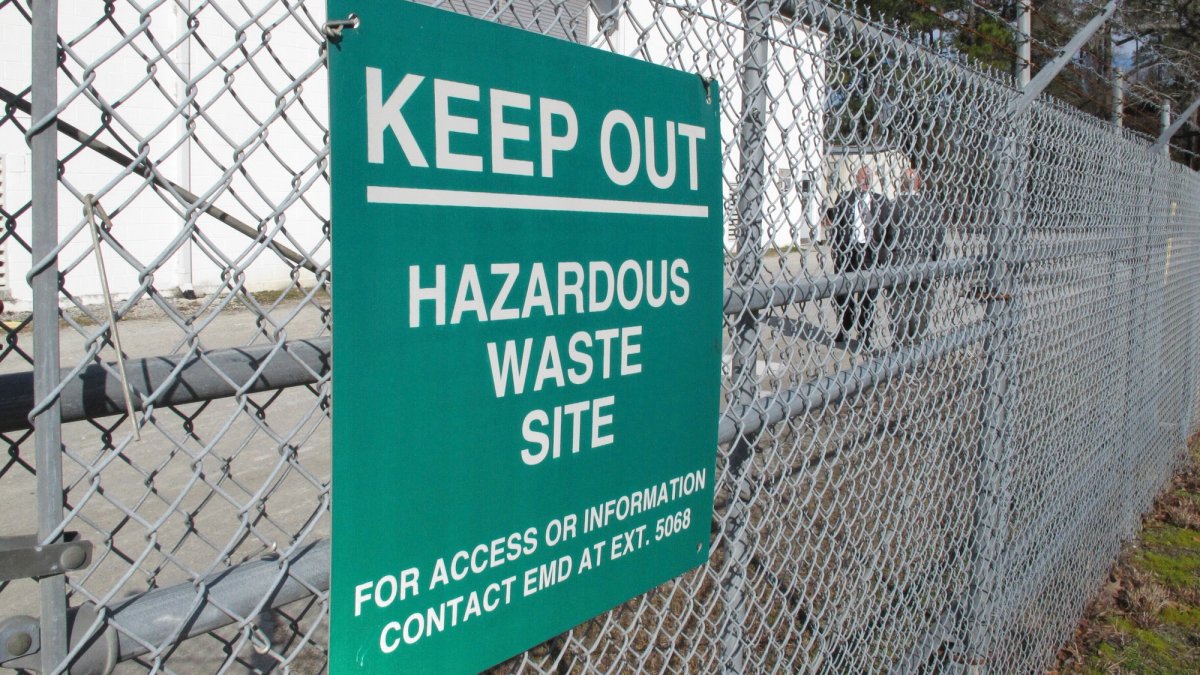
In May 1982, during routine EPA-mandated water quality tests, labs detected contaminated water in drinking water at two treatment plants on Camp Lejeune. Hadnot Point Water Treatment Plant had trichloroethylene (TCE), an industrial solvent used mainly to degrease metal parts, at levels up to 1,400 parts per billion (ppb). Those levels are about 280 times today's 5 ppb limit, from leaking storage tanks and waste sites. Hadnot Point delivered drinking water to the main side of the base. Another water treatment plant that supplied water to base housing was also contaminated. Tarawa Terrace had tetrachloroethylene (PCE) contamination up to 215 ppb (43 times the limit) from ABC One-Hour Cleaners, an off-base dry cleaner.
After the contamination was discovered, subsequent modeling of the “plume” of contaminants underground showed Tarawa Terrace over the limit for 346 months (Nov. 1957–Feb. 1987). The Navy closed most contaminated wells in February 1985, and Tarawa Terrace's water treatment plant shut in March 1987. The wells that served Holcomb Boulevard family housing were not contaminated, but those housing units at Hadnot Point received water from Hadnot Water Plant from 1972 to 1985.
The Agency for Toxic Substances and Disease Registry (ATSDR) evidence ties the contaminated water to kidney and bladder cancer, non-Hodgkin’s lymphoma, leukemia, Parkinson's Disease, and more. In a 2023 study of former residents, it found that Parkinson's risk among that group was 70% higher than the baseline. The US Environmental Protection Agency lists US Marine Corps Base Camp Lejeune and ABC One-Hour Cleaners as Superfund sites and adds both sites to the National Priorities List, which qualified both for federal cleanup funding.
The Marine Corps began notifying former Camp Lejeune residents in 1984, with a one-time communication to residents and articles in the base paper. The Marine Corps opened a registry on September 14, 2007, and a call center three days later. The 2008 NDAA required the Navy to try to notify former residents directly, and by the following September more than 140,000 people had registered.
A Long Wait for Compensation
One early case shows how difficult it was for plaintiffs to get compensation. Laura Jones, a Marine spouse from Iowa, lived on base from 1980 to 1983 and was diagnosed with non-Hodgkin’s lymphoma in 2003. She filed a $10 million administrative claim with the Navy in 2007, then sued under the Federal Tort Claims Act in 2009. In 2010, U.S. District Judge Terrence Boyle ruled in her favor twice, rejecting the government’s arguments that the government’s position shielded it and that North Carolina’s “statute of repose” (defendant’s last act, regardless of when you got sick) barred her claim.
Her case was then transferred to a consolidated suit in Georgia, where it was later dismissed after the court found she had not disclosed the claim in her bankruptcy filings. The other plaintiffs lost on different grounds. In 2016, the Georgia court dismissed their claims under North Carolina’s 10-year statute of repose. That deadline runs from the last act of the party being sued, here the 1985 and 1987 well closures, no matter when a person is diagnosed. The court also found that claims by active-duty Marines were barred under a 1950 Supreme Court decision that prevents service members from suing the government for injuries related to their service.
The entire affair caught the attention of Congress, which included a section in the 2022 PACT Act on Aug. 10, 2022, specifically to authorize anyone who spent 30 or more days at Camp Lejeune to sue after filing an administrative claim with the Navy. The Camp Lejeune Justice Act (CLJA) passed with bipartisan support. The filing window closed Aug. 10, 2024, with a window of eligibility of August 1953 - December 1987 for former residents of Camp Lejeune. Veterans can also apply for disability based on those conditions associated with contaminated water at Camp Lejeune.
The Claim Process to Date
To date, there are about 408,500 administrative claims filed, per DOJ's September court filing, and 2,822 claimants have been paid. According to the DOJ fact sheet, if claimants elect to file using the “Elective Option,” they can receive “settlement offers of $450,000, $300,000 or $150,000 for a 'Tier 1,' depending on whether the claimant was exposed to Camp Lejeune water for over five years, between one and five years or between 30 and 364 days, respectively.” Jerry Ensminger, a retired Marine master sergeant and longtime Lejeune advocate, in an interview with local Durham station WUNC on Oct. 23,
“It’s peanuts. They’re pennies on the dollar of what those cases would be worth in court.”
The first bench trial under the CLJA began in late October 2026, and is currently awaiting a verdict. It's the first of four test cases, with the next one scheduled for this month. Former Marine Frank Mousser sued, claiming that his exposure to contaminated drinking water in the 1980s was the cause of his kidney cancer. His cancer was diagnosed in 2020. There is no timeline for Judge Boyle to render his decision as of this writing.
Behind all of this is a fight between plaintiffs and the Navy on a “global framework” for settlements. A global framework means defining the qualifying conditions or diseases for a settlement, as well as how much exposure (time on base) would qualify. It sets the documentation needed, the process for making a claim including evidence required, and a standardized “payment grid” for how payments would be made. The “global” part of that means it would cover all plaintiffs. The court set a soft Oct. 30 deadline for a global framework, and as of this writing, no deal on a global framework has been announced by either party. The group representing the plaintiffs, the Plaintiffs’ Leadership Group, says there are more than 200 individual conditions alleged in the claims, while the current Elective Option covers only nine. DOJ is seeking an order requiring each plaintiff to prove causation individually, instead of (for example) being on base for a given amount of time. This is called a “Lone Pine” order, and the plaintiff bears the cost of pulling their evidence and connection between their condition and their exposure, which can be costly.
There is a legislative fix for the “Lone Pine” and other legal hurdles (S.907 and HR 4145). The bill would permit jury trials instead of judge-only bench trials, and let cases move to other courts in the Carolinas. It would also set a legal threshold, or “standard,” that presumes illnesses are a result of exposure, and cap attorneys’ fees at 20%. Both those bills were introduced in March and June 2025, respectively, and have neither had hearings nor marks since then by the Republican-controlled Congress.

Can the President Withhold Compensation?
In a word: no, he can’t.
Settlements and judgments are paid from the Judgment Fund, which is administered by the Treasury Department and congressionally appropriated. The DOJ negotiates the settlement, and the Treasury certifies and pays it. The Fund is a permanent, indefinite appropriation, so "necessary amounts are appropriated" and does not require reauthorization by Congress (31 U.S.C. § 1304). Which party controls Congress, or the White House, doesn't change that.
What the president does control is settlement policy. The AG and delegated officials decide whether and when to settle (28 C.F.R. §§ 0.160–0.161). This is the authority to conduct the negotiations that are occurring now to determine the global framework.
There is also a matter of law: the CLJA right to sue stays law unless Congress amends it and the president signs.
What's Next?
Claimants can check the status of their claims on the Navy claims portal, or call (757) 241-6020. They can also email CLClaims@us.navy.mil (Navy). The Elective Option for settlement offers requires dropping any and all lawsuits. When hiring an attorney, the current CLJA caps attorney’s fees at 20% for an Elective Option settlement and 25% for trial under DOJ's position. New claims can't be filed, as the deadline was Aug. 10, 2024.
Continue Reading

30+ Things to Do Near Cannon AFB in Clovis, New Mexico

Welcome to Cannon Air Force Base! Your Guide to Base Access, Amenities, and More
35+ Fun Things to Do Near Little Rock Air Force Base in Jacksonville
Join the Conversation

Mickey Addison
Military Affairs Analyst at MyBaseGuide
Mickey Addison is a retired U.S. Air Force colonel and former defense consultant with over 30 years of experience leading operational, engineering, and joint organizations. After military service, h...
Mickey Addison is a retired U.S. Air Force colonel and former defense consultant with over 30 years of experience leading operational, engineering, and joint organizations. After military service, h...
Credentials
- PMP
- MSCE
Expertise
- defense policy
- infrastructure management
- political-military affairs
SHARE: