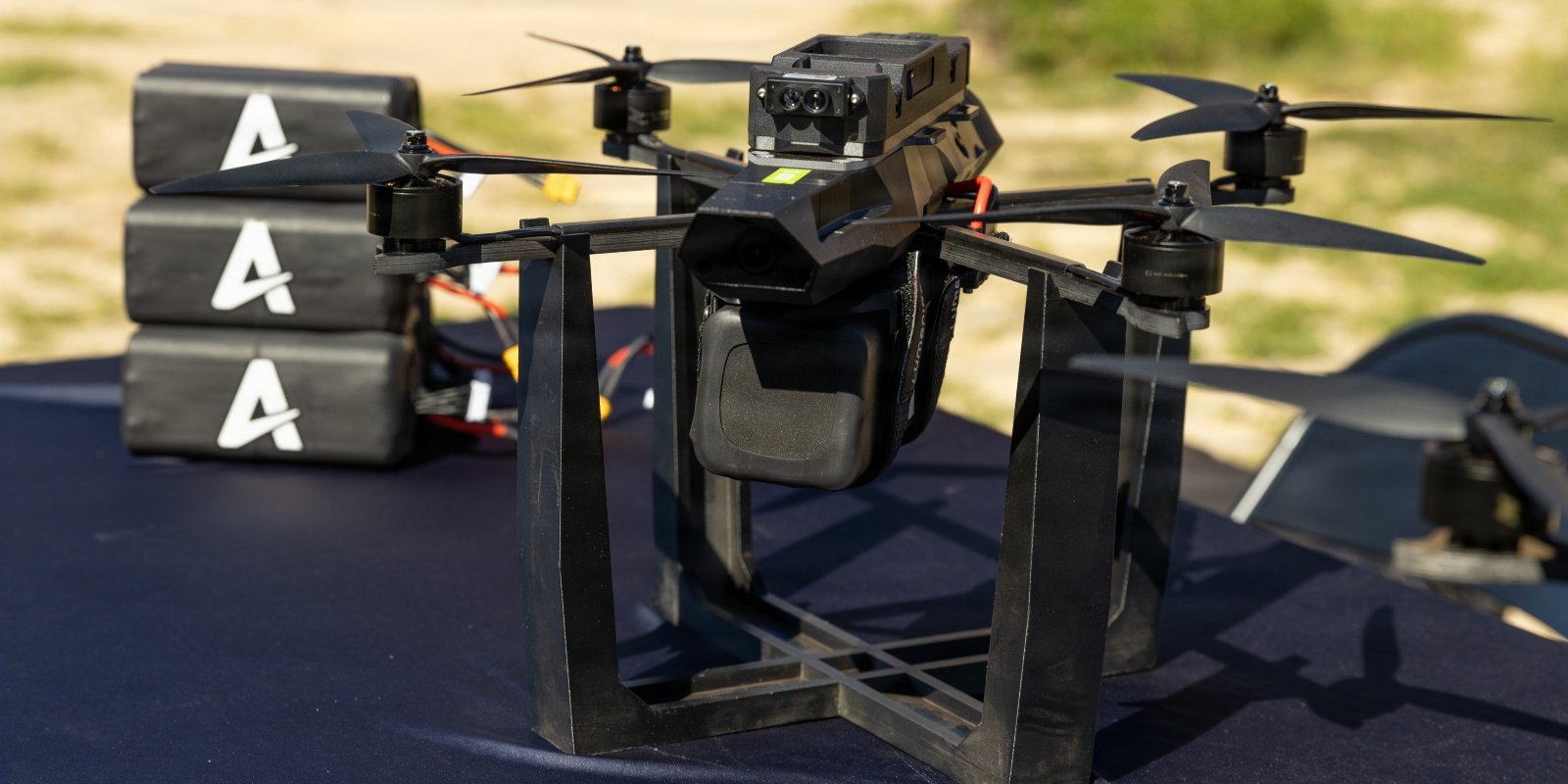
The Drone Wars and How the U.S. Is Responding

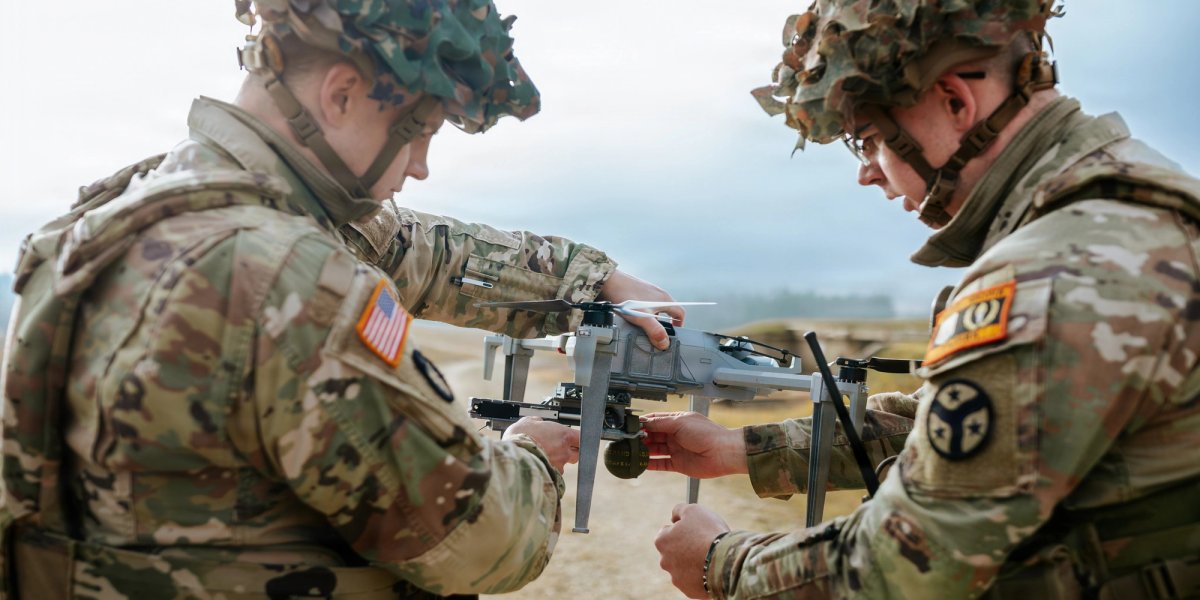
It is no secret that remotely piloted and autonomous drones have become central features of modern warfare. The most visible examples today come from Ukraine, but the use of small drones in combat has been evolving for more than a decade.
Large remotely piloted aircraft have been used by major air forces since the 1990s, but small drones entered the battlefield in force during the wars in Iraq and Syria. Beginning in 2016, ISIS employed commercially available quadcopters to drop 40mm grenades and improvised explosives on Iraqi Security Forces and coalition partners, most notably during the Battle of Mosul. Many of these platforms were off-the-shelf DJI Phantom drones, originally designed for hobbyists and aerial photography. The threat became serious enough that Iraqi commanders identified counter-drone defense as a top operational priority.
Iran soon took the use of inexpensive unmanned systems to a new level. Through mass production of autonomous “Shahed”-type drones and their derivatives, Tehran demonstrated how low-cost platforms could be used for strategic effect. On September 14, 2019, a coordinated attack struck Saudi Aramco’s Abqaiq processing facility and the Khurais oil field, temporarily cutting Saudi oil production in half and removing roughly five percent of global supply from the market. The strike employed a combination of drones and cruise missiles in multiple waves. Satellite imagery later revealed numerous impact sites and extensive damage to processing infrastructure. The attack showed that purpose-built, long-range unmanned systems could achieve effects once associated only with advanced air forces.
The Shahed family and its Russian variants now used in Ukraine fall into the category of “loitering munitions.” While these systems appear new, the concept dates back to the Cold War. DARPA pioneered early versions in the 1980s with the Northrop AGM-136 Tacit Rainbow program, though it was never deployed due to massive budget overruns and shifting post-Cold War requirements. The first successful U.S. operational system emerged decades later with the Army’s M3/M3A1 Lethal Miniature Aerial Munition System, better known as Switchblade, which saw extensive use in Afghanistan.
With the proliferation of cheap, mass-produced unmanned systems, counter-drone weapons, known in military parlance as C-UAS, have become a major priority for NATO and partner nations. Drones are small, difficult to detect, and increasingly employed in coordinated groups. Traditional air-defense missiles are expensive, making their use against low-cost targets economically unsustainable. During the April 2024 defense of Israel, U.S. and Israeli forces used Patriots, THAAD, and AMRAAMs to intercept Iranian drones and missiles, an effective response tactically but costly in strategic terms.
As expected, U.S. forces have adapted.
Categories of Counter-Drone Technologies
Modern C-UAS systems generally fall into four categories: kinetic kill, directed energy, electronic warfare, and non-kinetic capture.
Kinetic Kill Systems
Kinetic systems destroy drones through direct impact. These include guided missiles and precision projectiles originally designed for aircraft, cruise missiles, and ballistic threats. Systems such as the AIM-120 AMRAAM, Patriot, and Sea Sparrow are optimized for higher-end targets but can be employed against drones when necessary.
Because these interceptors are expensive, the Air Force and Navy have expanded the use of precision-guided rockets for counter-drone missions. The Advanced Precision Kill Weapon System (APKWS) converts standard 70mm Hydra rockets into laser-guided weapons. Originally fielded on helicopters such as the AH-64 Apache, APKWS has proven effective against small UAVs and cruise-missile-sized targets. Fighters typically carry 7-shot rocket pods, giving about 14 rounds on a standard counter-drone patrol, with heavier loadouts reaching four pods when required.

Directed Energy Weapons
Directed energy systems include high-energy lasers and microwave weapons. Laser systems physically damage drones through concentrated heat, while microwave systems disable onboard electronics.
High-energy lasers offer near-instant engagement and extremely low cost per shot, though they remain constrained by power generation, weather, and cooling requirements. Development has accelerated in recent years as these limitations are gradually addressed.
In early 2026, operations near El Paso International Airport drew attention to the Army’s newly fielded LOCUST system, a mobile high-energy laser originally developed by BlueHalo and brought into the AeroVironment portfolio following their May 2025 merger. Originally matured through rapid prototyping under the P-HEL program, LOCUST has transitioned from testing to operational deployment in the Middle East and is now being fielded domestically to protect critical infrastructure. The Army is integrating the system onto vehicle platforms, including the JLTV, to make it a standard capability for maneuver units.
Microwave systems represent another directed-energy approach. The Air Force’s Tactical High-power Operational Responder (THOR) uses high-power microwaves to disable multiple drones simultaneously. To address early reliability and manufacturing scalability issues, the Air Force is now transitioning to THOR's successor, Mjölnir. Unlike lasers, which typically engage targets one at a time, these microwave systems employ a wide-area effect that makes them particularly useful against swarm attacks.
Electronic Warfare and Jamming
Electronic warfare systems disrupt the radio-frequency links that connect drones to their operators. These range from handheld “drone rifles” to vehicle-mounted and fixed-site installations.
One widely deployed example is the BlueHalo-developed Titan system, now part of the AeroVironment portfolio. Titan uses software-defined radios and artificial intelligence to detect, track, and defeat hostile drones autonomously. It has been adopted as a Program of Record capability and is now fielded across military and federal installations worldwide, with thousands of systems in service.
Non-Kinetic, Non-Energy Solutions
Some C-UAS systems defeat drones without using projectiles or directed energy. These include net capture devices, acoustic sensors, and even animal-assisted interception. Their main advantage is stealth: they emit little or no electromagnetic, visual, or acoustic signature. In practical terms, they achieve the equivalent of forcing a drone to crash harmlessly into a tree.

Challenges Facing Counter-Drone Technology
The drone threat is no longer a future problem. Small unmanned systems are cheap, accessible, and capable of causing significant damage to personnel, infrastructure, and equipment. At present, offensive drone employment still holds an advantage, though defensive systems are closing the gap.
Counter-drone technologies face persistent challenges. Weather, power generation, sensor reliability, and false positives remain technical constraints. Operating C-UAS systems near civilian infrastructure requires new coordination mechanisms, operating procedures, and rules of engagement.
Drone swarms represent the next major challenge. Ukrainian forces and NATO air defenders are already confronting the difficulty of defeating large, coordinated groups of inexpensive platforms. Current systems struggle to scale fast enough to counter saturation attacks. Emerging trends, including AI-enabled autonomy and fiber-optic-controlled drones, further complicate detection and disruption.
The Drone Era and the Future of Counter-UAS
The world is adapting quickly to the drone era. It is increasingly clear that the defining precision weapons of the 21st century are not only sophisticated missiles and guided bombs, but also small, inexpensive unmanned systems. These platforms may not replace traditional munitions, but they add a new and persistent layer of complexity to an already crowded threat environment. For commanders and defense planners, countering that reality is now a central task of modern warfare.
Join the Conversation

Mickey Addison
Military Affairs Analyst at MyBaseGuide
Mickey Addison is a retired U.S. Air Force colonel and former defense consultant with over 30 years of experience leading operational, engineering, and joint organizations. After military service, h...
Mickey Addison is a retired U.S. Air Force colonel and former defense consultant with over 30 years of experience leading operational, engineering, and joint organizations. After military service, h...
Credentials
- PMP
- MSCE
Expertise
- defense policy
- infrastructure management
- political-military affairs
SHARE: