The Pentagon Wants Troops Offline, But Its Recruiting Strategy Depends on the Opposite

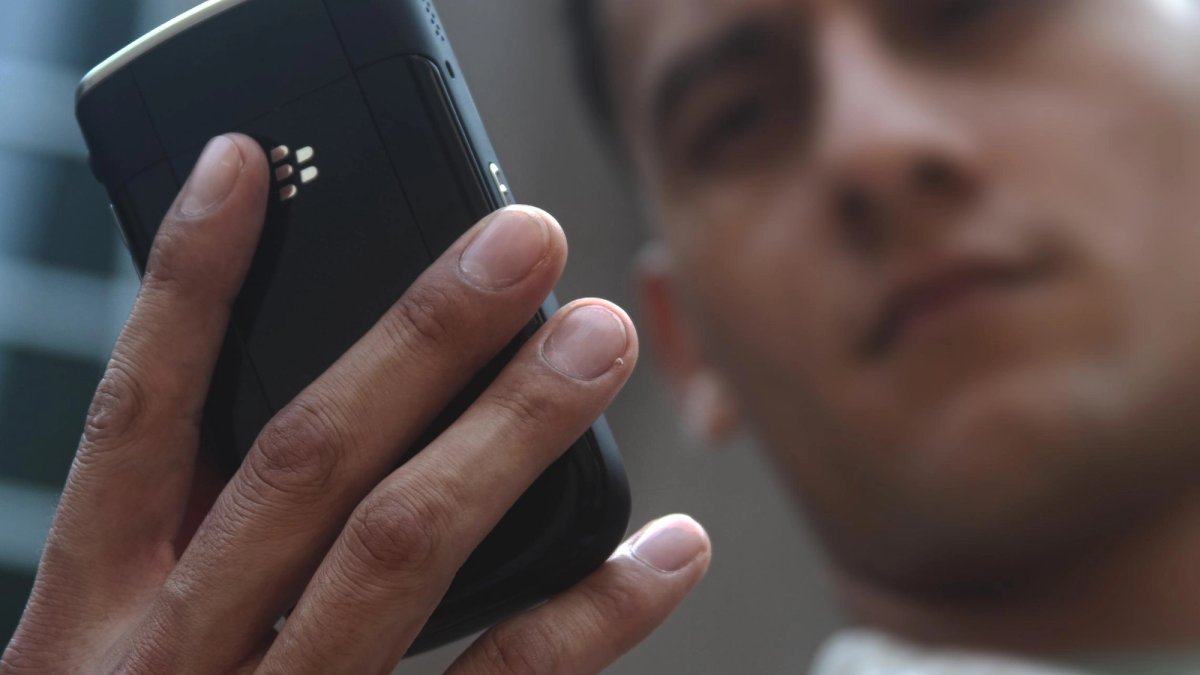
On August 19th, the acting Navy secretary ordered Sailors, Marines, and even their families to scrub all military ties from social media platforms. Five weeks earlier, the Army shut down hundreds of unit-level recruiting pages.
Both orders are due to security concerns tied to the U.S. war against Iran. But they both go against a strategy the Pentagon has spent years building: recruiting Gen Z through authentic social media posts from active military members.
Here's what each directive actually needs, why it's happening now, and where the legal limits sit, especially now that families are being pulled into the equation too.

The Pentagon's Recruiting Strategy Relies on Soldiers' Own Social Media Posts
Survey research on Gen Z's viewpoints toward the armed forces has found that young people learn about military life through social media, even before recruiters, paid advertising, or family members with service-related backgrounds, as noted by the Government Accountability Office.
Short-form videos, found on virtually every social media app, are the dominant format. More specifically, platforms like TikTok and YouTube outperform traditional recruiting ads you find on everyday TV commercial breaks.
During a 2023 national security forum, Deputy Secretary of Defense Kathleen Hicks attributed "influencers in uniform" as one of the department's most effective recruiting efforts, noting that content posted by service members on their own accounts resonated with young viewers because it read as unscripted and authentic.
On a similar note, Army Recruiting Command leadership has said the same thing for years: to reach enlistment goals, the service has to "meet new recruits where they are," which means using platforms Gen Z already lives on every day.
Two Separate Orders, Same Result, Less Military Presence Online
Acting Secretary of the Navy, Hung Cao, issued the department-wide notice as part of the initiative, "Epic Vigilance," ordering Sailors, Marines, and their families to review social media accounts and remove anything that reveals a connection to the Department of the Navy or exposes routines, what the memo calls "patterns of life."
The notice mentions a "coordinated, multi-domain campaign" against personnel and families since the start of Operation Epic Fury, the U.S.-Israel campaign against Iran that began February 28. An important detail that matters is that the order doesn't just ask a Sailor to lock down their own account; it asks them to police their spouse's and children's, too.
The Army followed with something a little bit different, but still philosophically related. Army Directive 2026-17, "Optimizing Digital Media," signed by Secretary of the Army Dan Driscoll on June 30 and made public July 8, orders the shutdown of hundreds, possibly thousands, of unit-level official social media accounts across the force.
"Effective immediately, only the Army organizations listed in enclosure 2 are authorized to operate official social media accounts. All other organizations must close and archive their accounts pursuant to Army records management policy."
The Army says this doesn't touch personal accounts. The directive's own language confirms that it applies to official organizational accounts, not the personal accounts of Soldiers. The unit pages being shut down were often the accounts actually producing the "authentic, unscripted" content the Pentagon has credited with recruiting success.

The Open Legal Question: Where Does a Command's Authority End?
Both directives raise a question neither one fully answers: how far can a command actually go into a service member's personal, off-duty online presence, and into a spouse's account.
The answer, according to Cody Harnish, a military defense attorney and former Army JAG officer, is slimmer than the ALNAV's language might suggest.
"A command has no authority to order a civilian spouse to do anything at all, social media included," Harnish said.
"Spouses aren't subject to the UCMJ, so a commander who issued that order would be issuing a completely unlawful one — it has no force of law on the civilian spouse, and it can't be enforced against the service member either."
Harnish points to the Manual for Courts-Martial itself for the threshold: an order "may not, without a valid military purpose, interfere with private rights or personal affairs."
Ordering a Sailor to police a spouse's Instagram, in his view, crosses that line.
"The command can ask, brief, and educate their service members, but that's it; it is not an order," he said.
"The only order a commander can lawfully give here runs to the service member's own account, and even that one has to serve a real military purpose like OPSEC rather than reach into private affairs."
Looking closely, the Navy's notice supports that threshold rather than contradicts it. The document asks Sailors to review "all social media accounts (including those of family members)," a request addressed to service members and civilians in the same breath, with no punitive clause attached.
"That is the most the Secretary of the Navy can do: tell a Sailor to look, and to ask," Harnish said. "If a commander wants something enforceable, he has to issue his own order, and that order stops at the Sailor's own account."
The distinction matters more than it might sound. A department-wide notice framed as a directive can read like a punitive command, the kind of thing you have to comply with without asking whether it's enforceable. Harnish's read indicates a gap between what the Navy is asking and what it can actually require.
The Military Has Silenced Itself Before: On Paper, Not Online
This isn't the first time an American war has required the government to control what its own service members say publicly about themselves and their affairs. It's just the first time it's happened to an all-volunteer force that was also being told to build a personal brand.
During World War II, the federal Office of Censorship, whose surviving files are held by the National Archives as Record Group 216, ran a mail and communications review program covering letters, cables, and radio traffic in and out of the country.
Service members' mail was censored line by line for exactly what the Navy is now asking Sailors to scrub from Instagram: unit locations, troop strength, equipment details, and anything that could reveal morale.
No photographs of a military character, no descriptions of casualties ahead of official notification, no diaries kept and mailed home. It was, in effect, an entire force going dark by government order, one envelope at a time.
The 2026 version asks each individual Sailor, Marine, and Soldier to be their own censor, in real time, across an unlimited number of platforms, for content that used to be exactly what their own service wanted them to make. That's a much harder problem to solve with a single memo, and it's one no previous generation of service members has had to manage entirely of their own accord.
What Comes Next?
Neither directive says what replaces the recruiting content it's displacing. Army officials have stated the consolidated, higher-level accounts will "elevate" Soldier stories rather than remove them, but a centralized page run by a major command is a lot different than a company-level account posting three times a week about the everyday people in that unit, and it's the specific, authentic version that Pentagon research says moves the needle with Gen Z.
Whether centralized, secured messaging can replicate what grassroots soldier content did for recruiting, and whether a generation of service members who grew up online can be asked to scrub their own digital footprint without scrubbing away the exact content that made them effective recruiters in the first place.
For families navigating this now, the best move isn't waiting for the policy to resolve. It's assuming both directives are permanent; that means fewer official unit accounts to follow for information, and a personal account that now needs the same privacy discipline as an OPSEC meeting. Commands that want to keep any benefit of the old strategy will need to say, explicitly, what version of "authentic" content is even allowed to look like, because right now, the honest answer is that no one has fully defined it.
Continue Reading
Understanding VEERP: The USMC’s 2026 Early Separation Program Explained

Why the US Is Weighing MOAB Deployment in Iran After the Midterms

30+ Things to Do Near Redstone Arsenal in Huntsville, Alabama
Join the Conversation

Michael Madrid
Military News & Gear Specialist at MyBaseGuide
Michael Madrid is a dedicated writer whose reporting brings clarity and authenticity to the stories of military members and their families. Having grown up in the shadow of Fort Bliss as the son of ...
Michael Madrid is a dedicated writer whose reporting brings clarity and authenticity to the stories of military members and their families. Having grown up in the shadow of Fort Bliss as the son of ...
Expertise
- Military News
- Military History
- Tactical Gear
SHARE: