Toll Relief for Military Commuters: Could MacDill’s Model Help Families at Other Bases?

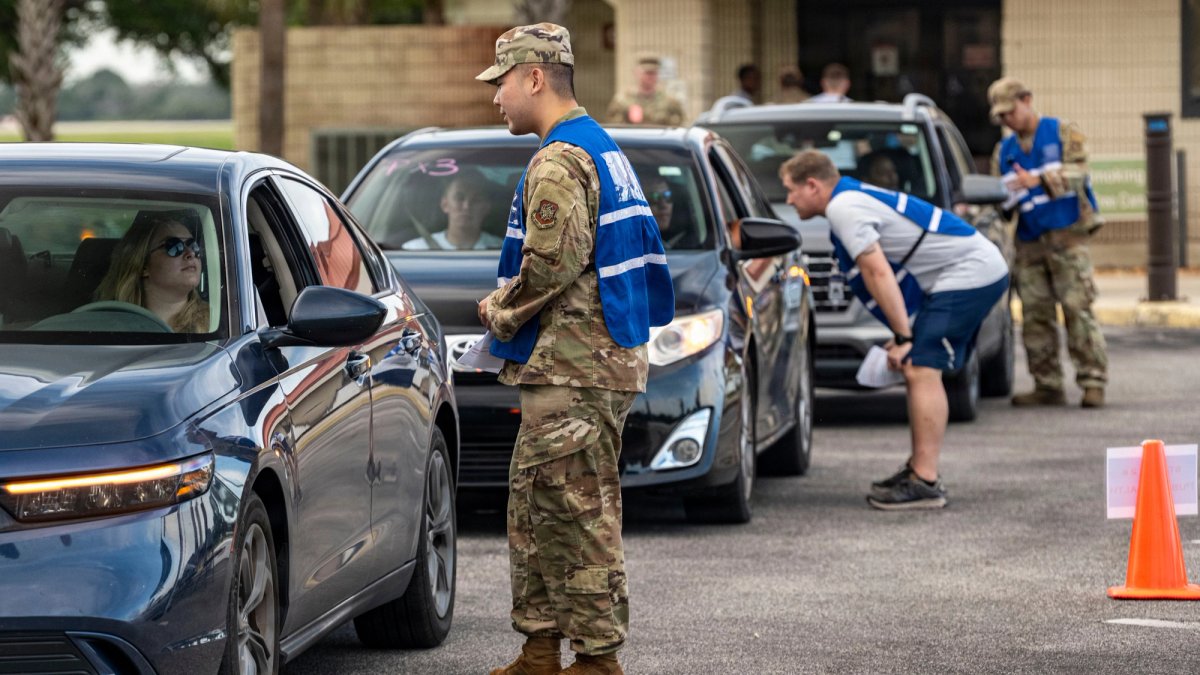
The cost of getting to work is an overlooked expense, which is often felt as a burden for military families who are forced to live off base. The White House Military Spouse Commission has shed light on the out-of-pocket expense and has taken the initiative to brainstorm how to relieve this pressure on the families serving our nation. The Military Spouse Commission is considering using the piloted program at MacDill Air Force Base in Tampa, Florida, as a potential model to expand toll relief for service members, including active duty and active Reserve members.
Under the MacDill program, eligible members can receive a 50% reduction in qualifying toll fees, with savings reported up to $1,500 annually for commuters who are forced to live off base due to different circumstances and need to use the designated route. While still under discussion, the committee has discussed the hope for further reductions, potentially eliminating the tolls altogether. For this to occur in Florida and other states, it would require significant cooperation with state governments and toll-road operators.

Why Toll Relief Matters to Military Families
The average military community member does not always have the option of living on the base or installation in which they are assigned. This is due to several factors, but the main ones being housing availability, family size, desired school districts, spousal employment, and the local housing price. For those military members who are forced to commute, the issue of tolls can be an added transportation expense that military families may not be able to accommodate.
The financial impact can be significant for families if they are commuting 5 days a week. Although a toll fine of a few dollars may not seem that significant on a singular basis, the same toll fee, recurring when commuting back and forth 5 times a week, can quickly add up to hundreds or thousands of dollars annually. A reduction or deletion in these costs could help reallocate those funds to child care, housing, groceries, or emergency savings.
The example of reduced toll fees that we see at MacDill Air Force Base demonstrates how partnership between the local military installation and the transportation authorities can potentially ease the burdens of those serving. It is the hope of the Military Spouse Commission to expand the example of MacDill to all military installations in which their service members are affected by the added expense of commuting.
How Tolls Affect Commuters at Other Military Installations
One of the reasons why MacDill AFB commuters face toll fees is because they heavily use tunnels and bridges that require access over large bodies of water. Although this is not a primary factor or prerequisite for requiring tolls, this is a heavily recurring theme of toll fees.
Examining Naval Station Norfolk and Joint Base Langley-Eustis in Virginia, Dover Air Force Base in Delaware, and Fort Belvoir and Marine Corps Base Quantico in Northern Virginia can help us better understand the potential benefits and challenges of expanding toll relief to all military installations.
Naval Station Norfolk, Virginia: Tunnels and Regional Commuting
Naval Station Norfolk is located in the Southeast region of Virginia, where tolled tunnels and bridges are abundant and connect surrounding communities around the Hampton and Norfolk area. Military members living in Portsmouth, Hampton, or other areas across the Elizabeth River will find themselves needing to navigate the Downtown or Midtown Tunnels or the Hampton Roads Bridge-Tunnel (HRBT) to reach their designated station site.
The Hampton Roads regional transportation report from 2025 states that passenger vehicles with an E-ZPass accumulate rates of $3.23 per passage during peak periods and $2.34 during non-peak periods to use the local tunnels (Hampton Roads Transportation Planning Organization, State of Transportation in Hampton Roads). Using this 2025 data as a reference point, a commuter crossing one tolled tunnel each way on 22 working days a month would pay between $103-$142. If the same template that is currently being used in Tampa were applied here, the Naval Station Norfolk service members could see a potential savings of at least $51 a month, equating to a minimum of $617 annually.
Virginia has a current toll relief program that is operating fluidly, known as the Elizabeth River Tunnels Toll Relief Program. This program is for all Virginia residents who meet its income and residency requirements. Virginia’s existing program and the eligibility criteria can be found on the Virginia Department of Transportation toll-road website.
Joint Base Langley-Eustis, Virginia: Different Commutes, Different Costs
Joint Base Langley-Eustis is a collective unit of Langley Air Force Base and Fort Eustis, which are located in the Newport News region of Virginia. Similar to Naval Station Norfolk, its area is impacted by toll roads for commuting service members. But, unlike the previously mentioned military installation, Langley-Eustis does have other routes to commute to the assigned base, which can mean a longer commute time, but a financially savvy option.
For those service members who are commuting daily via the Downtown or Midtown Tunnel, the same estimated toll costs of approximately $103-$142 a month apply, using the same 2025 E-ZPass rates.
While there are significant options to live closer to Langley-Eustis, the toll roads may not be needed for commuting purposes. Therefore, a military toll-relief initiative in this region would need to be route-specific, rather than automatically applied to every service member assigned to Joint Base Langley-Eustis. Ideally, in this situation, the toll-relief program could focus on eligible commuters who can demonstrate recurring use of the designated toll roads and bridges. The Virginia Department of Transportation’s toll-road information describes the existing regional program and its eligibility requirements.
Dover Air Force Base, Delaware: The Impact of Cross-State Commuting
Dover Air Force Base is located on the eastern coast of Delaware. Many service members live in the surrounding local area, so the commute to the installation is not necessarily impacted by tolls. However, some service members who live further away call Maryland home, where they incur toll fees on their cross-state commute from Maryland to Delaware.
The primary example of tolls on the commute to Dover is the William Preston Lane Jr. Memorial Bridge, which is commonly known as the Chesapeake Bay Bridge. This connects the western shore of Maryland to the eastern shore of Delaware, with many routes going to Dover from this crossing.
The Maryland Transportation Authority’s published toll schedule lists these rates for standard two-axle vehicles:
- Maryland E-ZPass: $2.50 per eastbound crossing.
- Maryland E-ZPass commuter plan: $35 for 25 trips, valid for up to 45 days or until the trips are used.
- Video tolling: $6 per crossing under the published schedule.
The Chesapeake Bay Bridge only collects tolls eastbound. This means a service member commuting from the west and crossing eastbound on 22 workdays a month could acquire:
- Maryland E-ZPass: $55
- Maryland E-ZPass commuter plan: $35
- MacDill Model, 50% discount on E-ZPass rate: $27.50
This Dover data illustrates why state and national government policymakers should distinguish between local commuting and longer/ cross-state commuting when discussing these initiatives. The toll is not a routine expense for all service members, but it is an added expense for some who cannot control where they live. A relief program could perhaps focus on eligible personnel who demonstrate recurring usage on toll facilities during their daily commute.
Installation information and regional directions are available through Military Brands Dover.
Fort Belvoir, Virginia: Variable-Priced Express Lanes
Fort Belvoir is situated in Northern Virginia with heavily trafficked areas, which affects commuting across the Washington, D.C., metropolitan area. With service members who are forced or choose to live off of the installation, most choose to use the I-95 or I-495 Express Lanes to reduce the commute time, but those options use variable pricing. Tolls change with traffic conditions, so the price of the commute can differ substantially given different variables such as time of day and the route.
While this makes it difficult to provide reliable data that leads towards an easy solution, there are a few different ideas that can be thought through. For example, the policy-makers of the Northern Virginia area can explore a monthly cap on tolls, a partial reimbursement on the average toll fee for the month, a monthly commuter credit for those service members who can show proof of residency and regularly use the designated lanes. The Virginia Department of Transportation explains its toll-road and express-lane system in greater detail on its official toll-road information page.
Marine Corps Base Quantico, Virginia: Long Distance Commuting
Marine Corps Base Quantico is located along the I-95 corridor between the Washington, D.C., metropolitan area and Fredericksburg. The express toll lanes on the highway provide a shortened commute and reduced travel time in the region, and therefore more service members choose to use them to avoid congestion.
As with previous military installations, Quantico has varying and inconsistent evidence that may lead to data based on speculation to combat the toll charges that service members face. The cost varies heavily on the route, distance traveled on the tolled lanes, the time of day in which lanes are traveled, and tolls displayed when entering said lanes.
A toll reduction initiative could examine whether a monthly commuter credit, a discounted rate, or reimbursement would be feasible. Due to toll rates fluctuating frequently, eligibility regulations would need to be poised so as to not subsidize occasional recreational travel.

What a Wider Military Toll-Relief and Benefits Policy Could Look Like
The expansion of a toll relief benefit system nationwide would require a more intricate involvement than a single policy announcement. The toll systems and facilities are operated by a mixture of state agencies, regional authorities, and private operators. Each of these entities has its own systems of payment, maintenance schedules, and fiscal responsibilities to navigate when assigning discount rules.
The following are approaches that could be considered:
1. A percentage discount on qualifying trips. A 50% reduction, similar to the reported MacDill model, could be implemented through partnerships with toll operators where eligible users can be identified and discounts applied automatically.
2. A monthly commuter credit. A capped benefit could help offset recurring toll costs while allowing regional authorities to set limits based on local rates and available funding.
3. Targeted support for unavoidable toll routes. Priority could be given to personnel whose realistic commuting options require a tolled bridge or tunnel, while treating optional express-lane use separately.
4. Coordination with existing relief programs. Existing state programs, such as Virginia’s Elizabeth River Tunnels Toll Relief Program and Maryland’s Bay Bridge commuter plan, could provide useful models for enrollment and discount administration. This would need to come with on-base education on how to access these existing state programs.
5. Better data collection. A pilot program could track enrollment, qualifying trips, average monthly toll expenditure, household savings, administrative costs, and the number of military commuters who benefit. With this data collection, the assigned base could add the reported amount to the Basic Allowance for Housing (BAH) for those service members living within certain zip codes that show usage of the tolls.
These measurements would help determine whether a program is reaching families who need assistance and whether its benefits justify the cost.
The Road Ahead for Military Commuters
The White House Military Spouse Council has begun discussing and proposing an expansion of the military commuter relief initiative because it has worked well in the Tampa area and for service members at MacDill AFB. MacDill AFB offers a reported 50% reduction for service members living off base by providing a great example of partnership and cooperation between local authorities, toll authorities, and the military installation.
Dover AFB demonstrates how cross-state commuters face tolls even when local commuters do not incur them; Naval Station Norfolk and Joint Base Langley-Eustis show how existing regional toll-relief programs may provide a concrete example for beneficial relief and how further reduction could be examined; and lastly, Fort Belvoir and Quantico provide an example of how additional, complex variable-priced tolls can pose a need for a deeper examination of the toll-relief benefits.
If the Military Spouse Council wishes to be successful in their implementation of toll-relief for service members nationwide, they will need to account for these mentioned differences, coordinate with state and regional lawmakers, and base their ideas and decisions on data-driven commuter expenses. With clear and concise eligibility rules, simple enrollment, and transparent reporting, a toll-relief program and partnership could help service members manage commuting costs and be beneficial to all areas of their lives.
Continue Reading

Military Installs Air Defense Systems Around Mar-a-Lago to Protect Trump

35+ Things to Do Near NAS Corpus Christi in Corpus Christi, Texas

Welcome to NAS Corpus Christi! Everything You Need to Know About Your New Duty Station
Join the Conversation

Mary Rednour
Military Spouse & Contributing Writer at MyBaseGuide
Mary Rednour brings a unique perspective to MilitaryBrands’ support for the military community. She uses her years of experience in education and military spouse leadership to write about military-con...
Mary Rednour brings a unique perspective to MilitaryBrands’ support for the military community. She uses her years of experience in education and military spouse leadership to write about military-con...
Credentials
- educator
- military spouse
- military family life
Expertise
- education
- education benefits
- spouse benefits
SHARE: