Military Installs Air Defense Systems Around Mar-a-Lago to Protect Trump

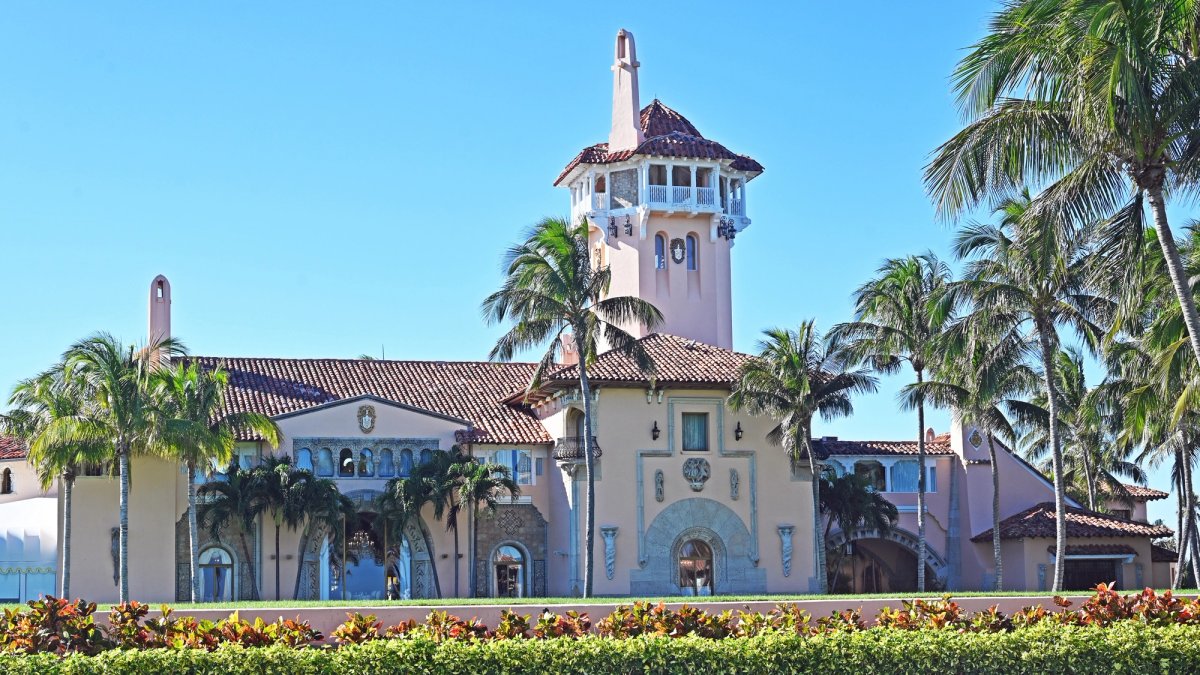
The idea of America’s Armed Forces providing protection to its president, the head of the nation’s Executive Branch of government, is nothing new. After all, dozens of Commanders-in-Chief have traveled the world aboard Air Force planes and a variety of Marine helicopters. But deploying equipment to defend a president’s personal dwelling is not as common a practice, albeit not without precedent. This is why the deployment of an array of air defense systems around current President Donald Trump's Mar-a-Lago estate and golf club in Palm Beach, Florida, adding another layer of protection to the president's private residence, has made headlines. The countermeasures include short-range missile defense systems and counter-drone technology, with additional equipment positioned at the nearby airport used by the President when he visits his home.
The deployment of these anti-air systems, confirmed by the North American Aerospace Defense Command (NORAD) and US Northern Command (USNORTHCOM), came at the request of the US Secret Service. Officials have described it as part of an expanded security operation amid what the Secret Service calls a "heightened threat environment." Photographs of the installations have attracted considerable attention, particularly images showing military equipment mounted on a floating barge just offshore from the president's property. While officials have declined to disclose the full details of the operation, reporting has identified several of the systems involved, offering a closer look at the military technology now protecting the presidential retreat.

Army Avenger Missile Systems Among Equipment Deployed
One of the most recognizable pieces of equipment identified in photographs is the U.S. Army's AN/TWQ-1 Avenger Air Defense System. The mobile, Humvee-mounted platform is designed to engage low-flying aerial threats, including aircraft, helicopters, cruise missiles, and unmanned aerial vehicles. Additional Avengers were also spotted near Donald J. Trump International Airport, approximately three miles west of the estate. The lands and remains ready for takeoff during presidential visits to the area.
The Avenger system uses FIM-92 Stinger missiles, infrared-guided weapons designed to track and destroy a wide array of aerial targets. Each vehicle can carry up to eight ready-to-fire Stinger missiles in two launcher pods and also features a .50-caliber machine gun for additional defensive capabilities. Mounted on a High Mobility Multipurpose Wheeled Vehicle (HMMWV), the Avenger can be easily repositioned as operational requirements change.
According to US Army documentation, the system can operate during the day or night and in limited adverse weather. Its identification friend-or-foe (IFF) capabilities also help operators distinguish friendly aircraft from potential threats. Although the Army originally developed the Avenger for battlefield air defense, its capabilities make it useful for protecting all fixed locations and assets against all manner of aerial threats so common in modern warfare.
Counter-Drone Technology Adds Another Layer of Protection
The Avenger systems are not the only military equipment that reportedly make up the expanded security measures surrounding President Trump’s country club estate. NORAD and USNORTHCOM both confirmed that the new defensive measures also include Counter-Unmanned Aircraft System (C-UAS) capabilities to detect, track, and neutralize drones that could potentially threaten the site. The equipment includes Ku-band radar, electronic support measures, jammers, and infrared search-and-track systems capable of providing surveillance coverage around the president’s country club residence.
These countermeasures are of increasing importance as relatively inexpensive commercial drones become increasingly accessible to anyone and everyone. Retired Maj. Gen. Paul Vallely highlighted the unique geography of the estate, noting,
"There is huge concern over the use of drones against Mar-a-Lago and other sites because they can be launched from anywhere in the Atlantic Ocean. They can park a boat out in the ocean and just fire drones. The bigger the drone, the bigger the payload, which can do a lot of damage."
All of that is preamble to understanding why an AeroVironment LOCUST laser-directed energy weapon mounted on a Joint Light Tactical Vehicle (JLTV) is also part of these new defenses. The LOCUST fires a high-energy laser to engage and disable unmanned aircraft. Unlike conventional missile systems, directed-energy weapons do not require the firing of physical munitions or other devices to eliminate a target. Thus, they typically offer a relatively inexpensive method of defeating certain drone threats, although their experimental status and varying effectiveness in different operational conditions mean that the capabilities of the systems can vary widely depending on circumstances.

Secret Service Requested the Additional Military Anti-Air Capabilities at Mar-a-Lago
Although press photographs have provided a glimpse of the equipment, federal officials have remained relatively mum about the specifics of the increased security measures around President Trump’s private residence. NORAD and USNORTHCOM confirmed that the systems were installed at the Secret Service's request and operate under those commands' control.
In a statement provided to The War Zone, the commands explained that the new air defense and counter-drone assets provide an additional layer of protection around Mar-a-Lago. They declined to release further information, citing operational security.
Additionally, the Secret Service confirmed it was operating in a heightened threat environment and continually adapting its protective operations through additional technology and security measures. The deployment of these new security measures comes after NORAD disclosed that its fighter pilots had intercepted more than 60 aircraft that violated temporary flight restrictions around Mar-a-Lago since January 2025.
Those interceptions are part of the military's ongoing mission to protect restricted airspace when Trump visits his Florida residence. NORAD officials have explained that many of these incidents involve pilots inadvertently entering restricted areas rather than deliberate attempts to threaten the president. In one October incident, an F-16 intercepted a civilian aircraft that entered restricted airspace near Mar-a-Lago.
Additional Presidential Security Comes With a Significant Price Tag
The installation of these added air defense systems raises questions about the costs associated with protecting a president who, when not in the White House, resides at an expansive privately owned property. The federal government has already spent millions of dollars on maintaining security during President Trump's Mar-a-Lago visits. However, officials have not disclosed precisely how much the latest air defense deployment costs, how long the equipment will remain in place, or how many military personnel are involved.
There is historical precedent for the considerable expense associated with presidential visits to the Florida property. A 2019 Government Accountability Office (GAO) report examined four trips Trump made to Mar-a-Lago between February 3rd and March 5th of, 2017. The agency estimated that federal departments spent approximately $13.6 million supporting those trips.
The Department of Defense accounted for approximately $8.5 million of that amount, while the Department of Homeland Security incurred another $5.1 million. The figures included travel, transportation, lodging, and security-related expenses, among other costs. Those figures reflect expenses from Trump's first administration and should not be confused with the cost of the current deployment. Nevertheless, they demonstrate how presidential travel requires substantial federal resources, both in terms of finances and personnel, particularly when military and law enforcement personnel must establish security around a location outside the Capitol.

What We Know About the Mar-a-Lago Missile Defenses
The unusual sight of missile launchers stationed near a presidential resort has understandably generated questions. Officials have not identified every system involved, provided a complete accounting of the equipment, or explained the precise threat assessment behind the decision.
What is clear is that the military has established a more extensive air defense presence around Mar-a-Lago, combining conventional missile systems with newer counter-drone technology.
The deployment highlights the increasingly complicated nature of presidential security, particularly as unmanned aircraft and other emerging aerial threats create new challenges for protective agencies. For now, the Avenger missile systems, surveillance equipment, and reported laser-based counter-drone capabilities represent another layer in the military and federal law enforcement effort to protect the president while he is in Florida.
Continue Reading
Toll Relief for Military Commuters: Could MacDill’s Model Help Families at Other Bases?

35+ Things to Do Near NAS Corpus Christi in Corpus Christi, Texas
Welcome to NAS Corpus Christi! Everything You Need to Know About Your New Duty Station
Join the Conversation

Paul Mooney
Veteran & Military Affairs Correspondent at MyBaseGuide
Paul D. Mooney is an award-winning writer, filmmaker, and former Marine Corps officer (2008–2012). He brings a unique perspective to military reporting, combining firsthand service experience with exp...
Paul D. Mooney is an award-winning writer, filmmaker, and former Marine Corps officer (2008–2012). He brings a unique perspective to military reporting, combining firsthand service experience with exp...
Credentials
- Former Marine Corps Officer (2008-2012)
- Award-winning writer and filmmaker
- USGS Public Relations team member
Expertise
- Military Affairs
- Military History
- Defense Policy
SHARE: