UK Ministry of Defence Proposes Recalling Reservists Up to Age 65

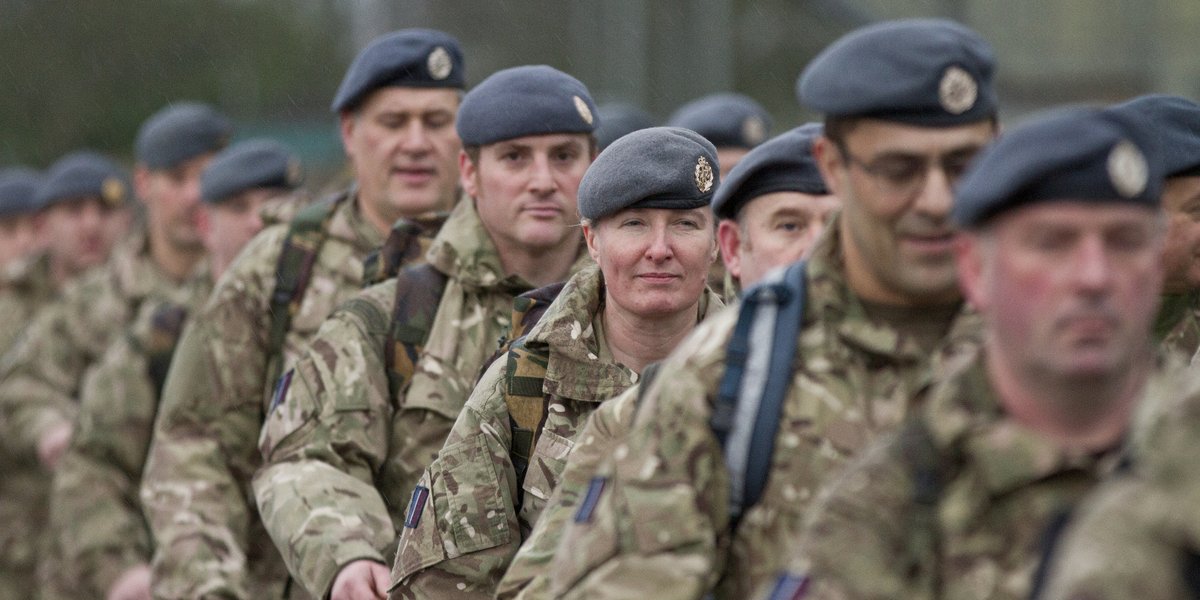
Between 1969 and 1977, the BBC television comedy Dad’s Army chronicled the exploits of a decidedly “mature” group of men serving in Britain’s Home Guard during World War II. Reading some of the early headlines surrounding the latest Armed Forces Bill before the UK Parliament, one might be forgiven for thinking Dad’s Army was being brought back to life. As with many things in defense reporting, however, the reality is far more sober and far more familiar to American readers than the headlines suggest.
The UK Ministry of Defence (MoD) has proposed widening the pool of trained personnel it can draw on in a crisis by raising the maximum age at which some former service members can be recalled to duty, from 55 to 65. The proposal is part of a broader package of reserve and readiness reforms included in the new Armed Forces Bill, and it has been framed by ministers and senior officers as a pragmatic, “use the talent we already paid to train” response to a significantly more dangerous security environment.
As sensational as some coverage has made it sound, the bill is not about sending 65-year-old infantry Soldiers back into combat. Rather, it focuses on extending recall liability for the UK’s Strategic Reserve, standardizing recall rules across the services, and lowering the legal threshold under which recall authority can be exercised.

What Is Changing
Press reporting and official summaries point to three closely related changes. First, the government proposes raising the maximum age at which former personnel with recall liability can be mobilized, extending it from 55 to 65.
In addition, recall liability for Royal Navy and Royal Marine personnel would increase from six to 18 years. Under the proposal, individuals would no longer automatically age out of recall eligibility in their mid-50s, allowing the MoD to retain access to a larger pool of experienced, previously trained personnel in the event of a major contingency.
Second, the reforms would standardize recall rules across the Royal Navy and Royal Marines, the British Army, and the Royal Air Force. At present, recall obligations and time limits vary by service, and by whether the individual served as an officer or enlisted member, a discrepancy officials have described in parliamentary materials as an anomaly.
The bill would also broaden the circumstances under which a recall could occur. In addition to national emergencies or direct threats, the government would be able to activate recall during “warlike preparations,” lowering the legal threshold for mobilization and enabling trained personnel to be brought back earlier as security conditions deteriorate. Assuming the bill passes with these provisions intact, the changes would come into force in spring 2027.
Who Would Be Affected (and Who Would Not)
A key detail highlighted in press coverage is that the new rules would not automatically apply to everyone who has already left the armed forces. In the British system, service members typically opt in to recall liability when they separate (or retire) and remain part of the Reserve Forces. Sky News reports that the new measures would not apply to those already separated unless they affirmatively opt in.
This approach is not unusual and is, in some respects, more restrictive than the US system. In the United States, service members who separate typically enter the Inactive Ready Reserve for the remainder of their eight-year service obligation and may be involuntarily recalled during that period. Military retirees, meanwhile, remain subject to recall under federal law, with no fixed statutory age limit. In practice, however, recalls beyond age 60 are rare and are generally focused on staff, technical, or advisory roles rather than frontline combat.
The logic is straightforward: experienced former personnel can fill high-value roles where maturity and prior training matter most. These include: logistics, planning, cyber operations, intelligence support, training pipelines, medical services, engineering, headquarters staff functions, and other enabling specialties critical to force generation.
The entire concept of a strategic reserve is to provide surge capacity and specialized skills in extremis. Several press accounts note that the UK is attempting to access “skilled former military personnel” more effectively during crises.
Beyond the age limit itself, the most consequential change may be the inclusion of “warlike preparations” as a trigger for recall. That phrase implies not only that the UK has been attacked, but that it is preparing for a serious contingency, allowing earlier mobilization for training, backfilling, force generation, and the stand-up of new units or headquarters.
What All This Means
In 2018, the US Air Force offered up to 1,000 recently retired officers the opportunity to return to active duty in specialized roles such as pilots, combat systems officers, and air battle managers. NATO militaries routinely draw on retired and separated Veterans for their expertise and experience, and the United States and the United Kingdom are no exception. What the UK is doing now appears to be a prudent, and arguably overdue, standardization of recall authorities across its services.
Several conclusions follow. First, a renewed and robust defense posture is no longer merely a political talking point; NATO allies increasingly view the Russian threat as real and immediate.
As with other European nations, the UK is putting renewed emphasis on modernizing its armed forces in response to Russia’s ongoing war against Ukraine. Alongside measures taken by other European countries to expand their forces, these reforms signal a shift in European defense posture not seen since the Cold War. Russia’s continued gray-zone attacks across Europe have accelerated modernization and expansion efforts across NATO, including in the Nordic countries, Poland, Germany, and France.
Like its allies on the continent, the United Kingdom is moving to modernize its armed forces in light of a more threatening security environment in Europe and beyond. The result may be that, in the years ahead, allied forces find themselves serving alongside partners with more than a little mileage under their boots—and a great deal of experience to offer.
Continue Reading
Understanding VEERP: The USMC’s 2026 Early Separation Program Explained

Why the US Is Weighing MOAB Deployment in Iran After the Midterms

30+ Things to Do Near Redstone Arsenal in Huntsville, Alabama
Join the Conversation

Mickey Addison
Military Affairs Analyst at MyBaseGuide
Mickey Addison is a retired U.S. Air Force colonel and former defense consultant with over 30 years of experience leading operational, engineering, and joint organizations. After military service, h...
Mickey Addison is a retired U.S. Air Force colonel and former defense consultant with over 30 years of experience leading operational, engineering, and joint organizations. After military service, h...
Credentials
- PMP
- MSCE
Expertise
- defense policy
- infrastructure management
- political-military affairs
SHARE: