How the “Arsenal of Freedom Tour” Could Shape Military Readiness in 2026

The Department of War launched the Arsenal of Freedom Tour to highlight how the United States builds and sustains military power through its Defense Industrial Base. The tour links America’s industrial workforce to national defense outcomes, with implications for service members, installations, and readiness in 2026.
What the Arsenal of Freedom Tour Is and Why It Matters Now
The Department of War describes the Arsenal of Freedom Tour as a nationwide campaign to revitalize American manufacturing and strengthen the industrial workforce that supports the military. Official statements emphasize that American manufacturing is the bedrock of American strength, framing industrial capacity as a pillar of national security.
The tour coincides with increased national attention on shipbuilding timelines, missile production, munitions supply, and the speed at which the Defense Industrial Base can support operational demands. Those conditions shape how quickly platforms, systems, and munitions reach service members in training and deployments.

How the Tour Connects America’s Industrial Workforce to National Defense
The Defense Industrial Base includes shipyards, aerospace plants, missile lines, and manufacturers who produce and sustain the systems used across the force.
The tour highlights that the industrial workforce is a national-level partner in ensuring that the fleet, the flight line, and missile forces receive the equipment and sustainment they require.
Tour stops emphasize the connection among welders, engineers, and machinists, as well as the readiness of service members across all branches. This places the industrial workforce within the broader national defense ecosystem.
Where the Tour Started and Which Hubs Are on the National Map
The first stop took place at Newport News Shipbuilding in Virginia, the nation’s largest military shipyard and a core node for aircraft carrier construction.
Newport News Shipbuilding is owned by Huntington Ingalls Industries, which employs approximately 44,000 workers and serves as the largest industrial employer in Virginia and Mississippi.
Additional tour stops include major industrial hubs where defense manufacturing plays a central economic role, including Southern California. These regions host aerospace companies, missile manufacturers, and defense facilities that interact closely with military installations, port commands, and test ranges.
What Secretary Hegseth Is Highlighting at Each Stop
Tour activities documented to date include:
- Workforce engagements inside shipyards and industrial facilities
- Meetings with defense industry leadership
- Oath of enlistment ceremonies for new recruits
- Troop touches with active-duty service members
- Visits aboard U.S. Navy vessels under construction or in delivery
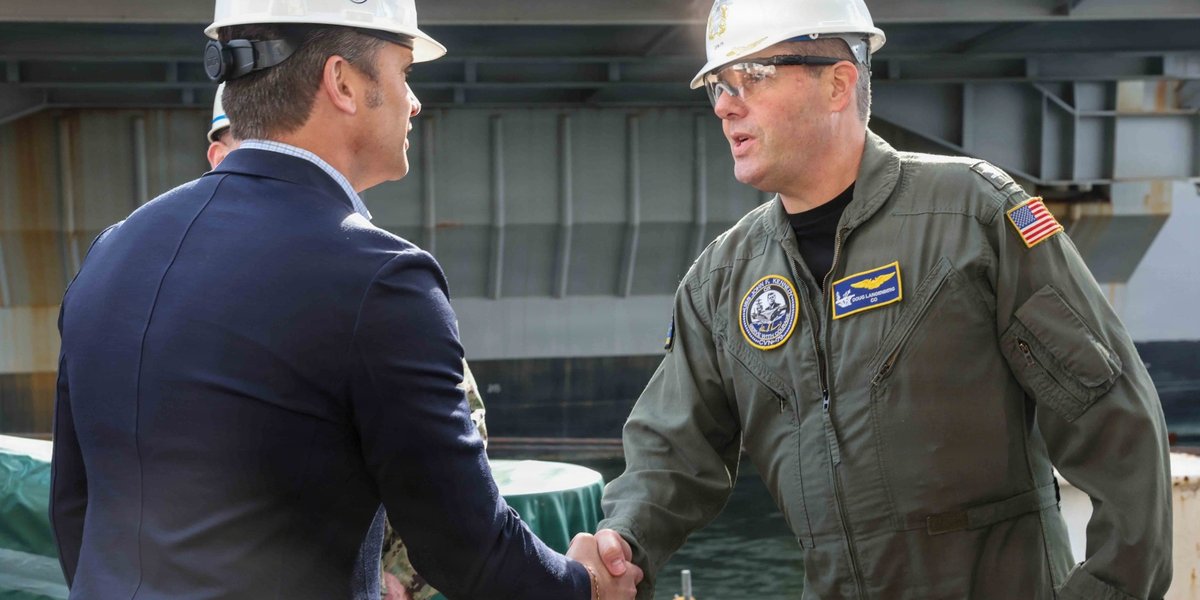
At Newport News, Secretary of War Pete Hegseth addressed shipbuilders beneath the Arsenal of Freedom signage and traveled aboard the future PCU John F. Kennedy (CVN-79) to speak directly with Sailors. Hegseth told shipbuilders:
“The surest and only real path to peace is through strength. We’re in the strength business, you are in the strength business.”
These documented activities reinforce the connection between industrial output, the Defense Industrial Base, and operational readiness.
Why the Defense Industrial Base Matters for Fleet, Flight Line, and Missile Readiness
The tour underscores several readiness factors:
- Shipbuilding and Fleet Delivery: Aircraft carriers, submarines, and surface combatants rely on shipyard throughput for construction, modernization, and sustainment. Commissioning schedules, availability periods, and modernization timelines are shaped by industrial capacity.
- Aircraft Production and Sustainment: Aerospace manufacturing drives fighter, bomber, tanker, trainer, and rotorcraft production, as well as spare parts and depot support for the flight line.
- Missile and Munitions Supply: Missile lines supply defensive and offensive systems used by the joint force, while munitions lines affect training, stockpiles, and surge capacity.
These factors influence the equipment service members operate and maintain throughout training and deployments.

What Service Members Should Expect at the Installation Level
There are three installation-level touchpoints worth noting:
- Equipment and Availability Signals: Industrial timelines influence the pace at which ships are delivered, aircraft are sustained, and munitions are produced. Units that rely on specific platforms are familiar with how these conditions affect training schedules and readiness calendars.
- Troop Engagement Opportunities: Some tour stops include direct engagement with service members. Public Affairs Offices typically manage communication when senior leaders visit installations, aviation facilities, or ships.
- Local Employment Ecosystems for Military Families: Defense industrial hubs often employ military spouses and transitioning service members. Regions such as Hampton Roads, Southern California, and parts of the Southeast host dense defense economies with consistent hiring for skilled labor in engineering, logistics, and administration. This connects the tour to job opportunities for military spouses near major installations and to transition pathways for Veterans.
How This Fits Into America’s Broader Military Readiness Picture
Public emphasis on the Defense Industrial Base aligns with broader attention to defense procurement, surge industrial capacity, and modernization priorities. These issues intersect with:
- Fleet construction and sustainment
- Aircraft production and depot maintenance
- Missile manufacturing and stockpile management
- Workforce and industrial infrastructure investments
- Military-to-industrial employment pipelines
Each connects to installation realities, including how base policies affect daily life at different installations, especially in regions where defense manufacturing and active-duty populations coexist.
Industrial Strength is Military Readiness
The Arsenal of Freedom Tour highlights the national connection between America’s industrial workforce and the readiness of U.S. service members.
The tour’s stops, engagements, and official statements reinforce that defense manufacturing, shipbuilding, aerospace production, and munitions supply are central components of how the United States equips, sustains, and supports the force.

Join the Conversation

Natalie Oliverio
Veteran & Senior Contributor, Military News at MyBaseGuide
Natalie Oliverio is a Navy Veteran, journalist, and entrepreneur whose reporting brings clarity, compassion, and credibility to stories that matter most to military families. With more than 100 publis...
Natalie Oliverio is a Navy Veteran, journalist, and entrepreneur whose reporting brings clarity, compassion, and credibility to stories that matter most to military families. With more than 100 publis...
Credentials
- Navy Veteran
- 100+ published articles
- Veterati Mentor
Expertise
- Defense Policy
- Military News
- Veteran Affairs
SHARE: