Starting in December, U.S. Men Will Be Automatically Registered for Selective Service

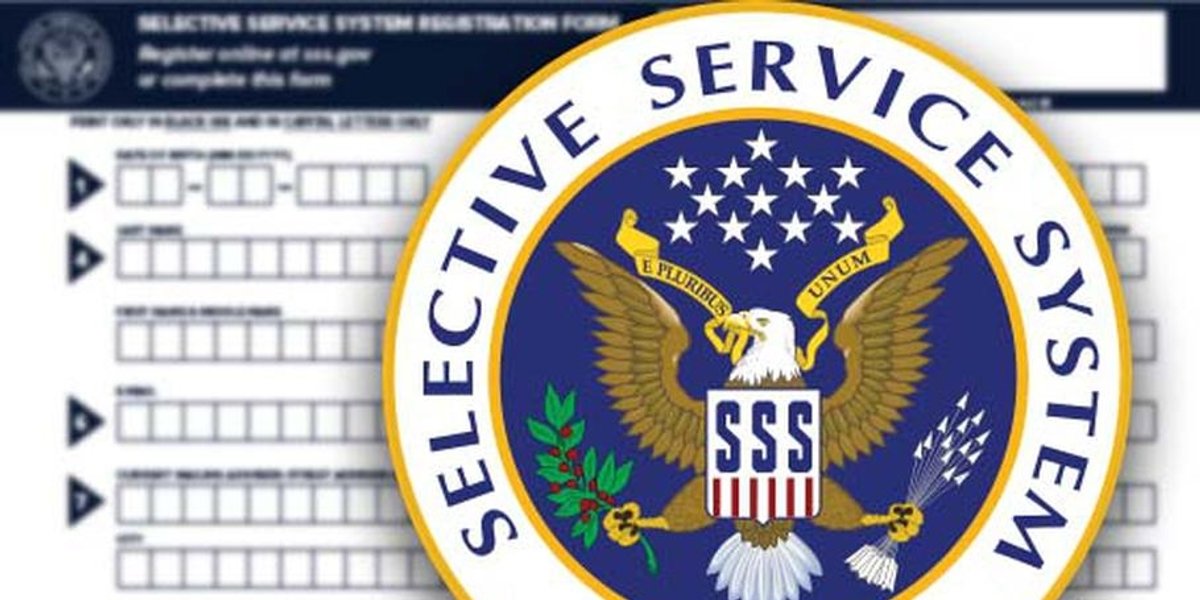
For the first time in over four decades, Congress has fundamentally changed how the United States registers young men for a potential military draft. This time, it no longer requires a trip to the post office or submitting a web form to register.
Tucked inside the Fiscal Year 2026 National Defense Authorization Act (NDAA), signed into law by President Donald Trump in December 2025, is a provision marking the most significant transformation of the Selective Service System in over four decades.
The law's Section 535 eliminates the requirement that draft-eligible men register themselves. Beginning December 18, 2026, this statutory change transfers responsibility for registration from individual men to the Selective Service System (SSS) through integration with federal data sources.

What the Law Does and Who Is Impacted
Under the new system, eligible males - primarily U.S. citizens and male immigrants residing in the country between ages 18 and 25 - will be registered automatically within 30 days of turning 18, drawing from databases maintained by other federal agencies such as the Social Security Administration, Department of Homeland Security, and state motor vehicle departments.
The Selective Service System will also be tasked with notifying men they have been registered, as well as asking them for any missing contact or biographical information, and informing them of the process to unregister if they are not actually required to register.
The law applies broadly. In addition to U.S. citizens and dual citizens, mandatory registration applies to green-card holders, refugees, asylum seekers, and undocumented men. Those on non-immigrant visas (such as international students or temporary workers) are exempt. Furthermore, the law does not extend registration requirements to women, who remain exempt from the draft but can still voluntarily enlist in active duty roles.
How Draft Registration Currently Works
For decades, the Selective Service System has required most men to self-register within 30 days of their 18th birthday. Historically, many young men registered by filling out a card at the post office or checking a box when applying for a driver’s license, state ID, or federal student aid.
Failure to register is a felony. Under this manual system, if a man fails to register before turning 26, he can face severe, lifelong penalties, including up to five years in prison, a $250,000 fine, and the permanent loss of eligibility for federal jobs, and even U.S. citizenship for immigrants.
Why Sponsors Pushed the New Law
Compliance had been sliding. In 2023, there were 15.6 million men registered. By 2024, that number dropped to 15.2 million - with the percentage of compliance falling from 84% to 81%, and the specific compliance rate for 18-year-olds plummeting to just 42%.
Sponsors argued the old manual system was increasingly costly and ineffective. Rep. Chrissy Houlahan, D-Pa., a member of the Armed Services Committee who championed the NDAA provision, said automatic registration "simply moves the burden of filing the registration paperwork from the individual to the government, where it belongs," adding that it would save taxpayers money by eliminating the need for expensive educational and advertising campaigns, and make it easier for young men to follow the law without risking inadvertent felony charges or loss of benefits.
Houlahan stressed that the measure carried bipartisan support, and the NDAA passed with bipartisan votes in both the House and Senate.
What Critics Are Saying
The shift to an automated system has generated mixed public reactions, and opposition spans the political spectrum. The objections are substantive: The Friends Committee on National Legislation, the lobbying arm of the Quakers, warned that,
"This extensive data gathering poses a significant risk of weaponization and misuse, particularly with the potential for targeting the most vulnerable, such as immigrant and transgender young adults."
The data the SSS will collect and cross-reference - including sex assigned at birth, immigration status, and current address - gives the federal government an unprecedented surveillance footprint over an entire demographic. Critics have also flagged that the Department of Government Efficiency (DOGE) was given access to the SSS registration database in early 2025 for undisclosed purposes. While framed as an administrative efficiency effort, civil rights advocates and anti-war activists warn that SSS data could be shared with law enforcement or immigration agencies with no apparent legal basis.
Which Military Branch Is Right for You?
Answer 10 questions to discover which branch of the U.S. Armed Forces best matches your personality, interests, and goals.
10 questions • Takes about 2 minutes
Conscientious objectors will face an additional step. In the past, a person could declare themself a conscientious objector - someone who is morally opposed to serving in the armed forces - when they registered by checking the appropriate box on the registration card. Under the new process, a conscientious objector will need to report when called up and then declare themself.
Civil liberties organizations have raised concerns that automatic registration may complicate the conscientious objector pathway further, since registrants will have no opportunity to note their status at the point of enrollment or decline to have their data entered into a military database without their consent.
When Was the Draft Last Used?
To contextualize the public anxiety surrounding this change, it is important to look at the history of the draft.
The United States has relied on an all-volunteer military since 1973. The last time the draft was actively used was during the Vietnam War, ending that same year.
In 1975, the registration requirement was temporarily suspended. However, President Jimmy Carter reinstated the Selective Service database in 1980 in response to the Soviet invasion of Afghanistan.
Since then, draft registration has remained a purely administrative requirement, and no involuntary inductions have occurred in over 50 years.

The Timeline and What This Change Actually Means
A proposed rule submitted by the SSS on March 30, 2026, would fast-track a change to go into effect by December 2026. The rule is currently under White House review. Implementation is targeted for December 18, 2026, exactly one year after the law was signed.
What the law does not do is authorize a draft. Congress would have to separately approve a draft before one could ever take place, and not all registered men would be enlisted to serve. In the event of a draft, the SSS would run a lottery in which birthdays and numbers are randomly drawn to determine induction order, with men whose 20th birthdays fall in the year of the draft called first. This is the way conscription has worked in the past, so that is not expected to change. Returning to an active draft would require Congress to amend the Military Selective Service Act.
This is a modernization measure, not a mobilization order. In light of renewed public anxiety about conscription and ongoing global conflicts, the distinction is one worth understanding clearly. Ultimately, this change means the government is streamlining its bureaucratic readiness to mobilize if ever necessary, shifting the legal and administrative burden away from young men while simultaneously expanding the federal government's interagency data-sharing capabilities.
Continue Reading
Should Men Automatically Register for Selective Service?
What Is the Selective Service, and Who Actually Controls the Draft?
New Bill Requires Women to Register for Selective Service
Join the Conversation

Mickey Addison
Military Affairs Analyst at MyBaseGuide
Mickey Addison is a retired U.S. Air Force colonel and former defense consultant with over 30 years of experience leading operational, engineering, and joint organizations. After military service, h...
Mickey Addison is a retired U.S. Air Force colonel and former defense consultant with over 30 years of experience leading operational, engineering, and joint organizations. After military service, h...
Credentials
- PMP
- MSCE
Expertise
- defense policy
- infrastructure management
- political-military affairs
SHARE: