One Year In: DC's "Temporary" National Guard Mission Now Runs Through 2029

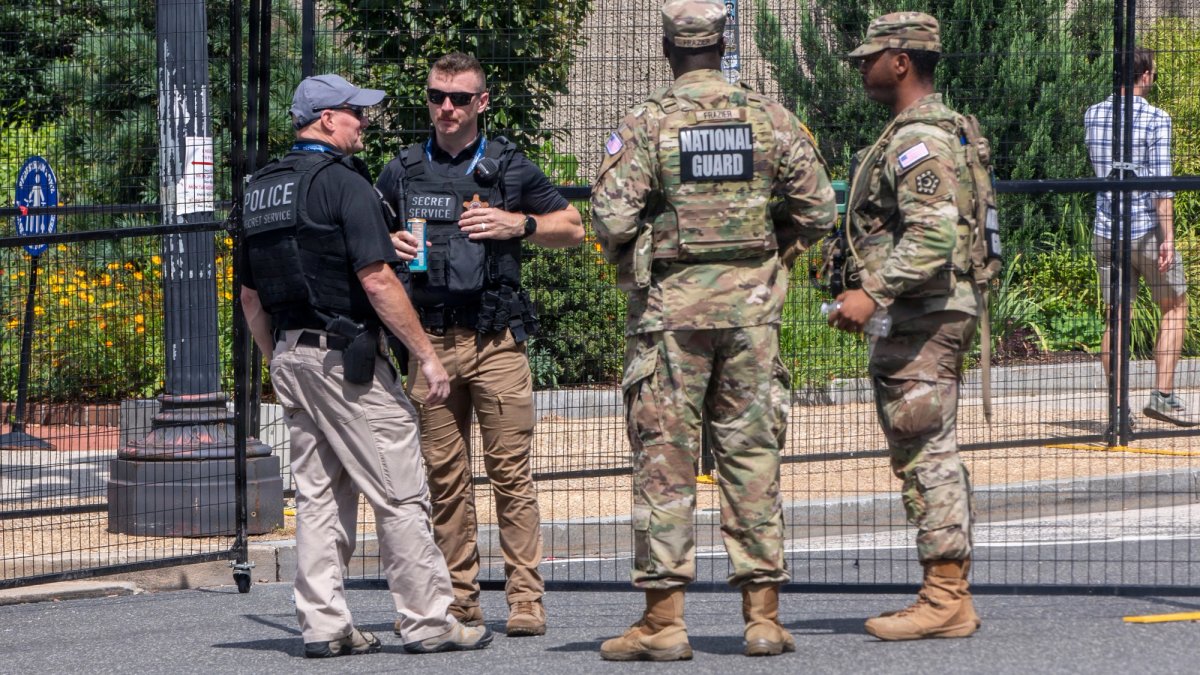
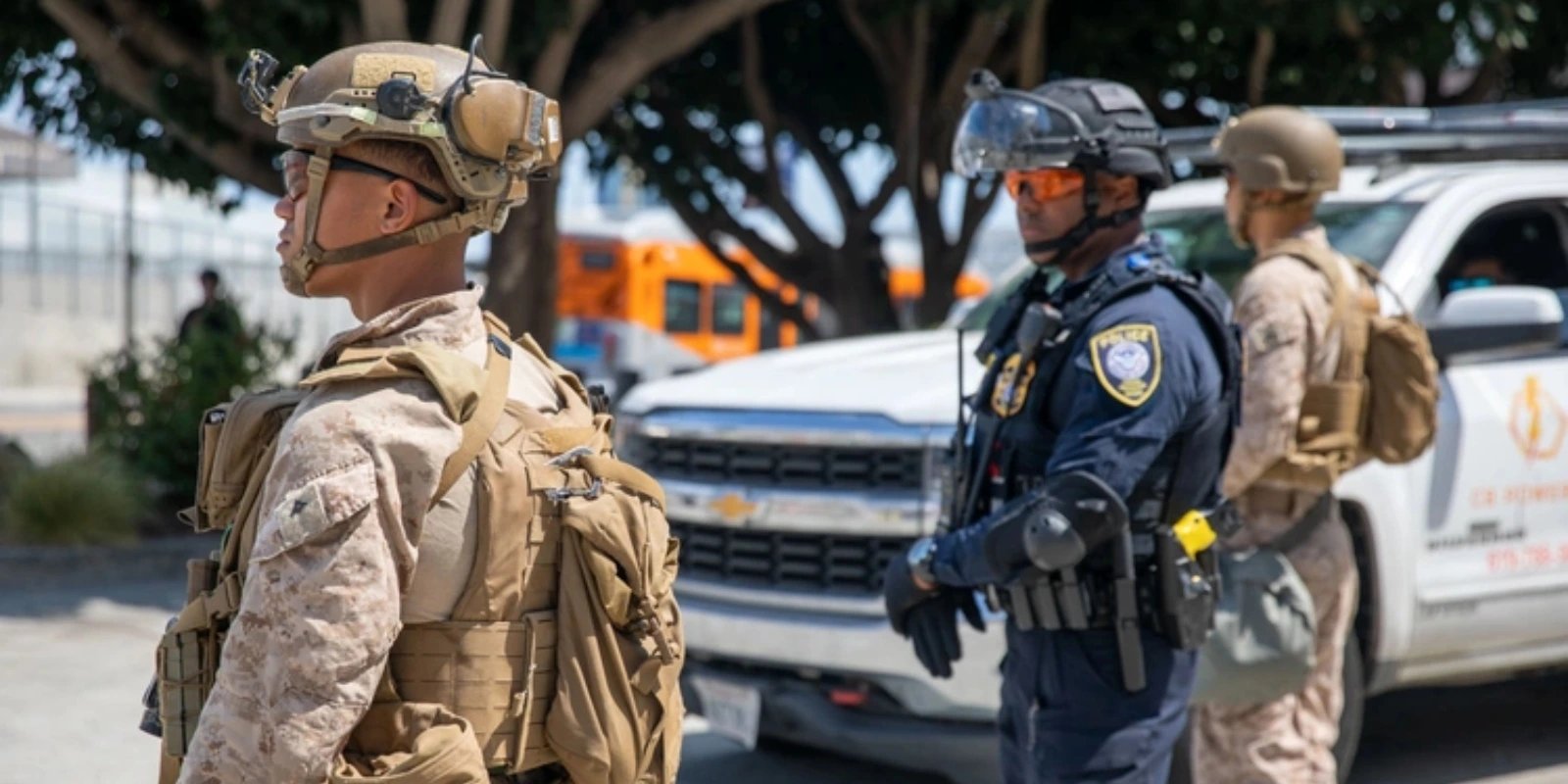
A year ago this month, what the Trump administration described as a temporary emergency response to crime in Washington, DC, became one of the longest-running domestic military deployments in American history. The Pentagon has now confirmed the National Guard will remain in the nation's capital through Inauguration Day 2029, unless the president terminates it sooner.

What Has Happened So Far
President Trump announced the deployment on August 11, 2025, invoking a “public safety emergency” and taking direct federal control of the DC Metropolitan Police Department alongside the Guard mobilization. He cited what he called "crime, bloodshed and bedlam" in the District. The National Guard mission, branded "Make DC Safe and Beautiful," began with several hundred troops and expanded steadily over the following year.
That characterization of “crime, bloodshed, and bedlam” stood in direct contradiction to the U.S. Attorney's Office for DC's own announcement in January 2025, just seven months earlier. That total violent crime in the District had fallen 35 percent from 2023 and had reached its lowest level in more than 30 years, a statistic reported under prior DOJ leadership and covering full-year 2024 data. All that, of course, before the first Guardsman stepped foot in the District under “Make DC Safe and Beautiful.”
By the summer of 2026, as the city marked the 250th anniversary of the signing of the Declaration of Independence, troop levels essentially doubled to nearly 5,000 Guard members drawn from more than 20 states. As of early August, more than 4,600 personnel from DC and 24 states and territories remained on the ground, alongside an unspecified number of less visible federal law enforcement officers. Numbers are expected to settle lower, with officials projecting the mission will typically hover between 2,500 and 3,000 troops going forward.
The Pentagon has also moved to make the arrangement more permanent in practical terms. Officials signed a $292 million contract to move Guard members out of hotels and into apartments across the region, a shift expected to save roughly $90 million through 2029. The Defense Department's own cost estimate, provided to Congress in response to inquiries from Senator Elizabeth Warren (D-MA), puts the total price tag at approximately $1.4 billion for fiscal years 2027 through 2029, assuming an average deployment of 2,500 Guard members. That figure does not include costs already incurred since August 2025, which the Pentagon has not yet made public.
Notably, the DC mission operates under a different legal footing than National Guard deployments elsewhere in the country. Because the President serves as direct commander of the DC National Guard under the DC Code, rather than needing to federalize a state Guard under Title 10, the DC deployment has continued largely unimpeded by the court challenges that have constrained similar missions in California, Oregon, and Illinois.
Crime fell. The question is which crime, and why.
MPD DATA · CHANGE SINCE THE GUARD’S ARRIVAL
Bars scaled to a common 60% axis.
NISKANEN CENTER STUDY · MAY 28, 2026 · EFFECT ATTRIBUTABLE TO THE DEPLOYMENT
OPPORTUNISTIC PROPERTY CRIME
−24%
A real, fast reduction — concentrated in auto theft and larceny.
VIOLENT CRIME, INCL. ROBBERY AND HOMICIDE
No break
No measurable change at the deployment date.
“It was an expensive tool deployed in the wrong places for the wrong types of crime.
Niskanen Center, May 28, 2026
What Are the Results So Far?
The results so far are genuinely mixed. The administration has repeatedly pointed to falling crime figures as vindication for the mission, with Defense Secretary Pete Hegseth hosting a public event this summer at Meridian Hill Park to thank troops for what he described as securing the city. Year over year since the Guard's arrival, MPD data shows homicides down 32 percent, robberies down 15 percent, and car theft down 53 percent.
Independent analysis complicates how much of that credit belongs to the Guard specifically. A study published May 28, 2026, by the nonpartisan Niskanen Center, which isolated the deployment's effect using D.C.'s crime and policing data as a natural experiment, found the Guard's presence produced a real reduction in crime of approximately 24 percent, but concentrated almost entirely in opportunistic property offenses such as auto theft and larceny.
Violent crime, including robbery and homicide, showed no measurable break at the deployment date. The researchers found Guard troops were posted largely in commercial, transit, and tourist corridors rather than in the city's highest-crime neighborhoods, and calculated the daily cost of a Guard member in D.C. at roughly $607, compared with about $384 for an MPD officer. Their conclusion was blunt:
"The National Guard deployment was not a waste. It produced a significant reduction in property crime, and it did so quickly, which matters when residents and businesses are demanding visible action. But it was an expensive tool deployed in the wrong places for the wrong types of crime."
In practice, the mission has expanded well beyond traditional law enforcement support. Guard members have patrolled tourist sites such as the Tidal Basin during the Cherry Blossom Festival, walked beats in low-crime neighborhoods like Georgetown, assisted with medical emergencies, performed snow removal, and carried out beautification projects, some of which have drawn support from residents even as the broader mission remains contested.

A Guard member costs 58% more than an MPD officer
Per person, per day, the deployment runs well above what the District spends on its own police — a gap that compounds across thousands of troops and more than three years.
Approximate daily cost per person, Niskanen Center calculation.
ESTIMATED COST, FY2027–2029
$1.4B
DoD figure to Congress, assumes an average of 2,500 Guard members, excludes all costs since August 2025 (not made public).
HOUSING CONTRACT
$292M
Hotels to apartments across the region.
PROJECTED SAVINGS THROUGH 2029
$90M
Projected savings through 2029 from that shift.
What Critics and Residents Are Saying
A year in, DC residents and local officials continue to question both the necessity and the legality of an extended military presence in the capital. Scott Michelman, legal director of the ACLU of the District of Columbia, summarized the frustration bluntly,
"There's a deep irony that here we are in the capital of the free world, and our president is treating it like a police state."
Nineteen former senior military and defense officials who served under presidents of both parties added their voices to the debate this summer, writing to the Democratic governors who declined to send their own state Guard units to Washington. The letter praised those governors' restraint in explicitly institutional terms:
"Over the past 250 years, a non-partisan military has been a bedrock of American democracy. Your abstention from the D.C. deployment is an honorable tribute to those who founded our nation and the men and women in uniform who have fought to defend it ever since."
The signatories raised specific concern about Guard personnel performing routine local policing functions, calling it a departure from the long-standing separation between military forces and domestic law enforcement.
Local officials, meanwhile, view the extended deployment as an encroachment on the heavily Democratic city's limited home rule autonomy, a tension that predates this mission but has intensified as the deployment's endpoint has repeatedly moved further into the future.
The Case of Captain Anna King
No single episode has crystallized the debate over the Guard's role in Washington more than the detention of Anna King, a retired U.S. Army captain who served in Iraq and holds both a Purple Heart and a Bronze Star.
On May 8, 2026, King was sitting on a bench outside her own home on a busy DC street when three National Guard members, assigned to the Idaho National Guard, entered her front gate and confronted her. Ring security camera footage captured the encounter. As the three Guardsmen approached, King can be heard telling them,
"Get away from me right now. You have absolutely no authority to detain me."
As she attempted to move toward her front steps, the Guardsmen grabbed her, pinned her to the ground, and secured her hands behind her back with zip ties, holding her restrained for roughly 17 minutes.
The Joint Task Force overseeing the DC mission said the guardsmen approached King because she was suspected of assaulting a Guard member two days earlier, an allegation her attorneys have called baseless and unsupported by any filed charges. King's legal team believes the true motivation was her monthslong public criticism of the deployment. King had displayed large signs outside her home reading "Occupation: Troops Out" and "National Guard Stop Being So Embarrassing."
Following her detention, DC's Metropolitan Police were called to the scene. King was held overnight and is now facing a charge of assaulting the guardsmen who detained her. Her attorneys say she sustained a serious wrist injury from the zip ties that required surgery, along with ongoing post-traumatic symptoms. "Being a combat veteran, having served in war, to then be abused and assaulted by National Guardsmen at home has deeply decreased my ability to sleep again," King said in a video statement released by the ACLU of DC.
"I'm not going to stop sitting outside of my home on my bench, and I'm not going to stop bringing awareness to the fact that armed National Guardsmen in any city in the U.S. is uncalled for."
Michael Perloff, senior staff attorney at the ACLU of DC, who represents King, framed the incident as illustrative of a structural problem rather than an isolated one. "National Guard members aren't trained for this work. This isn't what they do on a day-to-day basis; they are being asked to do something that they are not equipped to do," Perloff said. All Guard members assigned to the DC mission have been deputized as special police through the U.S. Marshals Service and carry handguns, an arrangement that is unusual for a domestic Guard deployment. They lack formal arrest powers but retain the authority to detain individuals until civilian officers arrive.

Legal Claims and Court Outcomes
King's case is not the first from the DC mission to reach a legal remedy. Perloff also represented Sam O'Hara, a DC resident arrested on September 11, 2025, after he followed several Ohio National Guard members while playing the Darth Vader theme from Star Wars in protest. O'Hara sued the District, four MPD officers, and an Ohio Guard sergeant. The District agreed to pay O'Hara $50,000, inclusive of attorney's fees and costs, to settle his claims against the city and its officers. That settlement did not resolve O'Hara's separate claims against the Ohio Guard member, who has asked a federal judge to dismiss the case against him.
King's attorneys, working with the ACLU of DC and the private firm Levy Firestone Muse, filed an administrative Federal Tort Claims Act (FTCA) complaint against the Idaho National Guard and the Department of Defense on July 28, 2026, seeking $3 million in damages. Under the FTCA, an administrative claim of this kind is a required precursor before a lawsuit can be filed in federal court. King's claim was one of 54 such claims the ACLU and its affiliates filed that day across 17 states and DC, alleging misconduct by federal law enforcement and National Guard personnel connected to the second Trump administration's domestic deployments.
Beyond DC specifically, the broader legal fight over presidential authority to deploy the Guard domestically reached the U.S. Supreme Court this past winter, though in cases involving a different legal mechanism. In Trump v. Illinois, decided December 23, 2025, the Court ruled 6-3 on the emergency docket that the administration had likely exceeded its statutory authority under 10 U.S.C. § 12406(3) when it attempted to federalize Illinois and Texas Guard units to protect federal immigration personnel and property in Chicago over the governor's objection. The ruling followed an earlier, similar defeat for the administration in California, where U.S. District Judge Charles Breyer found that the federalization of the California Guard during 2025 protests in Los Angeles violated the Posse Comitatus Act. California prevailed, and the administration withdrew its appeal, returning Guard troops to Governor Gavin Newsom's command by December 31, 2025.
These rulings do not directly govern the DC mission, since the president's authority over the DC National Guard is not constrained by the same Title 10 federalization framework that applies to state Guard units. But attorneys and former officials following the DC litigation say the Illinois and California precedents have established that courts are willing to review presidential Guard deployment decisions, a principle likely to inform future challenges regardless of jurisdiction.
From several hundred to a standing garrison
Several hundred
~5,000
4,600+
2,500–3,000
AUG 11, 2025
Deployment announced under a declared public safety emergency.
SUMMER 2026
Levels essentially double for the anniversary surge; troops drawn from more than 20 states.
EARLY AUG 2026
Personnel from DC and 24 states and territories remain on the ground.
THROUGH JAN 2029
Projected steady state through Inauguration Day, unless the president terminates it sooner.
Columns are milestone readings, not a continuous series. Yellow marks a projection; the hatched band spans the 2,500–3,000 range.
MISSION LENGTH AT INAUGURATION DAY 2029
3.5 yrs
One of the longest-running domestic military deployments in American history.
VIOLENT CRIME BEFORE THE MISSION BEGAN
−35%
Full-year 2024 against 2023, a 30-year low, per the U.S. Attorney’s Office for DC in January 2025, seven months before the first Guardsman arrived.
FTCA CLAIMS FILED IN ONE DAY
54
Across 17 states and DC on July 28, 2026, by the ACLU and its affiliates, including Capt. Anna King’s $3 million claim.
The Way Ahead
As of this writing, the DC mission's legal footing through January 2029 remains intact, and the Pentagon has signaled no plans to reduce it substantially beyond the natural drawdown from this summer's anniversary surge. Troop levels are expected to stabilize in the 2,500 to 3,000 range for the duration. The $1.4 billion cost estimate through 2029, combined with the newly signed apartment housing contract, suggests an administration planning for the long term rather than a swift exit.
For residents, elected officials, and the Guard members themselves, many of whom are serving repeated rotations far from their home states, the mission's open-ended timeline raises questions that remain unresolved a year in: what standard determines when an emergency ends, who bears accountability when Guard members operate in roles for which they were not trained, and what precedent a multiyear domestic deployment sets for future administrations of either party. King's tort claim, along with any future legal action it may inspire, is likely to test at least some of those questions in the months ahead.
Continue Reading
DC National Guard Deployment to Tackle Crime Surge
Join the Conversation

Mickey Addison
Military Affairs Analyst at MyBaseGuide
Mickey Addison is a retired U.S. Air Force colonel and former defense consultant with over 30 years of experience leading operational, engineering, and joint organizations. After military service, h...
Mickey Addison is a retired U.S. Air Force colonel and former defense consultant with over 30 years of experience leading operational, engineering, and joint organizations. After military service, h...
Credentials
- PMP
- MSCE
Expertise
- defense policy
- infrastructure management
- political-military affairs
SHARE: