Hegseth Orders Sweeping Overhaul of Officer Professional Military Education

Secretary of Defense Pete Hegseth announced changes to officer professional military education (PME) to address what he termed “academic drift” in intermediate and senior service schools. In a November 9, 2026 memo titled “Reforming Professional Military Education to Forge Warfighters and Secure Victory,” Hegseth announced 33 directives to modify officer PME. This is the latest in a series of significant changes in how Hegseth sees officer education and how the Department of Defense interacts with academia.
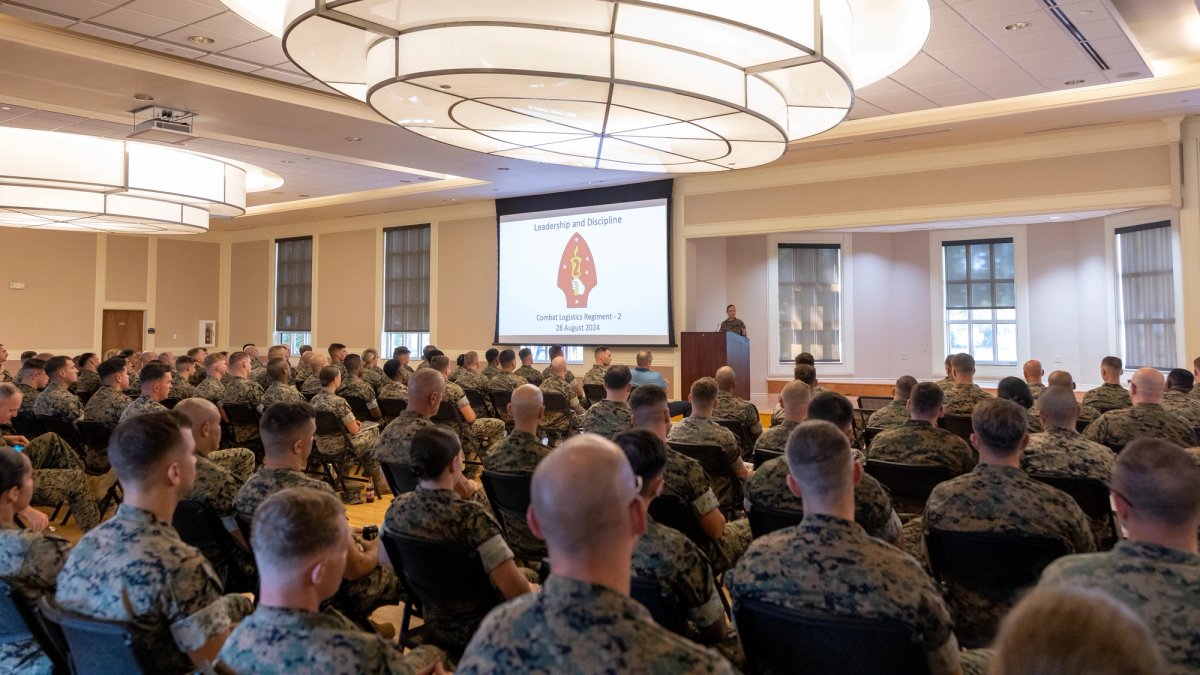
During a 30-minute speech to 700 Naval War College students, faculty, and staff, the Secretary detailed the new directives. In the speech, he criticized DEI programs, highlighted the termination of partnerships with various prestigious academic institutions over differences in philosophy, and declared his view that PME had been “civilianized.”
Hegseth’s History with Academic Institutions
An Ivy League graduate himself, Pete Hegseth’s skepticism toward academia predates his tenure at the DoD. In a June 2022 Fox & Friends segment, Hegseth wrote “Return to Sender” across his diploma from the prestigious Kennedy School of Government at Harvard, where he earned a Masters Degree in 2013.
On his LinkedIn profile, he wrote “Mailed Degree Back from this Anti-American/Anti-Western Indoctrination Camp” under the entry for Harvard. In his confirmation hearing, Hegseth made plain his intent for fewer civilian academics and more uniformed military members:
“And we need more uniformed members going back into West Point, the Air Force Academy, and the Naval Academy, as a tour-to-teach, with their wisdom of what they have learned in uniform, instead of just more civilian professors that came from the same left-wing, woke universities that they left, and then try to push that into service academies.”
Upon taking office at the Pentagon, Secretary Hegseth set out to re-order the relationship between academia and the military. In February 2026, he severed ties with Harvard, writing that the Ivy League institution sent officers back with “heads full of globalist and radical ideologies that do not improve our fighting ranks." That move eliminated or transferred 93 senior service school (SSC) fellowships to other institutions.
The following month, Hegseth stood up the SSC Task Force with the mandate to review relationships with non-DoD institutions and curricula at DoD senior service schools with a 90-day clock. The review was to be completed in time for the 2026-27 academic year, which began this past August.
This past September, service academies stopped appointing civilian faculty to new hires. In a September 29, 2026 memo, Hegseth wrote,
“Tenure often leads to academic stagnation, faculty complacency, and institutional inability to adapt to emerging needs.”
Finally, in his November 9 address to the Naval War College, the Secretary disclosed that he had ended the Naval War College’s twelve-year relationship with Brown University’s Watson Institute for International Studies, saying,
“The only place more stridently ideological in one direction more than Columbia or Harvard is Brown. It was long past due to end that relationship in service of breaking the paradigm of civilianizing military education.”

What’s the Same
Several directives in the Task Force recommendations and Hegseth’s memo formalize or expand upon existing practices at PME schools. Command and staff colleges, as well as the Service war colleges, already have capstone wargame exercises. The Joint Land, Aerospace, and Sea Simulation (often called the Joint Land, Air & Sea Strategic Special Program, or JLASS-SP) has been run across the SSC’s for decades. What’s changing is making it a graded event and adding it to intermediate-level education.
Hegseth’s directive includes requirements for curricula, several of which align with current Joint Learning Areas or Joint Staff Special Areas of Emphasis for research. Civil-military relations, ethics, and grounding in the National Security Strategy and National Defense Strategy are currently required by the CJCS guidance in CJCSI 1800.01F. The Joint Staff's annual Special Areas of Emphasis currently work like the research priority list Directive 18 establishes under the Undersecretary of Defense for Personnel and Readiness.
Every military service except the Navy already has competitive selection for in-residence PME for senior and intermediate service schools. The Navy currently uses an administrative process run through its functional community in order to account for sea duty and other demands.
Regarding Directive 11, which ensures the majority of the full-time faculty possess direct military experience and defense experience, demographic data from SSC websites indicates most institutions currently operate near this threshold. Roughly half the faculty are military, and of the civilian faculty, roughly half are veterans or have civilian experience in defense or intelligence agencies.
The Eisenhower School at National Defense University has a Senior Acquisition Concentration designed for the acquisition workforce, so the primary change would be ensuring the entire acquisition corps, including program executives and defense software leads, prioritizes that school over others for all services.
Regarding tenure for civilian faculty, the Secretary’s directive covers new hires. Currently, tenured faculty across all DoD academic institutions are a minority of the total. The Naval War College and Air University have tenured faculty, but only the Naval War College has a formal tenured track. The Army offers mostly renewable three-year term appointments, and Marine Corps University does not offer tenure.
What’s New in the Secretary’s Memo
There are several new initiatives in the Secretary's memo, the most significant being the addition of a mid-career PME, joint credit for military instructors, and the addition of a Warfighter Chair at SSCs; the addition of AI “sandboxes” for simulation along with wargaming in a classified environment.
Mid-career officers will be required to complete “PME 1.5,” which is intended to bridge between command and staff college and war college. The course will cover Global Force Management, campaign design, contested logistics, algorithmic warfare, and will become a prerequisite for resident SSC. Intermediate PME (ILE) for officers occurs between the 10- and 14-year point as an O-4, and Senior Service School after the officer’s first O-5 command or between 17 and 22 years in service. “PME 1.5” is intended to fill the six- to ten-year gap between ILE and SSC.
The proposal to add military faculty to the Joint Duty Assignment List (JDAL) commensurate with service on a joint staff is intended to incentivize high-performing officers to join the faculty at SSCs. Academic instructors are generally required for a minimum of two to three years following completion of academic instructor training. That timeline could be a barrier to an officer trying to line themselves up for the next command or promotion.

The Real Change: Control of PME
A major change is the shift of responsibility for curricula and credentialing to the Undersecretary of Defense for Personnel and Readiness. Currently, the Chairman of the Joint Chiefs oversees PME and sets the requirements for curricula, as well as research areas of interest. The Secretary’s memo directs the Undersecretary to “analyze alternative institutional accrediting options for SSCs and ILE institutions.”
Currently, DoD academic institutions are credentialed via a host of civilian credentialing commissions and boards, which are Congress’ conditions for those schools awarding degrees. The USD(P&R) assuming the Chairman’s role is within the Secretary’s authority, but it is not clear what alternatives are available to accredit academic programs at those institutions.
Directive 22 establishes a new senior PME governance forum whose guidance "will supersede all other military education governance bodies." This effectively moves the functions of the Chairman’s Military Education Coordination Council run by the Joint Staff J-7 to the USD(P&R). In the new system, the services and the Joint Staff get seats, but they are no longer in the driver's seat for curricula, formulating budgets, and the like.
Directive 5 requires a review of the schools’ Boards of Visitors charters and membership. This mirrors recent audits and membership overhauls conducted at the service academies. The directive seeks a minimum of 15 years of military experience for BoV members, and requires both the audit of the charters and members to be in compliance with the Federal Advisory Committee Act of 1972.
Implementation Timeline
Although the memo takes effect immediately, most changes students will see don’t arrive until Academic Year 2027-28, so much of what is in the Secretary’s memo will not affect the current class.
Officers who have completed ILE and are not yet eligible for SSC will have an additional requirement, PME 1.5, before they become eligible for SSC. That course then becomes a gate for eligibility for resident SSC.
Beginning in AY 2027-28, ILE and SSC students will see a revised curriculum. By AY 2028-29, students will face a graded capstone wargame or comprehensive exam that weighs heavily on their final class standing. The Eisenhower School will likely have to make room for more acquisition professionals going through its Senior Acquisition Concentration.
Continue Reading

Army Closes Final Path Into Blended Retirement System for Legacy Soldiers
Welcome to Patrick Space Force Base! Everything You Need to Know About Your New Duty Station

20+ Things to Do Near Patrick Space Force Base, in Brevard County, Satellite Beach, and More!
Join the Conversation

Mickey Addison
Military Affairs Analyst at MyBaseGuide
Mickey Addison is a retired U.S. Air Force colonel and former defense consultant with over 30 years of experience leading operational, engineering, and joint organizations. After military service, h...
Mickey Addison is a retired U.S. Air Force colonel and former defense consultant with over 30 years of experience leading operational, engineering, and joint organizations. After military service, h...
Credentials
- PMP
- MSCE
Expertise
- defense policy
- infrastructure management
- political-military affairs
SHARE: