Air Force Waist-to-Height Deadline: What Happens If You Miss July 31

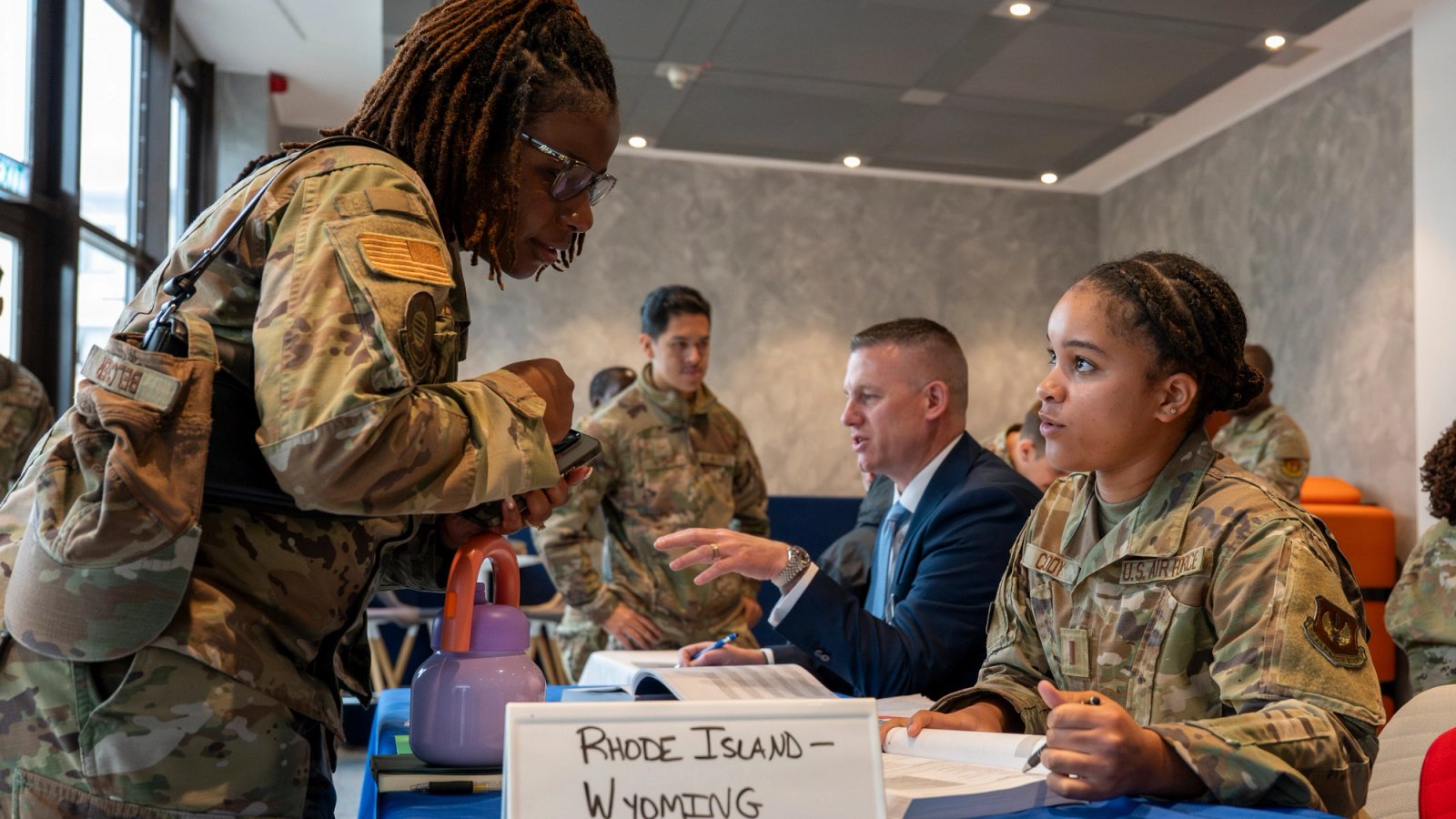
Active duty Airmen have until Friday to load a number into an app, and the Air Force has spent two weeks making sure nobody misses the pending deadline. Chief of Staff Gen. Ken Wilsbach sent a letter to the force, and the message has been constantly reinforced via Public Affairs channels from the Pentagon to the wing level. As the deadline approaches, there has been a clarification that should alleviate any immediate fears Airmen have had: the number itself will not be scored. At least not this time.
That clarification has left plenty of Airmen with a straightforward question and no straightforward answer on where to find it: what actually happens if you miss the July 31 deadline for your Waist-to-Height Ratio measurement?
The Deadline, In Plain Terms
The requirement traces to a July 9 memorandum from the Office of the Assistant Secretary of the Air Force for Manpower and Reserve Affairs, which directed a one-time Waist-to-Height Ratio, or WHtR, measurement for every Airman without a qualifying exemption. Active duty members must have a current measurement recorded in a new application called myBodyComp no later than July 31. Air Force Reserve and Air National Guard members (ARC) have until Aug. 31.
Four days after that memo went out, Wilsbach reinforced it in a letter to the force dated July 13.
"Standards are the foundation of discipline and readiness," he wrote. "Consistently holding ourselves accountable builds trust within our formations, reinforces confidence in our teammates, and ensures we are prepared to answer our Nation's call."
On the measurement itself, he was specific: "The Waist-to-Height Ratio (WHtR) assessment is an important component of our overall fitness program and provides commanders another tool to understand the readiness and health of the force. You must have a current WHtR assessment uploaded in myBodyComp."
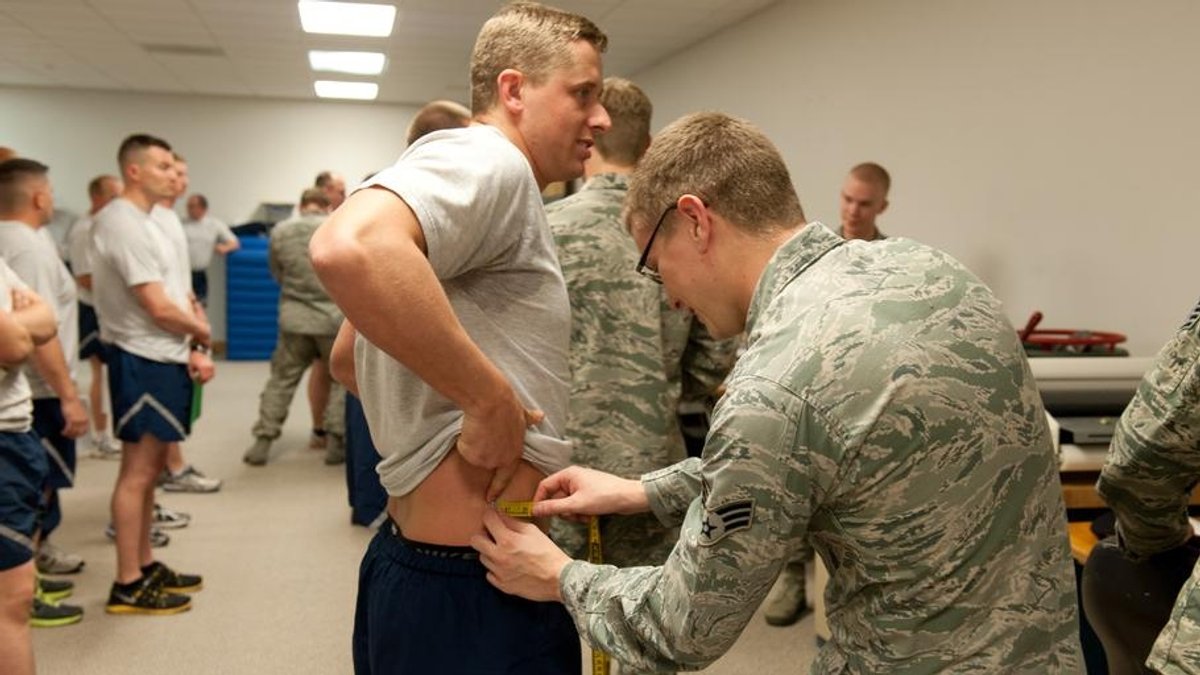
WHtR is calculated the way it sounds. An Airman's waist circumference, measured at the midpoint between the bottom rib and the top of the hip bone by a trained Physical Fitness Readiness Assessment administrator or fitness assessment cell staffer, is divided by height. The Air Force adopted the metric because it correlates more reliably with cardiometabolic health risk than body mass index or waist circumference alone, replacing a BMI that had been a perennial source of complaint by some more muscular Airmen.
On July 23, the Air Force formally launched myBodyComp as the system of record for logging that measurement, distinct from myFitness, which remains the system of record for official Physical Fitness Readiness Assessment scores.
The launch announcement repeated the deadline and added detail on exemptions and carryover rules that had not been spelled out as clearly before.

It Will Not Count, This Time
According to the Air Force's July 23 release, "the measurement is not part of the Physical Fitness Readiness Assessment and will not affect fitness scores, test currency or other personnel actions."
But to put it even more plainly: this mandated data won’t be scored. According to an Air Force spokesperson,
"This one-time Waist-to-Height Ratio (WHtR) measurement is separate from the official PFRA and is not scored. Specific administrative steps and tracking are at the discretion of commanders."
The WHtR data point being collected by July 31 is explicitly a diagnostic baseline for the modernized Physical Fitness Readiness Assessment program (PFRA) that took effect July 1, not a graded event tied to any Airman's fitness score, promotion file, or record of performance.
The WHtR is different from the waist measurement component that already exists inside the actual PFRA, which is scored and does count. The Air Force Personnel Center's official PFRA scoring chart, effective March 1, sets a single WHtR standard across every age band and both sexes: a ratio of 0.49 or below earns the maximum 20 points available for that event, a ratio of 0.50 earns 19 points, and scoring steps down in single-point increments for each 0.01 increase until a ratio of 0.60 or above earns zero points, the assessment's designated "high risk" threshold.
According to an Air Force spokesperson,
"Airmen achieve a composite score from 0 to 100 based on the following maximum component scores with component minimums: 50 points for Cardiorespiratory, 20 points for Body Composition (does not have a minimum requirement), 15 points for Muscular Strength, and 15 points for Core Endurance."
"If an Airman’s body composition component is high risk (WHtR > .55) and he or she does not meet the minimum standards on the other three components or scores below a 75, a Tier 2 Body Fat Assessment (BFA) must be accomplished."
Airmen who tested during the March 1 through June 30 diagnostic window and kept an official score do not need to re-measure. Those whose diagnostic scores were purged, or who have no score on file since March 1, must complete a new measurement before the deadline, though a purged score documented on a hardcopy AF Form 4446 signed by both the Airman and the assessment administrator can also satisfy the requirement.
The Tape Test Problem: Margin of Error
While the math behind the Waist-to-Height Ratio is perfectly objective, the physical act of measuring it introduces a variable the Air Force has struggled with for decades: human error. The official guidance requires the tape to be placed at the midpoint between the lowest rib and the top of the hip bone. But anyone who has ever stood in a fitness center while a stranger wraps a piece of fiberglass around their midsection knows that clinical precision does not always translate smoothly to the gym floor.
Under the new PFRA scoring chart, the margins are incredibly thin. For an Airman who is 68 inches tall, a waist measurement of 33.3 inches yields a WHtR of 0.489, safely in the maximum 20-point category. However, if a Fitness Assessment Cell (FAC) staffer places the tape just a fraction of an inch too low, or if the tape isn't pulled with uniform tension, that measurement could easily jump to 34.5 inches. Suddenly, that same Airman's ratio rises to 0.507, dropping them into the 18-point bracket. A two-point swing might seem minor, but for an Airman hovering near the minimum passing line of 75, it can be the difference between a passing score and a career-altering failure.
Methodology matters immensely under this new standard. Air Force guidelines dictate specific breathing protocols during the tape test, requiring the measurement to be taken at the end of a normal exhalation. But in the rush to process hundreds of Airmen through a short diagnostic window, inconsistencies are inevitable. An Airman who nervously holds their breath or flexes their abdominal wall can inadvertently expand their circumference. Conversely, an administrator who pulls the tape too tightly to compress soft tissue can artificially lower the score, creating wild discrepancies from one test cycle to the next.
For now, because the July 31 deadline is purely for a diagnostic baseline, these minor tape-test discrepancies carry no real penalty. But when the metric becomes a scored component of the PFRA, this margin of error will likely become the program's primary point of friction. Airmen whose careers hang in the balance of a fraction of an inch will naturally scrutinize the administrators holding the tape. Ensuring uniform, standardized training for every FAC staffer across the enterprise will be one of the Air Force's biggest hurdles before this baseline becomes load-bearing.
Who Is Exempt, And Who Is Not
Airmen with a full medical exemption documented on an AF Form 469, a pregnancy or postpartum exemption, or a composite exemption tied to an approved retirement or separation within 12 months are not required to complete the measurement.
Partial exemptions covering individual fitness components, such as an exemption from running or push-ups, do not by themselves exempt a member from the WHtR measurement unless a medical provider specifically extends the exemption to cover it.
Reserve and Guard members carry the requirement into the drill schedule, so the fitness assessment schedule should not change for most. ARC members in a qualified duty status must meet the requirement, and those performing a regularly scheduled drill or unit training assembly in July or August must complete the measurement no later than Aug. 31, with wing and installation commanders responsible for executing the requirement within their organizations.

Why Now: Behind the Memo
The Air Force's July push follows a Sept. 30, 2025 gathering of hundreds of generals and admirals at Marine Corps Base Quantico, where Secretary of Defense Pete Hegseth laid out a sweeping set of new physical standards for the joint force.
"It's tiring to look out at combat formations, or really any formation, and see fat troops," Hegseth told the assembled officers, according to the official Department of Defense video and transcript of the address.
"Likewise, it's completely unacceptable to see fat generals and admirals in the halls of the Pentagon and leading commands around the country and the world."
He directed that every member of the joint force, at every rank, take a physical fitness test and meet height and weight standards twice a year, and complete physical training every duty day.
That directive set the framework the Air Force has been building out since, of which the modernized PFRA and its WHtR component are the service-specific implementation. The Army and Marine Corps are pursuing comparable body composition overhauls on their own timelines, with their own scoring standards and their own consequences for members who fail to meet them, including medical evaluation referrals in some cases.
The Army, for instance, completely overhauled its long-standing height and weight tables, abandoning the old tape-test locations in favor of a single-site waist measurement, much like the Air Force. The Marine Corps, however, is taking an even stricter approach. While the Air Force scoring chart identifies a 0.55 ratio as the start of the "high risk" zero-point category, the Marines are pursuing a leaner 0.52 ratio as their hard ceiling. This divergence highlights a broader Pentagon reality: while Hegseth mandated a joint-force standard, each branch is tailoring the biometric realities to its own specific culture and mission requirements. The Air Force’s approach is arguably the most measured, designed to avoid the sudden separation boards that a harder, immediate cutoff might trigger.
The Air Force's version, at least as it stands heading into July 31, keeps this specific entry as baseline and not part of the PFRA for now. For Airmen with longer memories, they will recall that this is exactly how the Air Force has rolled out changes to the fitness program in the past. When then CSAF General John Jumper added push-ups and sit-ups and re-instituted the 1.5-mile run in 2004, many units did “practice” assessments to help. Airmen establish a baseline, and there was plenty of advance notice and time for implementation.
The process is similar here: establish a baseline and then begin making them “count” once commanders and unit leaders are ready to administer the program.
What Airmen Should Actually Do This Week
For any Airman still unsure where they stand, the practical checklist is short.
Check whether a WHtR measurement from the March 1 through June 30 diagnostic window is already on file and retained as official; if so, no action is needed. If no current measurement exists, or if a diagnostic score was purged, schedule a measurement with a unit fitness assessment cell before Friday.
Confirm exemption status directly with a medical provider rather than assuming a partial profile covers the WHtR requirement, since the Air Force's guidance is explicit that it usually does not. And if questions remain after checking with an installation fitness assessment cell or fitness information manager, the Air Force has designated a central inbox, AFSVC.FitnessPrograms.Workflow@us.af.mil, for issues that cannot be resolved at the installation level.
The bigger takeaway for the force is less about a single Friday deadline and more about what it signals for the next PFRA cycle. This baseline data collection is the Air Force's way of establishing where the force stands on WHtR before the metric becomes fully load-bearing in every Airman's twice-yearly fitness score.
The number an Airman logs this week will not follow them anywhere on Friday. The number they post on their next official PFRA almost certainly will.
Continue Reading

How to Cast Your Military Absentee Ballot: Step-by-Step Guide for Service Members

Planning Your Military Career? Why You Should Lock in Life Insurance Early

Free Wi-Fi in the Barracks is Finally Here (And the Marines Got It First)
Join the Conversation

Mickey Addison
Military Affairs Analyst at MyBaseGuide
Mickey Addison is a retired U.S. Air Force colonel and former defense consultant with over 30 years of experience leading operational, engineering, and joint organizations. After military service, h...
Mickey Addison is a retired U.S. Air Force colonel and former defense consultant with over 30 years of experience leading operational, engineering, and joint organizations. After military service, h...
Credentials
- PMP
- MSCE
Expertise
- defense policy
- infrastructure management
- political-military affairs
SHARE: