
Too Many Statuses, Not Enough Benefits: Inside the Duty Status Reform Act
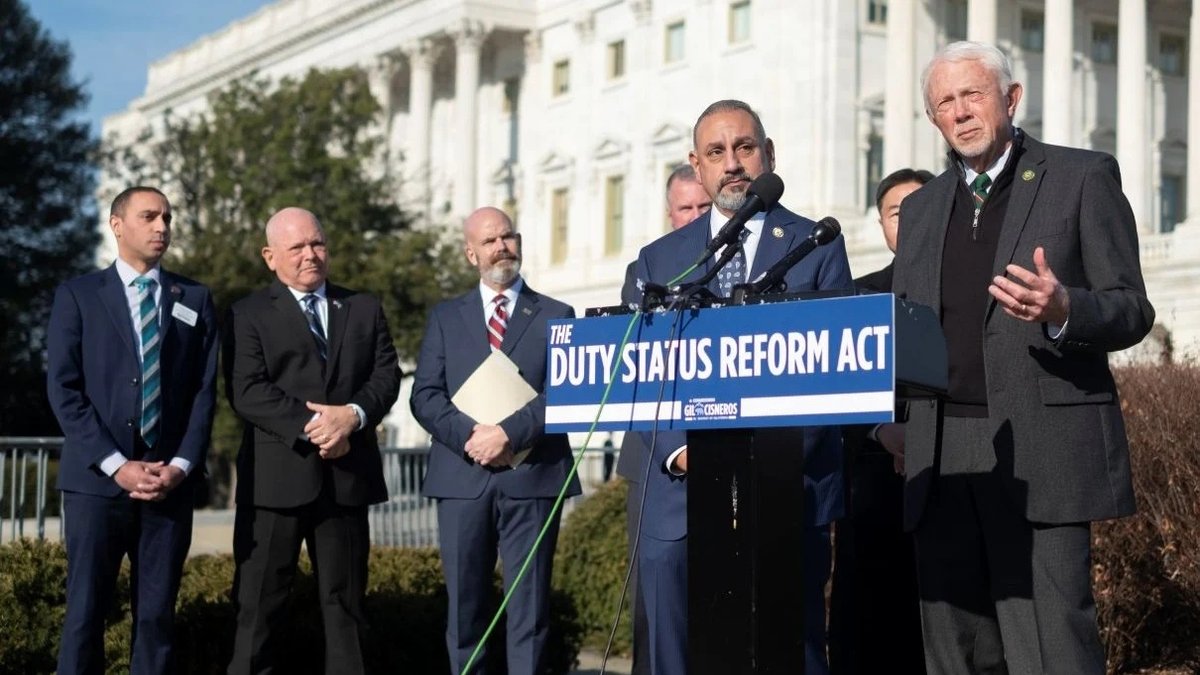
For anyone who has been deployed with or as part of a National Guard formation, navigating the complex web of duty status, pay and allowances, and benefits can be daunting. The Guard, conceived as either an “emergency force” meant to fill specific gaps or an “augmentation” force designed to round out active-duty formations, has effectively become a part-time active-duty force in the post-9/11 era. However, the bureaucracy designed to manage what is essentially 54 separate military forces has been slow to adapt. A bill in Congress called the Duty Status Reform Act aims to finally simplify that complexity.
When Congress directed the Department of Defense to activate National Guard units for COVID-19 support missions in 2020, thousands of Guardsmen answered the call - and then discovered their orders had been written for exactly 30 days instead of 31. The one-day difference wasn't accidental. At 30 days, TRICARE doesn't activate, BAH stays at the lower reserve rate, and the clock toward retirement credit doesn't tick the same way. Commanders and Pentagon budget officials had a financial incentive to keep orders short, and they used it. The people absorbing the cost were the Guardsmen and their families.
That decision was likely a result of decades of short-duration Guard activations that reflect the system working exactly as designed - or more precisely, as it accumulated over eight decades of piecemeal legislative fixes. The National Guard and Reserve duty status framework, now comprising more than 30 separate classifications scattered across multiple different titles of federal law, is a bureaucratic artifact of a military that no longer exists. The current patchwork of more than 30 Guard and Reserve duty statuses was cobbled together since the end of World War II, and commissions and panels have been recommending its overhaul for a quarter century.
There is now a bipartisan Senate companion bill to match a House effort that has been building momentum since January. The Duty Status Reform Act, introduced June 17 by Sens. Jerry Moran (R-Kan.) and Jacky Rosen (D-Nev.) and cosponsored by six additional senators from both parties, proposes to collapse that labyrinth into four straightforward categories. The bill represents the most serious congressional push to fix this problem in a generation. The consequences for Guard and Reserve families are meaningful.

A System Built by Accident
To understand why all this matters, it helps to understand how the current system came to exist. The Guard and Reserve duty status framework was never designed as a coherent whole. It grew organically, one statutory patch at a time, as Congress responded to each new military crisis with enabling legislation that created another authority, another status, another set of eligibility rules.
Senator Moran articulated the need in his press release,
“The men and women of the National Guard in Kansas and across the country play a critical role in serving our communities and defending our nation. As the Guard’s mission has evolved, the duty status system has become increasingly complex.
This legislation will simplify the structure and strengthen the Guard’s ability to carry out its missions by standardizing pay and benefits, bolstering readiness and better supporting those who serve.”
The complex system has expanded to more than 30 separate statutes scattered across multiple titles of federal law, creating pay and benefits inequities and frequent administrative delays when National Guard members and reservists shift between duty statuses.
For active-duty service members, "duty status" is an administrative identifier - Present for Duty, Leave, Temporary Duty, and similar designations that tell the personnel system where a soldier or airman is at any given moment. For the Guard, the term carries an entirely different weight. Duty status determines who is paying for the mission and under what legal authority. That is crucial for dictating what benefits the service member is entitled to, whether TRICARE activates, what BAH rate applies, and whether the time counts toward retirement. That definitional gap helps explain why active-duty commanders have historically struggled to understand Guard and Reserve status issues: they're not speaking the same language, even when they're using the same words.
The legal ambiguity surrounding the California Army National Guard's June 2025 deployment to Los Angeles illustrated just how far the current system can break down under political pressure. President Trump directed roughly 4,000 CAARNG soldiers to the city, but California Governor Gavin Newsom refused to issue the Title 32 orders that would have funded the mission under state command between the call-up and the issuance of federal activation orders. Federal Title 10 activation orders - the instrument that establishes duty status, triggers pay, and unlocks TRICARE - were delayed.
The soldiers deployed anyway, operating in a legal gray zone that had no clean statutory basis. They were technically under verbal orders from the Federal Commander in Chief, but also still technically remaining under the command of the State Commander in Chief (governor). It was arguably the starkest demonstration in recent memory of what happens when the chain of command moves faster than the paperwork that makes military service legally coherent.
The 2015 Military Compensation and Retirement Modernization Commission report put duty status reform on the Pentagon's formal to-do list. DoD responded by standing up a Senior Leader Steering Committee and a dedicated Working Group on Duty Status Reform, drawing representatives from OSD, the Joint Staff, the National Guard Bureau, the services, and the reserve components. Congress reinforced the mandate in the FY2018 NDAA, directing DoD to consolidate the existing statuses into four categories and develop a legislative proposal to do it. That was eight years ago. The reform stalled repeatedly - caught between interagency disagreements over how to align benefits across the new categories and the sheer legislative weight of touching nearly 300 federal laws in the process.

What Goes Wrong, and When
The mechanics of how the system fails Guard and Reserve members are well-documented, even if rarely explained to the public.
The most acute problem is what happens at the seams - when a service member moves from one duty status to another. The biggest pain point hits when members have to change from one status to another on back-to-back assignments, such as ordering a Reservist to transition from training to support a real-world operation. They changed from one status to another, so it would kick them off TRICARE.
The 30-day threshold creates its own category of dysfunction with consequences that are anything but abstract. A Specialist from Sacramento activated for 30 days receives a lower housing allowance calculated on a reserve transient rate - not the BAH rate for where he actually lives. One additional day on orders changes that entirely. At 31 days, full BAH kicks in, TRICARE activates, and the clock toward retirement credit starts ticking differently. The difference in take-home pay for that single day can run to several hundred dollars a month - and that assumes the orders were written honestly, without an eye toward keeping costs down by staying under the threshold.
The implications of that single-day difference ripple outward. At the beginning of both a border mission and the COVID-19 support mission, Guard members were placed on 30-day orders, leaving them and their families without TRICARE coverage. The suspicion among many Guard and Reserve members is that commanders or Pentagon budget officials have at times deliberately written short orders to avoid triggering the benefit thresholds associated with longer activations - a perverse incentive built into the structure of the system itself.
That suspicion found a very public confirmation in June 2025. A November 2025 Military.com report found that the 4,000 California National Guard soldiers whom President Donald Trump surged into Los Angeles remained unpaid due to delays in issuing official activation orders, leaving compensation and benefits in limbo. According to Guardsmen across multiple units, none had received formal activation orders - the critical paperwork that not only authorizes their duty status, but also unlocks pay, TRICARE health benefits, and eligibility for Department of Veterans Affairs services.
They were on the street executing a federally directed mission; they just weren't, legally speaking, on duty.
The issue goes beyond individual financial hardship. The system results in confusion for service members, administrative burden for commanders, and disruptions in pay and health care. That the system no longer matches how the Guard and Reserve are used has been known for many years, but it has taken a while to develop the comprehensive legislative fix required.
What the Bill Would Actually Do
The Duty Status Reform Act would replace the current maze with four clear categories:
- Category 1: Active Duty - war, national emergency, disaster response, cyber and WMD events, presidential call-ups, and pre-planned missions.
- Category 2: Active Duty - disciplinary jurisdiction, missing status, required active-duty training, and Active Guard and Reserve functions.
- Category 3: Reserve Component Duty - required annual training, musters, Inactive Duty Training-like duties, and additional training with consent.
- Category 4: Remote Assignments - flexible tasks, online learning, and individually assigned non-supervised duties.
Pay and benefits would be standardized within each category, eliminating the status-to-status gaps that currently strip service members of TRICARE, BAH, and other entitlements mid-mission. The bill would also, according to its sponsors, clean up nearly 300 laws - with no additional Congressional Budget Office scoring required, meaning it's budget-neutral as drafted.
Endorsements have come from the National Guard Association of the United States, the Reserve Organization of America, the Enlisted Association of the National Guard of the United States, the Marine Corps Reserve Association, and the Military Officers Association of America - organizations that don't always agree on legislative priorities. This kind of broad-based support in Washington is rare and indicates a common understanding of the problem.
"The National Guard has become an indispensable operational force for this country, but the duty status system has not kept pace with the way our Soldiers and Airmen serve today," said Maj. Gen. (Ret.) Francis M. McGinn, President of the National Guard Association of the United States.
"Duty Status Reform will reduce administrative burdens, simplify a system that has become too complex, and make the Guard easier to access and employ when the nation needs us most."
Sen. Rosen framed the stakes plainly,
"Duty Status Reform is a necessary overhaul to antiquated administrative systems that have negatively impacted our Reserve and National Guard servicemembers' quality of life and readiness.
This bipartisan bill will cut through the red tape by simplifying the duty status structure from nearly 30 statuses down to four, so the reserve component will receive timely and equitable pay and benefits without preventable delays or disruption."
The Readiness Argument
The bill's advocates are careful to frame this not only as a quality-of-life issue but as a readiness issue - and that framing is strategically important in the current political environment, where defense spending is under scrutiny, and Congress is unlikely to act on anything perceived as a benefit expansion without a clear military rationale.
The disparity is the result of a complex and outdated patchwork of more than 30 distinct duty statuses, many of which were created for a different era. In practice, this system allows orders to be structured in ways that deny Guardsmen access to housing allowances, medical coverage, and education benefits. Guardsmen who repeatedly accept missions without predictable pay and benefits face financial strain on their families and employers. Over time, that strain erodes retention. Readiness is not just equipment and training; it is people willing and able to answer the call.
Rep. Gil Cisneros (D-CA), who led the House companion legislation, brought a specific credential to this argument: he served as Under Secretary of Defense for Personnel and Readiness before returning to Congress, giving him firsthand knowledge of how the system operates at the Pentagon level.
"The broken duty status construct is hurting our readiness, and fixing this long-standing issue has remained my number one priority since returning to Congress," Cisneros said.
"The Duty Status Reform Act is a bipartisan, bicameral solution that will bolster our readiness and improve our servicemembers' lives by giving them predictability, pay parity, and hard-earned points towards TRICARE and Post-9/11 GI Bill benefits."

What Comes Next and What Guard Members Should Watch
The Senate bill's introduction gives advocates a vehicle they've been seeking. The House legislation (H.R. 6976) was introduced in January 2026; the Senate companion now provides the bicameral structure needed for the bill to be considered as a standalone measure or incorporated into the FY2027 National Defense Authorization Act - the primary legislative vehicle for defense policy changes.
The NDAA path is likely. The FY2027 NDAA is currently working its way through committee markups, and duty status reform has been flagged by multiple advocacy organizations as a priority amendment. If it follows the pattern of past defense legislation, the Senate Armed Services Committee markup - where Sen. Rosen holds a seat - would be the next critical juncture.
For Guard and Reserve members and their families, the practical question is simpler: what does passage actually mean for you?
If the bill becomes law, it would mean that the benefit your family receives should no longer depend on the specific legal authority under which your orders were written. A Guardsman responding to a hurricane and a Guardsman deployed overseas on the same type of mission would fall under the same category, with the same pay rules, the same TRICARE access, and the same retirement credit accrual. The administrative guesswork - and the risk of falling through the cracks at a status transition - goes away.
It would also mean that a future scenario like Los Angeles in 2025 - where thousands of deployed service members went unpaid because activation paperwork lagged behind the mission - becomes structurally harder to replicate. Under a four-category system, the pathway from presidential call-up to Category 1 Active Duty status is clear. There's no ambiguity to exploit, accidentally or otherwise.
The Guard and Reserve have answered every call since September 11. The question Congress is finally being asked to settle is whether the system supporting them will answer the call, too.
Continue Reading

Family Separation Allowance Is Now $300/Month: What Every Military Family Must Know

The 2027 DoD Per Diem Rates Are Released. Here’s How Your Travel Budget Has Changed

National Guard’s $292 Million Housing Contract Will Move D.C. Troops Out of Hotels
Join the Conversation

Mickey Addison
Military Affairs Analyst at MyBaseGuide
Mickey Addison is a retired U.S. Air Force colonel and former defense consultant with over 30 years of experience leading operational, engineering, and joint organizations. After military service, h...
Mickey Addison is a retired U.S. Air Force colonel and former defense consultant with over 30 years of experience leading operational, engineering, and joint organizations. After military service, h...
Credentials
- PMP
- MSCE
Expertise
- defense policy
- infrastructure management
- political-military affairs
SHARE: