Who Gets to Go to the Moon? Inside NASA’s Modern Astronaut Selection Process

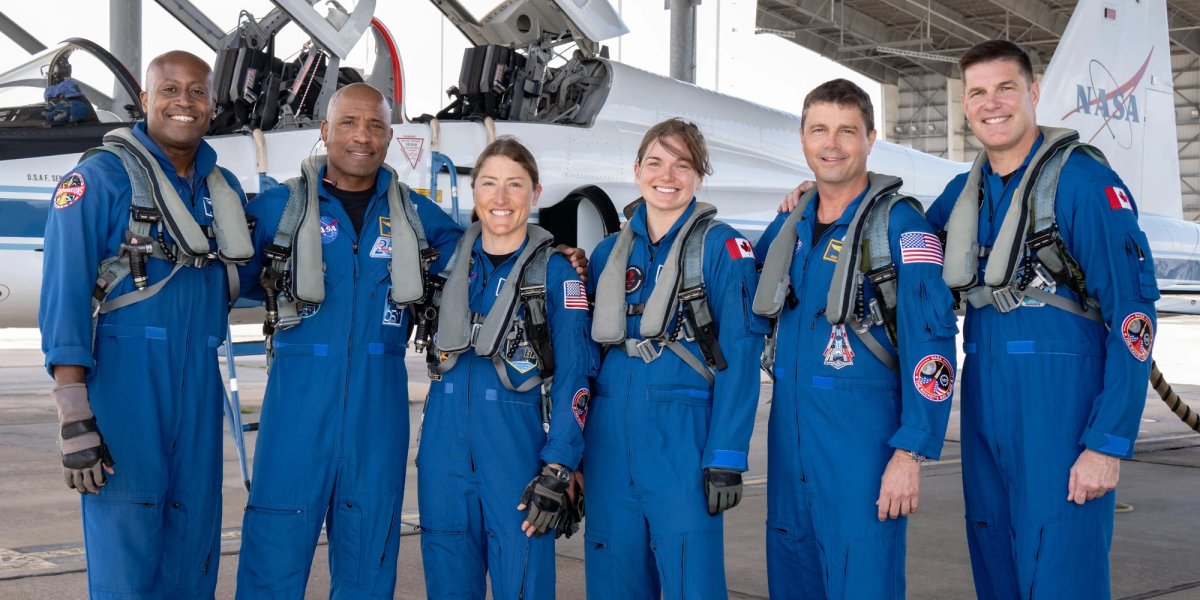
On April 1, 2026, four astronauts will climb aboard a spacecraft and, for the first time in more than half a century, head toward the Moon. The Artemis II mission is not a landing, but it is a return to deep space for American human spaceflight for the first time since 1972. When commander Reid Wiseman, pilot Victor Glover, and mission specialists Christina Koch and Jeremy Hansen strap into the Orion capsule atop a Space Launch System rocket and clear Launch Pad 39B at Kennedy Space Center, they will carry with them decades of institutional knowledge, personal sacrifice, and the hard-won expertise of an evolving astronaut corps that looks nothing like the one that started this journey in 1959 - and everything like the one that will take us to Mars.
How does one become a NASA astronaut? The answer has changed dramatically over sixty years, and that evolution tells a story not just about spaceflight, but about what it means to be the best.

Test Pilots and the Original Right Stuff
When NASA selected its first seven astronauts in April 1959, President Eisenhower quietly directed that candidates come exclusively from the military test pilot ranks. That decision shaped the character of American spaceflight for its first fifteen years. The Mercury Seven - Alan Shepard, Gus Grissom, John Glenn, Scott Carpenter, Wally Schirra, Gordon Cooper, and Deke Slayton - were all military fighter pilots who had already demonstrated the ability to stay calm inside experimental aircraft that were one bolt away from killing them. NASA wanted men who had already seen what happened when machines failed at altitude and still brought the aircraft home.
That coolness under pressure and experience with untested machines would save lives on multiple missions. On Gemini 8, Neil Armstrong and Dave Scott took manual control of the out-of-control spacecraft and successfully de-orbited it to an emergency landing in the Western Pacific Ocean. Everyone is now familiar with the Apollo 13 mission and the heroic efforts of the crew and ground control to bring them home in a crippled spacecraft.
The requirements were stringent by any measure: military test pilot experience, a bachelor's degree in engineering or a related field, 1,500 hours of flight time, excellent physical condition, and age under 40. The psychological profile mattered as much as the technical credentials. NASA was sending human beings into an environment where no humans had ever been, aboard vehicles that existed as engineering drawings just years before.
The Gemini program expanded the astronaut corps somewhat, adding scientists to the mix for the first time in 1965 with a group that included future Apollo moonwalker Harrison Schmitt, a geologist. But the pilot astronauts dominated the program. Gemini was, above all, an engineering test bed - practicing rendezvous, spacewalking, and long-duration flight in preparation for Apollo. The astronauts who flew those missions were men intimately familiar with the language of systems failure and emergency procedures because they had written some of those procedures themselves at test pilot school.
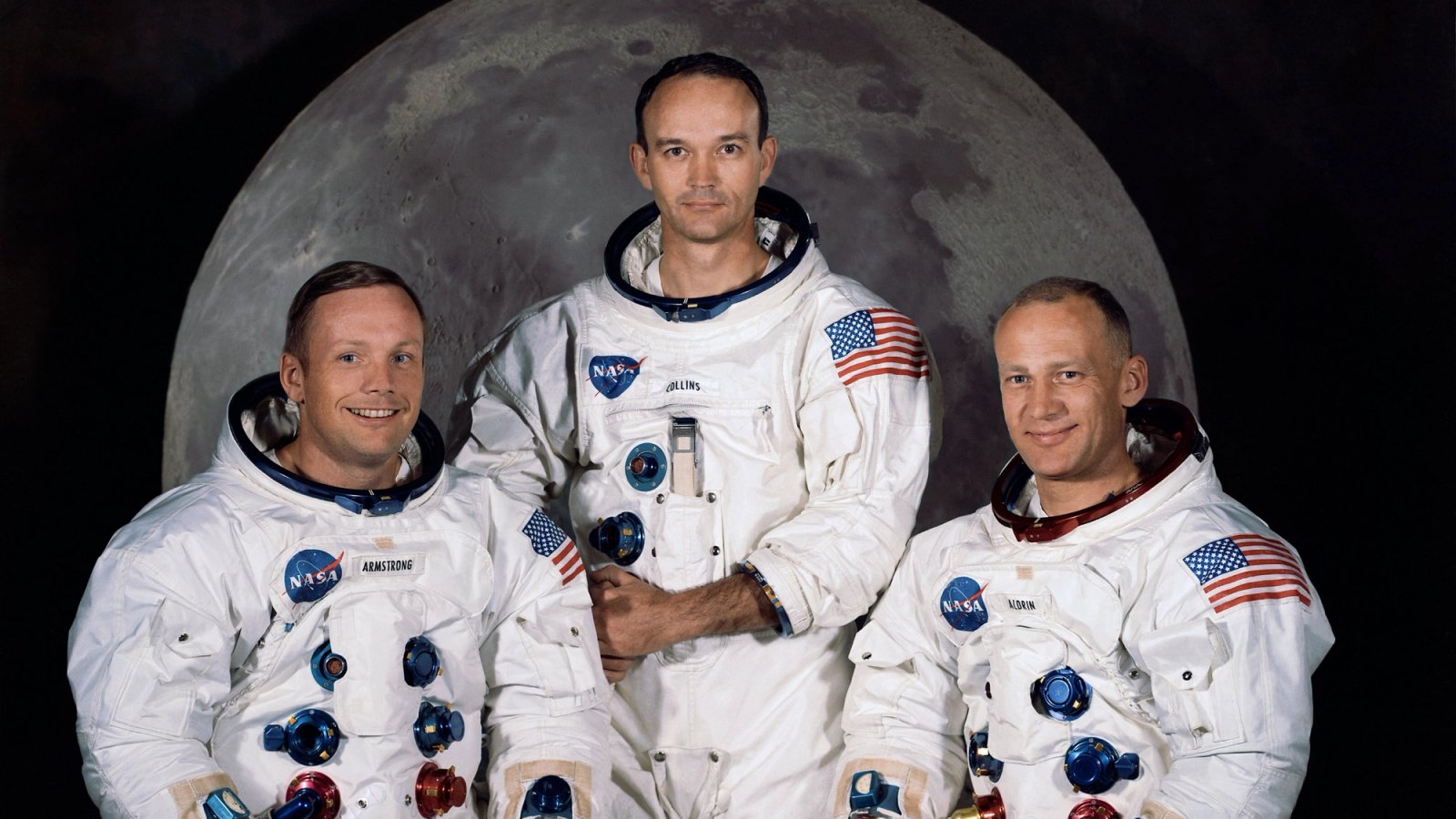
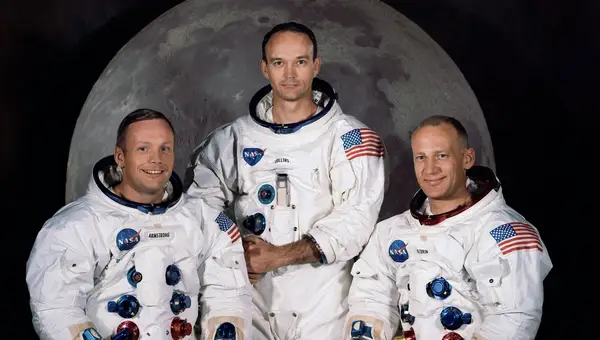
Apollo codified the supremacy of the aviator. Of the twelve men who walked on the Moon, eleven were test pilots. The sole exception was Harrison "Jack" Schmitt (Apollo 17), a civilian geologist. Neil Armstrong had flown the X-15 rocket plane to the edge of space before NASA selected him. Buzz Aldrin held a doctorate from MIT in orbital mechanics. With decorated aviators like Pete Conrad, Alan Bean, Dave Scott, the roster reads like a directory of the most capable aviators America produced in the postwar era. They were elite by every possible measure: physically, intellectually, temperamentally. When Tom Wolfe immortalized them in "The Right Stuff," he was capturing something real.

The Shuttle Era: Expanding the Definition of Excellence
The Space Shuttle changed everything. Beginning in 1978, NASA introduced a new category of astronaut: the Mission Specialist, a position that did not require pilot wings. Scientists, engineers, physicians, and even payload specialists - specialists in particular experiments who were not career astronauts at all - began flying alongside pilots and commanders. The corps became broader, more diverse, and more reflective of the nation it represented.
The selection process grew more rigorous in some ways and more open in others. NASA began accepting applications from civilians, not just military personnel. Competition intensified sharply. In 2013, the year half of the Artemis II astronauts were selected, NASA received more than 6,300 applications for eight slots. The agency was looking for the same fundamental qualities that had always defined the astronaut corps such as exceptional professional achievement, mental and physical resilience, and the ability to perform under pressure.
However, the definition of "exceptional" had expanded considerably. Astronauts now came from backgrounds in oceanography, medicine, physics, and electrical engineering. They were no longer exclusively military, though military veterans remained heavily represented because the service academies and flight programs produce exactly the kind of high-achievers NASA seeks.
The Shuttle era also brought the International Space Station into being, and with it a new set of demands. Station astronauts were not just pilots and scientists - they were construction and maintenance workers, teachers, engineers, and diplomats, living and working with Russian cosmonauts and astronauts from fifteen other nations. The skill set expanded again: language proficiency, interpersonal adaptability, and the ability to manage complex technical systems over months-long expeditions became as important as any single discipline.

Artemis and the Modern Astronaut Corps
NASA's current selection criteria require either a master's degree or higher in a STEM field - or a medical degree - plus at least two years of relevant professional experience. Military pilots can substitute 1,000 hours of jet pilot-in-command time for both requirements. Candidates must also pass NASA's long-duration spaceflight physical.
Every astronaut selected in the modern era is, by some objective measure, exceptional in their field. The Artemis-era corps includes a cardiologist who performed heart procedures during a deployment aboard an aircraft carrier, a marine biologist who conducted dives in the most remote ocean environments on Earth, and military officers who commanded everything from fighter squadrons to nuclear submarines.
The common thread is not a specific background but a specific standard: these are people who have already proved, in their professional lives before NASA, that they perform at the highest level when the stakes are real.
The Artemis II crew perfectly illustrates how much the corps has evolved - and how much has stayed the same.

The Artemis II Crew
Commander Reid Wiseman
Reid Wiseman grew up in Baltimore, Maryland, attending the Blue Angels airshows that lined the Chesapeake Bay waterfront, and knew he wanted to fly.
He earned a bachelor's degree in engineering from Rensselaer Polytechnic Institute and a master's in systems engineering from Johns Hopkins before earning his Navy Wings of Gold.
As a naval aviator flying the F/A-18F Super Hornet, he deployed twice to the Middle East and flew combat missions, earning multiple Air Medals. Selected by NASA in 2009, he flew his first mission in 2014 as a member of Expedition 40/41 aboard the International Space Station, spending 165 days in orbit and completing nearly thirteen hours of spacewalks.
He later served as Chief of the Astronaut Office before stepping down in 2022 to return to active flight status. Wiseman brings to Artemis II the rare combination of combat experience, deep technical knowledge, and the administrative perspective of someone who has run the office that selects and trains the people who fly.
Pilot Victor Glover
Victor Glover is from Pomona, California, and his path to the Moon runs through the flight decks of carrier-based Navy fighters and the floors of the United States Senate.
He earned a degree in general engineering from Cal Poly San Luis Obispo and three master's degrees - in military operational art and science, systems engineering, and business administration - before becoming a naval aviator and eventual test pilot in the F/A-18 Hornet, Super Hornet, and EA-18G Growler. He logged more than 3,500 flight hours across more than 40 aircraft, completed more than 400 carrier landings, and flew 24 combat missions. Selected by NASA in 2013 while serving as a Senate Legislative Fellow, he flew the inaugural operational SpaceX Crew Dragon mission in November 2020, spending 168 days aboard the ISS and completing four spacewalks.
He became the first Black astronaut to complete a long-duration stay aboard the station. Before every launch, Glover listens to two songs from the Apollo era - Gil Scott-Heron's "Whitey on the Moon" and Marvin Gaye's "Make Me Wanna Holler" - as a meditation on what the space program got right and what it got wrong. He brings both a fierce technical competence and a clear-eyed sense of history to a mission that is itself a statement about who gets to go to the Moon.
Mission Specialist Christina Koch
Christina Koch grew up in North Carolina with an early love of polar exploration and eventually combined that passion with a degree in electrical engineering and physics from North Carolina State University.
She worked as a field researcher in remote Antarctic and Arctic environments before joining NASA's Goddard Space Flight Center as an electrical engineer working on scientific instruments. Selected by NASA as an astronaut in 2013, she launched to the ISS in March 2019 and did not come home for 328 days - the longest single spaceflight by any woman in history. During that mission, she participated in the first all-female spacewalk alongside fellow astronaut Jessica Meir.
Her extended stay made her one of the most comprehensively studied human subjects in the medical literature on long-duration spaceflight, and that data is directly informing what NASA learns about preparing crews for the Moon and Mars. Koch represents a newer archetype of astronaut excellence: the scientist-operator whose technical depth rivals any engineer's, and whose endurance in extreme environments - Antarctic research stations are their own kind of isolation and cold - proved the character NASA needed before the agency even looked at her application.
Mission Specialist Jeremy Hansen
Jeremy Hansen grew up on a farm near London, Ontario, started flying gliders at age twelve as a Royal Canadian Air Cadet, earned his private pilot's license at seventeen, and went on to receive a bachelor's degree in space science with honors from the Royal Military College.
From 2004 to 2009, he flew CF-18s for the Royal Canadian Air Force, serving as a combat operations officer with NORAD and conducting Arctic flying operations. The Canadian Space Agency selected him as an astronaut in 2009, and in 2017 he became the first Canadian ever entrusted with leading a NASA astronaut class - supervising the training of candidates from both nations. Artemis II will be Hansen's first spaceflight, and it will make him the first non-American ever to travel beyond Earth orbit.
Canada's participation in Artemis is no accident of diplomacy: it is the product of a partnership stretching back to 1981, when the original Canadarm first flew aboard the Space Shuttle. Canada's robotic arm technology has been a continuous presence in American human spaceflight ever since - Canadarm2 remains operational aboard the ISS today - and Canadarm3 will be integral to the Gateway lunar space station that Artemis is building toward. Hansen carries the weight of a nation's aspirations and the credibility of a career that would have distinguished any candidate, regardless of nationality.

Spacecraft Are Marvels and They Still Need Pilots
The Artemis II mission is built on technology of breathtaking sophistication. The Space Launch System rocket generates more thrust than the Saturn V that sent Apollo astronauts to the Moon. The Orion spacecraft features an advanced heat shield, digital fly-by-wire controls, and life-support systems far beyond anything available in the 1960s. Automation handles an enormous share of what once required manual intervention. And yet, the Boeing Starliner Crew Flight Test of June 2024 delivered a blunt reminder that no amount of engineering elegance eliminates the human requirement at the center of the machine.
When NASA astronauts Butch Wilmore and Suni Williams launched aboard Boeing's Starliner capsule on June 5, 2024, the mission was designed as a largely automated demonstration to the International Space Station. Twenty-four hours into flight, as Starliner approached the ISS for an autonomous docking, five of the capsule's twenty-eight reaction control system thrusters failed in cascade.
The failures eliminated six-degree-of-freedom control - the spacecraft's ability to maneuver in any direction - and by standard flight rules, should have triggered an abort. Wilmore, a retired Navy captain and carrier aviator, and Williams, a former Navy helicopter test pilot, were suddenly the most important variables in an equation that the vehicle's designers had hoped would never require solving in real time. Mission controllers in Houston commanded thruster resets from the ground, recovering four of the five failed jets, restoring partial control. The crew then manually flew the docking sequence, bringing the capsule home to the station at 1:34 p.m. Eastern on June 6. As NASA Administrator Jared Isaacman would later put it, had the crew made different decisions, had the thrusters not been recovered, the outcome could have been "very, very different."
The Starliner mission subsequently became a cautionary tale about program management, engineering oversight, and contractor relationships - it was ultimately classified as a "Type A" mishap, NASA's designation of the most severe mishap. But within that difficult story is a quiet testament to why humans are still at the controls. Two of the most experienced test pilots in the American astronaut corps, trained for exactly the scenario they never expected to face, did what test pilots do: they read the machine, trusted their training, and brought the vehicle home. No software wrote that ending; two incredibly skilled and highly trained people did.
The reality that spacecraft, however magnificent, are ultimately instruments flown by human beings of exceptional capability and judgment is the through-line from Alan Shepard's fifteen-minute suborbital mission in 1961 to the Artemis II crew orbiting the Moon in 2026. The technology has changed beyond recognition, but the requirement for exceptional people inside it has not.
The Long Arc
America's astronaut selection process has evolved from an exclusive club of military test pilots to a broad meritocracy that seeks excellence across every technical discipline. The thread connecting John Glenn to Christina Koch, or Neil Armstrong to Victor Glover, is not their backgrounds - it is the standard they met before anyone put their name on a flight manifest. These are people who had already proven, in the careers they built before NASA came calling, that they could perform at the highest level when failure was not an abstraction.
On April 1, 2026, four of them will ride a column of fire off a Florida launchpad and head toward the Moon, the first human beings to do so since Gene Cernan climbed off the lunar surface in December 1972 and told the world he believed history would record that America's challenge of today had forged man's destiny of tomorrow. More than fifty years later, four of the best people on Earth are about to find out if he was right.
Join the Conversation

Mickey Addison
Military Affairs Analyst at MyBaseGuide
Mickey Addison is a retired U.S. Air Force colonel and former defense consultant with over 30 years of experience leading operational, engineering, and joint organizations. After military service, h...
Mickey Addison is a retired U.S. Air Force colonel and former defense consultant with over 30 years of experience leading operational, engineering, and joint organizations. After military service, h...
Credentials
- PMP
- MSCE
Expertise
- defense policy
- infrastructure management
- political-military affairs
SHARE: