
Navy Voting Stand Down 2026: Your Rights, Resources, and What to Expect

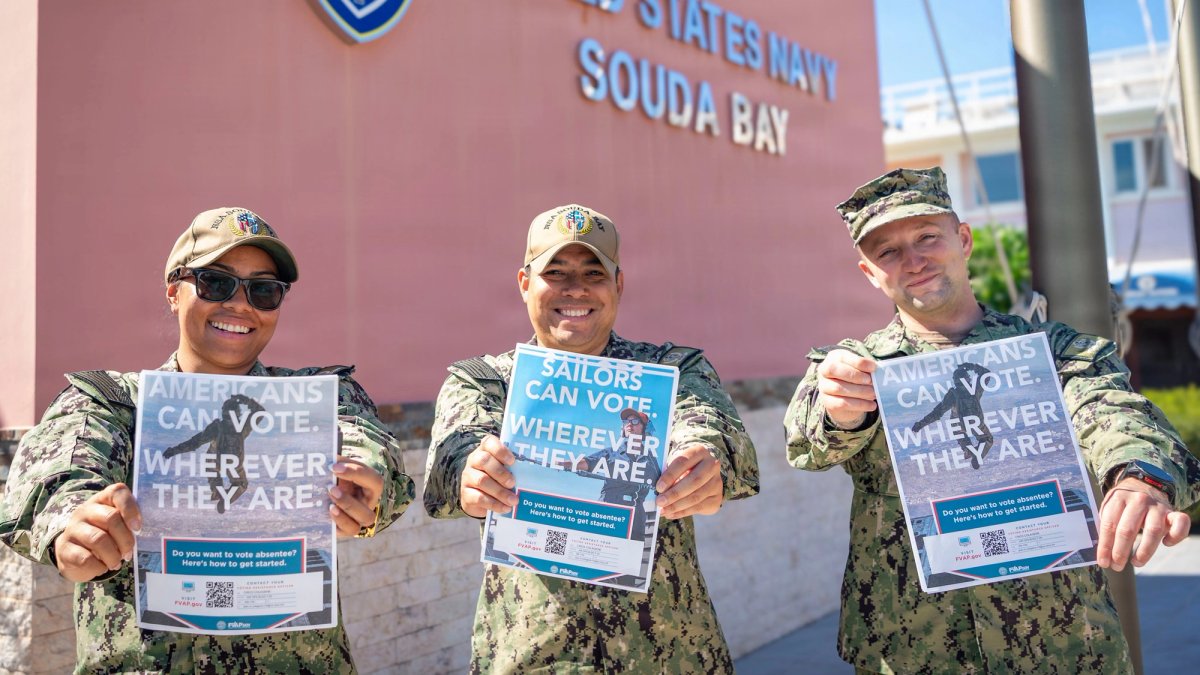
The Navy and Marine Corps must conduct a nonpartisan military voting stand-down by October 15, 2026, ahead of the November 3 general election.
The Navy Voting Stand Down 2026 is intended to help Sailors and Marines understand voter registration, absentee-ballot requirements, and the federal forms available to military voters. The guidance also addresses reasonable duty-day flexibility for voting-related tasks and assistance with eligible family members’ absentee-voting needs.
The key distinction is that the stand-down is a command requirement. Registering to vote and casting a ballot remain individual choices.
CDR Patricia Kreuzberger of Pentagon Press Operations relayed a statement provided on background by a Pentagon official:
“The Department is committed to ensuring all servicemembers have the opportunity to vote.”
Kreuzberger also pointed service members and families to the Federal Voting Assistance Program (FVAP) for election information and voting resources.

What Should You Expect During the Military Voting Stand-Down?
The Department of the Navy issued department-wide voting guidance in ALNAV 062/26, followed by NAVADMIN 234/26, Military Voting Stand Down.
The Marine Corps issued separate implementing guidance for active and reserve units. It calls for a nonpartisan, one- to two-hour session led by the commander or senior officer present, alongside the unit Voting Assistance Officer (VAO).
The session includes voting guidance and hands-on assistance with the absentee-ballot process.
Commands also have reporting requirements to document completion of the stand-down through their voting-assistance channels. For example, Marine Corps guidance requires major command VAOs to report completion to Headquarters Marine Corps.
A Mandatory Stand-Down Doesn’t Mean Mandatory Voting
Attending the required command event shouldn’t be confused with being required to register, request a ballot, or vote.
The guidance prohibits commanders, VAOs, and other leaders from attempting to influence a service member’s or family member's political choices. The session should provide the information and administrative help needed to participate without directing that participation toward any candidate or party.
In practice, a VAO can explain registration requirements, help you locate the correct forms, and point you to your state’s voting rules. What they can’t do is recommend a candidate, party, or political position.
Know the Difference Between the FPCA and FWAB
Two federal forms may come up during the stand-down.
The Federal Post Card Application (FPCA) lets military voters and their family members register to vote and request an absentee ballot. FVAP recommends checking the rules for the state where you vote because registration, request, and ballot-return deadlines vary.
The Federal Write-In Absentee Ballot (FWAB) serves as a backup if there isn’t enough time to receive and return your requested ballot before the deadline. If your official ballot arrives after you submit a FWAB, complete and return the official ballot too; election officials will count only one.
Military spouses and other eligible family members can also use FVAP's absentee-voting resources when living away from their voting residence.

What Should You Do Before Election Day?
With the November 3 election approaching, start with your state's rules rather than assuming one national registration or ballot deadline applies.
On the FVAP website, military voters can select their state to check registration requirements, election deadlines, local election-office contacts, and ballot-return rules. Because those requirements vary by state, confirm which deadlines still apply to you. Your unit VAO can also help you complete the appropriate forms or find the right resources.
The Navy Voting Stand Down 2026 on October 15 gives Sailors and Marines dedicated access to voting information and assistance before Election Day. What you do with it, including whether you register or vote, remains your decision.
Continue Reading

Planning a TDY or PCS? Here Is How the 2027 Per Diem Rates Affect Your Wallet

Were You Denied TAMP? Guard and Reserve Members May Qualify for Retroactive Reimbursements
Family Separation Allowance Is Now $300/Month: What Every Military Family Must Know
Join the Conversation

Allison Kirschbaum
Veteran, Military History & Culture Writer at MyBaseGuide
Allison Kirschbaum is a Navy Veteran and an experienced historian. She has seven years of experience creating compelling digital content across diverse industries, including Military, Defense, History...
Allison Kirschbaum is a Navy Veteran and an experienced historian. She has seven years of experience creating compelling digital content across diverse industries, including Military, Defense, History...
Credentials
- Navy Veteran
- 7 years experience in digital content creation
- Expertise across Military, Defense, History, SaaS, MarTech, FinTech industries
Expertise
- Military History
- Naval Operations
- Military Culture
SHARE: