
Following Barracks Crisis, Air Force Launches Digital Maintenance Portal

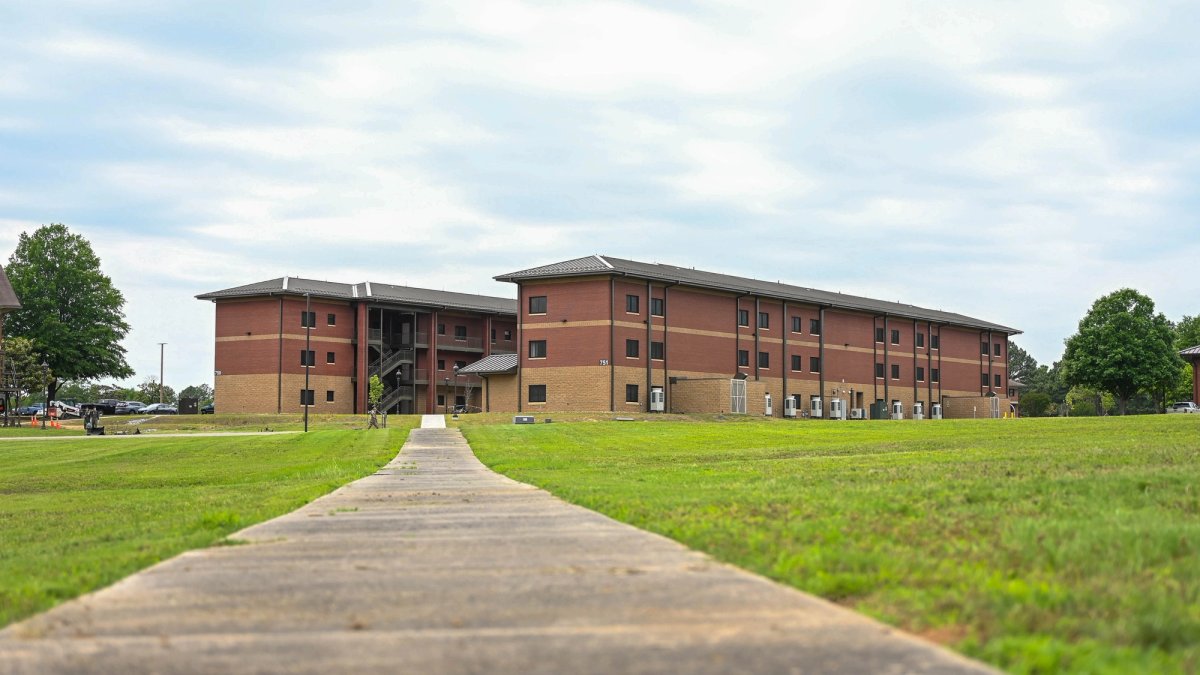
The Air Force Installation & Mission Support Center just launched a new portal where every Airman living in the government-owned housing can submit and track maintenance requests. The new Resident Maintenance Portal connects directly to the Air Force Civil Engineer Center’s (AFCEC) NextGen IT system and was mandated by the 2024 and 2025 National Defense Authorization Acts (NDAA). Rollout began on October 16, 2026.

How It Works
Airmen can submit a maintenance request by scanning a QR code on a mobile phone or tablet, which connects to a digital maintenance request form. Once the resident submits the request, it is automatically logged into the Air Force’s work control system, NextGen IT. From that point, the requestor will get an email each time there is an updated status to the request. The enterprise-wide platform is part of a larger transformation of the Air Force civil engineering work and information management system.
The new system replaces a variety of tracking systems used at the various bases that included standalone SharePoint sites. In addition to giving the AFCEC staff visibility across all government-owned family housing and dorms, it eliminates duplicative tracking by the Airman Dorm Leaders and should aid in reducing duplicate requests.
Once fully deployed, the system will cover all dorms and government-owned (not privatized) family housing. Airmen, Guardians, and their families living in privatized family housing will continue to use their existing systems through their property owner.
In response to questions from our publication, an Air Force Installation & Mission Support Center (AFIMSC) spokesman responded,
“All 63 installations that have unaccompanied housing and/or government-owned housing have a primary point of contact with access provisioned to the RMP. All 63 installations are actively using the RMP.”
He went on to detail that the requestor may add additional people to the request so they can also get updates, such as their Airman Dorm Leaders, their chain of command, and housing staff.
The Air Force Civil Engineer Center is developing an overview dashboard for enterprise-wide visibility and transparency. They are anticipating the rollout of that dashboard next month. Another interesting feature of the RMP is that although it was built to integrate with NexGen IT, it can operate as a standalone portal for tracking maintenance requests where the Air Force is not the lead for housing.
According to the AFIMSC spokesman, “The AFCEC Facility Maintenance Operations (FMO) specifically designed the portal with the flexibility to function as a standalone system to support unique operational environments.”
Barracks Problems Are Not New
Housing for service members and their families has been under scrutiny for some time. In 2022, 1,189 soldiers at Fort Bragg were forced to move out of their barracks over the course of three months as the buildings were deemed to be unsafe due to mold. The move came after inspections of the HVAC systems in the 50-year-old barracks revealed higher than normal moisture levels and concerns for the health and quality of life for the soldiers. The Army ended up sending nearly 500 soldiers off base as the existing barracks were at capacity.
The defining moment was a September 2023 Government Accountability Office report (GAO-23-105797) which documented serious deficiencies in DoD unaccompanied housing. Service members interviewed told GAO staffers that their living conditions posed “potentially serious risks to health and safety.” The GAO staff witnessed numerous maintenance issues with the barracks. They cataloged and photographed mold, broken fire alarm systems, extreme temperatures, sewage overflows into latrines, and water damage.
The GAO reviewed all the DoD and Military Services’ regulations and policies, as well as visiting ten installations and conducting twelve focus groups with service members. The GAO had five major findings in its report. The GAO assessed that the Military Services do not reliably assess the condition of unaccompanied housing, which permitted living conditions for some barracks to become substandard.
Further, the GAO found that the Services had not reevaluated their policies for unaccompanied housing. The GAO also determined that the OSD staff was not sufficiently monitoring the effects of barracks conditions on quality of life and readiness, not using consistent or complete information for allocation of resources, and not conducting sufficient oversight on unaccompanied housing.
Upon receiving this report, Congress took action quickly. The 2024 NDAA placed a host of requirements on the DoD aimed at improving conditions in unaccompanied housing and establishing the metrics and reporting systems to ensure improvements were made. The next year, Congress added the directives to establish a digital system for residents to submit and track maintenance requests.
If the 2022 Fort Bragg story was a bellwether, the 2025 Guam barracks story was a gong. In an early May 2025 visit to the Navy-run unaccompanied housing for sailors and Marines at Anderson AFB, Guam, Navy Secretary John Phelan said he was “appalled” at the conditions. Phelan said his first impression made him think the buildings were condemned, and he gave commanders ten days to move the Sailors and Marines out. Photos of Palau Hall showed mold, HVAC systems in disrepair, dangling wires, and broken ceiling tiles and window screens on the floor in the hallway.
Of the over 500 residents, 80 were Navy/Marine Corps, and an Air Force spokesman said that the other dorms on Anderson were not significantly better. While the 80 Marines and Sailors departed, the remaining 430 Airmen and Soldiers stayed. The Air Force pinned the poor conditions partly on the climate and the recent Typhoon Mawar. Vice Admiral Scott Gray, Commander Naval Installations Command, directed a full inspection by region and installation commanders of all unaccompanied housing in their respective areas of responsibility to be completed not later than May 27, 2025.
In his email to commanders, he wrote, “The conditions shown in the photos are a failure of leadership across multiple echelons of command.”

The Navy requested $12.5 billion for Navy and Marine Corps barracks in 2027.
Both the Pentagon leadership and the Military Services followed the Navy’s lead. The Pentagon established the Barracks Task Force led by MOH recipient Marine Sergeant Dakota Meyer. In his announcement creating the task force, Secretary of Defense Pete Hegseth said,
“The Barracks Task Force will improve more barracks, [and] deliver a better quality of life.”
The Services all undertook their own inspection and improvement programs. The Air Force stood up its own Department of the Air Force (DAF) Task Force, which is the successor to the Air Force Civil Engineer Center’s “Dorm Response Program,” overseeing funding for maintenance, repair, and construction of DAF’s 170 dorm projects valued at $146.5 million planned through 2027. The Army stood up the Army Barracks Management Program under the Office of the Assistant Chief of Staff for Installation Management to provide a framework for improving Army barracks. The Army has spent $484 million on repairs already and has requested nearly $20 billion for barracks in 2027. Finally, the Marines established Barracks 2030 to ensure the quality of living conditions in their barracks. The Marine Corps budget is part of the overall Department of the Navy, and in 2027 the Marines requested $6.97 billion for maintenance and repairs to “accelerate Barracks 2030.”
One footnote deserves mention. Despite the focus from Capitol Hill and Pentagon leaders on accelerating the improvement of unaccompanied housing, the Army had its program truncated in 2025. DoD diverted $1 billion intended for Army facility maintenance and repair, including barracks, in order to fund the surge of troops to the U.S.-Mexico border. While those funds were partially refunded in the One Big Beautiful Bill Act, it was not paid back in full and probably delayed execution of projects ready to go that year.
What Airmen and Guardians Should Do
The rollout of the new Resident Maintenance Portal began on October 16 and will likely take months to be fully deployed across the DAF.
Airmen and Guardians should be on the lookout for the rollout at their base.
Commanders, First Sergeants, and dorm leaders should check with their base engineers and housing office for updates on timing for their base.
Continue Reading

25+ Things to Do Near Fort Rucker in Daleville, Enterprise, and More!
Welcome to Fort Rucker! Everything You Need to Know About Your New Duty Station

30+ Things to Do Near Fort Bliss in El Paso, Texas
Join the Conversation

Mickey Addison
Military Affairs Analyst at MyBaseGuide
Mickey Addison is a retired U.S. Air Force colonel and former defense consultant with over 30 years of experience leading operational, engineering, and joint organizations. After military service, h...
Mickey Addison is a retired U.S. Air Force colonel and former defense consultant with over 30 years of experience leading operational, engineering, and joint organizations. After military service, h...
Credentials
- PMP
- MSCE
Expertise
- defense policy
- infrastructure management
- political-military affairs
Calculate Your BAH
Planning your housing budget? Use our 2026 BAH Calculator to see your Basic Allowance for Housing rates for your base.
Calculate BAH Rates →SHARE: