Navy Pledges $1.7 Billion to Modernize Unaccompanied Sailor Housing

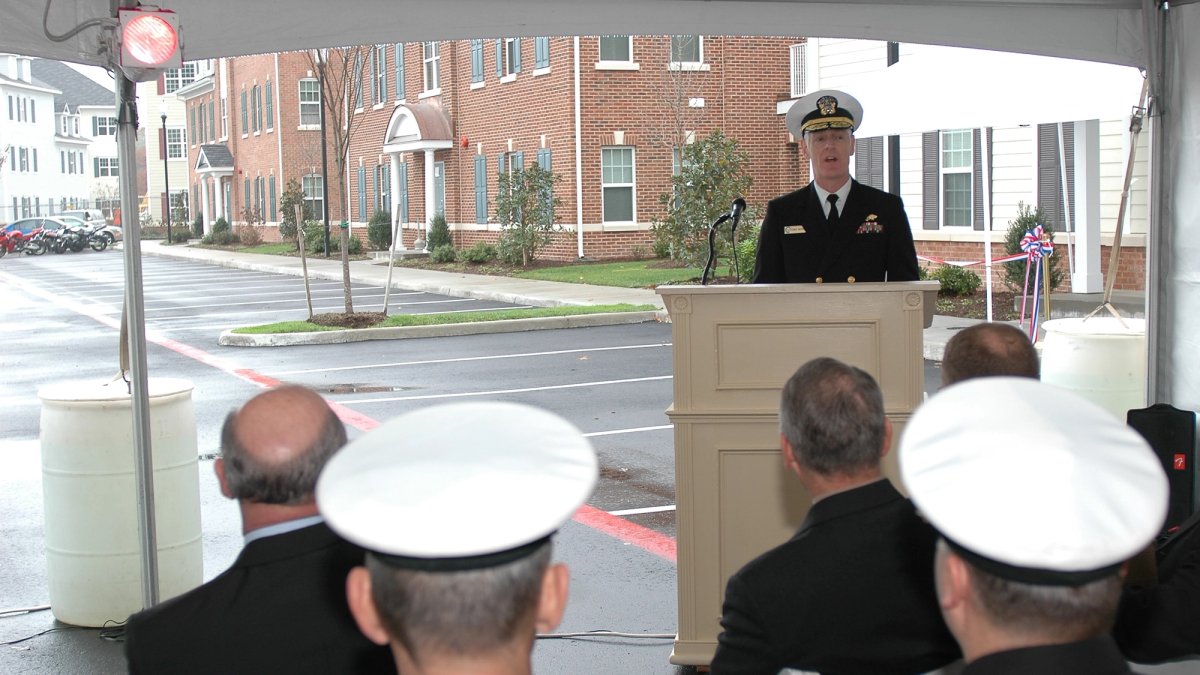
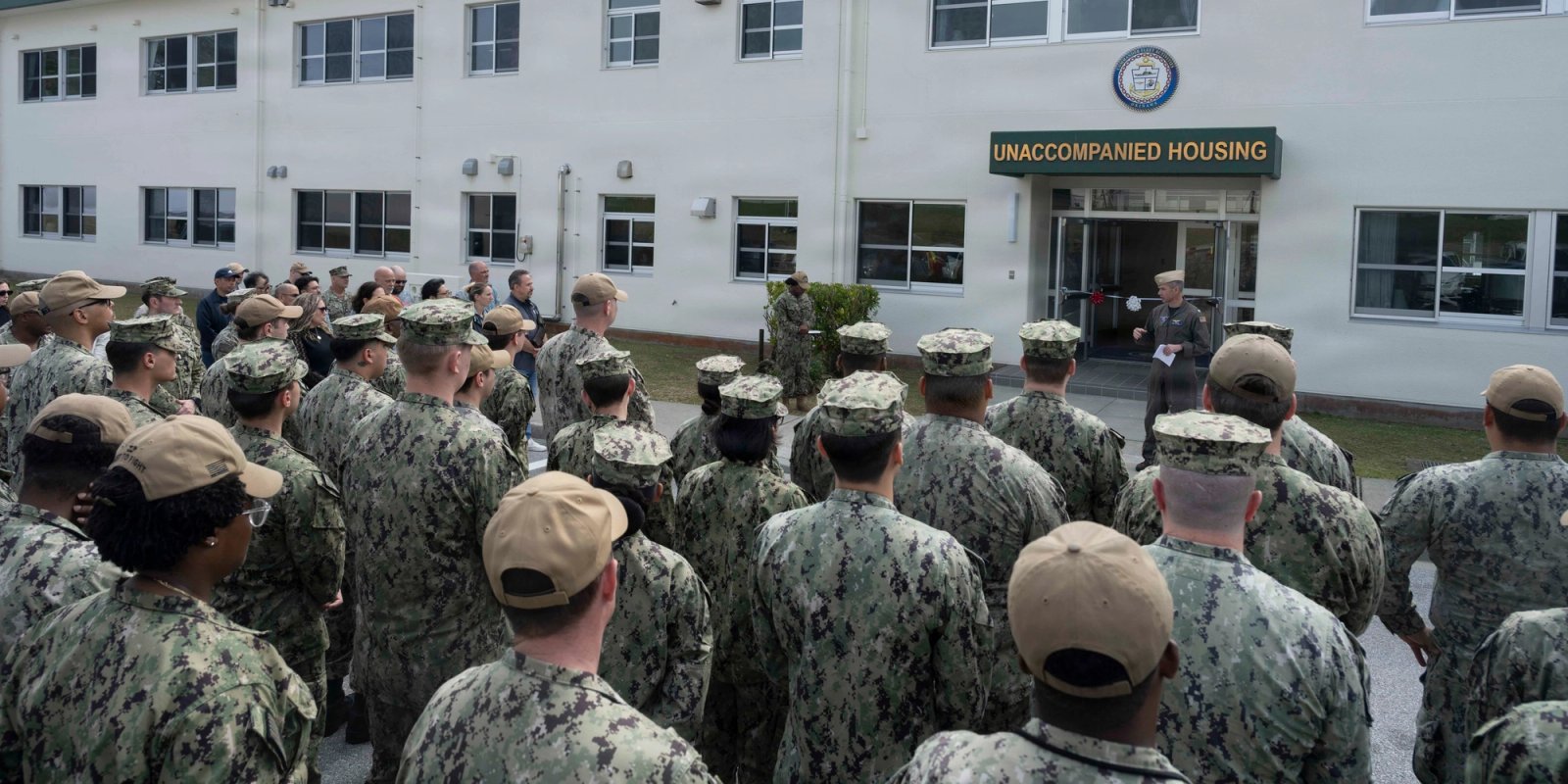
The Navy just inked a five-year deal with Hunt Military Communities to expand their existing public/private venture (PPV) for management and upgrades to Sailors’ unaccompanied personnel housing at three naval bases in Virginia. The $1.7 billion deal privatizes unaccompanied housing (UH) for Sailors in the Hampton Roads area, including a new tower in downtown Newport News.
The deal is an extension of Hunt’s pilot project called “Homeport Hampton Roads,” which dates to 2007 and was one of two Navy pilot projects to use the authority granted by Congress to leverage private investment to improve military housing. The first phase has 3,600 beds at Norfolk and Newport News, owned and managed by Hunt. The second phase adds another 8,098 beds to the project. There will be a total of sixteen buildings conveyed from the Navy to Hunt for renovation and then management of 6,598 beds, and at least two new apartment buildings with 1,500 beds constructed in Newport News.
“No Sailor Lives Afloat”
The military has a large presence in the Hampton Roads/Newport News area, with the lion’s share belonging to the Navy. Naval Station Norfolk is the largest naval installation in the world, and homeport to 75 ships, including three carrier strike groups and two amphibious ready groups. According to the Hampton Roads Alliance, the area hosts a huge military community of 150,000 uniformed and civilian personnel at six naval installations. Hunt already operates 1,900 UH homes on and around naval installations in the area, so the addition of another 8,098 beds for Sailors represents a large addition to that portfolio.
In February, the Commander, Naval Installations Command (CNIC) advanced the “No Sailor Lives Afloat” initiative designed to get Sailors off their ships when they are in port.
In the CNIC press release, CNO Adm. Daryl Caudle said, “No Sailor Lives Afloat is about readiness, dignity, and trust. When our ships are in port, our Sailors should be able to rest, recover, and reconnect in safe and modern housing ashore.”
Expanding the PPV effort from family housing to unaccompanied housing is part of that effort. According to the February press release, CNIC identified several short- and long-term projects at major homeports, including PPV projects like this one to increase the number and quality of housing for single Sailors while in port.
Vice Admiral Scott Gray, Commander, Naval Installations Command, underscored the importance of the community in this initiative.
“Our community partners in the Commonwealth of Virginia and the City of Newport News have been absolutely instrumental in making this initiative a reality, proving that we are strongest when we work together to support our service members.”

How a PPV Project Works
A public/private venture is exactly what it sounds like: a joint business venture between a government entity and a private firm. Technically, the initiative in Virginia is a public-public-private venture since it includes $400 million in federal dollars, $1.3 - $1.7 billion in private investment, and a $40 million loan from the Commonwealth of Virginia to the city of Newport News. Virginia lawmakers have proposed forgiving that loan.
Congress created the Military Housing Privatization Initiative (MHPI) in the FY1996 NDAA that permitted the services to turn their housing estates over to private developers to upgrade and manage. The initiative was born from the enormous backlog of substandard housing and the services’ inability to secure funding to repair and rebuild them. Funding for those repairs was appropriated in the military construction budget, and the state of the housing estate had gotten to the point where it had become unaffordable within DoD’s budget. Private developers have access to loans from private institutions and are therefore able to leverage that funding at a greater scale and faster than the government. A Congressional Research Service report noted that while MHPI is not a “silver bullet”, it has been a cost-effective remedy to substandard housing.
While individual deals vary from place to place and between services, in general a PPV deal typically conveys DoD housing to a developer (“project owner”) on a 50-year lease who then secures construction loans to renovate the buildings and infrastructure, construct new homes, and in many cases repair the existing infrastructure.
These deals nearly always include community amenities such as parks, pools, trails, and community centers. The developer then turns management of the property over to an experienced property management firm that handles the day-to-day operations, including maintenance.
The project owner recoups their investment and makes money by collecting rent, which is the service members’ basic allowance for housing.

What Sailors Can Expect
The Navy finalized this newest deal to privatize the existing unaccompanied housing and build new housing in July. The UH at Naval Station Norfolk (5,272 beds), NAS Oceana (712 beds), and JEB Little Creek-Fort Story (614 beds) will all be scheduled for renovation at some point in the next five years.
Two new towers are planned for construction in downtown Newport News, with another 1,500 beds, a 1,050-space parking garage, and ground-floor retail/office space. Each tower in HomePort Hampton Roads 2 will replace an existing 17-story Huntington Hall UH tower in Newport News. City of Newport News officials are planning to complete the parking garage by summer 2028, followed by two more phases finishing in 2029 and 2030. Navy officials will release the construction schedule once it is finalized with Hunt Military Communities and the city.
The next five years will see Sailors moving out of old housing and into modern, updated apartments. When the project is completed in five years, the Navy expects to increase the number of beds available to Sailors as well as improve the quality of those homes.
Continue Reading

Sailors Could Bunk in RVs and Houseboats as Navy's Barracks Crisis Forces Unconventional Fixes
“No Sailor Lives Afloat”: Why the Navy’s Moving Sea Duty Sailors Ashore

Navy Updates BAH and Female Uniforms for October 2024
Join the Conversation

Mickey Addison
Military Affairs Analyst at MyBaseGuide
Mickey Addison is a retired U.S. Air Force colonel and former defense consultant with over 30 years of experience leading operational, engineering, and joint organizations. After military service, h...
Mickey Addison is a retired U.S. Air Force colonel and former defense consultant with over 30 years of experience leading operational, engineering, and joint organizations. After military service, h...
Credentials
- PMP
- MSCE
Expertise
- defense policy
- infrastructure management
- political-military affairs
Calculate Your BAH
Planning your housing budget? Use our 2026 BAH Calculator to see your Basic Allowance for Housing rates for your base.
Calculate BAH Rates →SHARE: